WHAT DO YOU DO FOR A LIVING? LITERALLY
LVMH PRIZE by ELENA CESCON
Becoming an established fashion designer today is a bit like becoming a Serie A footballer. Both jobs carry an almost mythical desirability – global appeal, glamour, success, fulfilment – and both are dreams exceptionally hard to realise. So hard, most call it utopia.
THOSE WHO EVENTUALLY SHIFT AWAY FROM FASHION DESIGN AREN’T NECESSARILY THE LEAST TALENTED, THE LEAST VISIONARY, OR THE LEAST RESOLUTE. MORE OFTEN, THEY’RE SIMPLY THE ONES WHO KNOW HOW TO ADAPT, TO REINVENT THEMSELVES FOR PATHS THAT ANSWER MORE PRACTICAL NEEDS: FINANCIAL, SOCIAL, SOMETIMES JUST CIRCUMSTANTIAL. IT’S AN ADMIRABLE KIND OF ADAPTABILITY, THE SAME ONE THAT HAS LET OUR SPECIES EVOLVE AND SURVIVE.
ON THE OTHER HAND, THE ONES WHO STAY ARE THE ONES WHO NEVER HAD A CHOICE. FOR THEM, FASHION DESIGN ISN’T A DREAM JOB, IT’S HOW THEY EXIST IN THE WORLD. NOT BECAUSE IT COMES NATURALLY, BUT BECAUSE, LIKE BREATHING, IT’S ESSENTIAL. THEY DON’T CHOOSE TO DESIGN. THEY HAVE TO.
THAT’S, AT LEAST, THE FEELING THAT COMES FROM STANDING FACE TO FACE WITH THE NINE FINALISTS OF THIS YEAR’S LVMH PRIZE. IN ITS 13TH EDITION, FASHION’S MOST CELEBRATED AWARD BRINGS TOGETHER A GENERATION OF EMERGING DESIGNERS FROM EVERY CORNER OF THE WORLD, EVERY CULTURE, EVERY STORY.
An Arena of Glass for Nine Dreams
Created, and still steered, by Delphine Arnault since its first edition in 2013, the LVMH Prize receives over 2,400 applications every year, judged by a jury that could, only half-jokingly, be called the Avengers of contemporary fashion: Pharrell Williams, Jonathan Anderson, Maria Grazia Chiuri, Marc Jacobs, Stella McCartney, Sarah Burton, Nicolas Ghesquière, Nigo, Camille Miceli, Phoebe Philo, Michael Rider, Pietro Beccari, Jean-Paul Claverie, Sidney Toledano, Jack McCollough and Lazaro Hernandez.
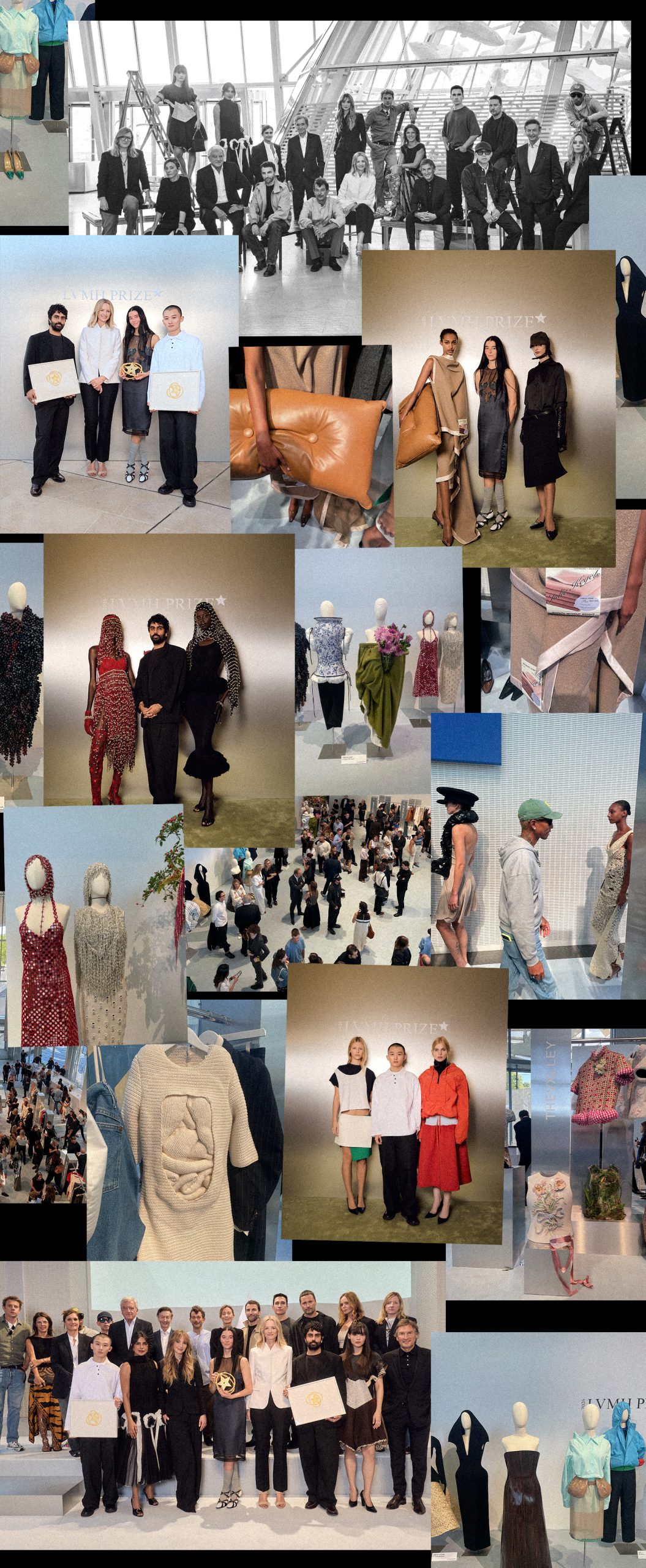
Last Friday, September 4th, the nine finalists presented their collections inside the amphitheatre of the Fondation Louis Vuitton, another creation by a man who could hardly have been anything other than an architect, and remained one until his last breath: Frank Gehry.
Here, in this glass arena floating above the Bois de Boulogne, where the building feels less like architecture and more like an idea caught mid-motion, the nine finalists of the 2026 LVMH Prize laid their futures, and their collections, on the table.
Three prizes are awarded each year, each pairing a cash grant with a year-long mentorship from LVMH’s own experts, covering marketing, sustainability, legal structuring and financial management. Each prize honours a different facet of what it means to be a designer today, but the mission stays the same: support emerging talent, help them find their voice, and build something that lasts.
Where Champions Are Crowned
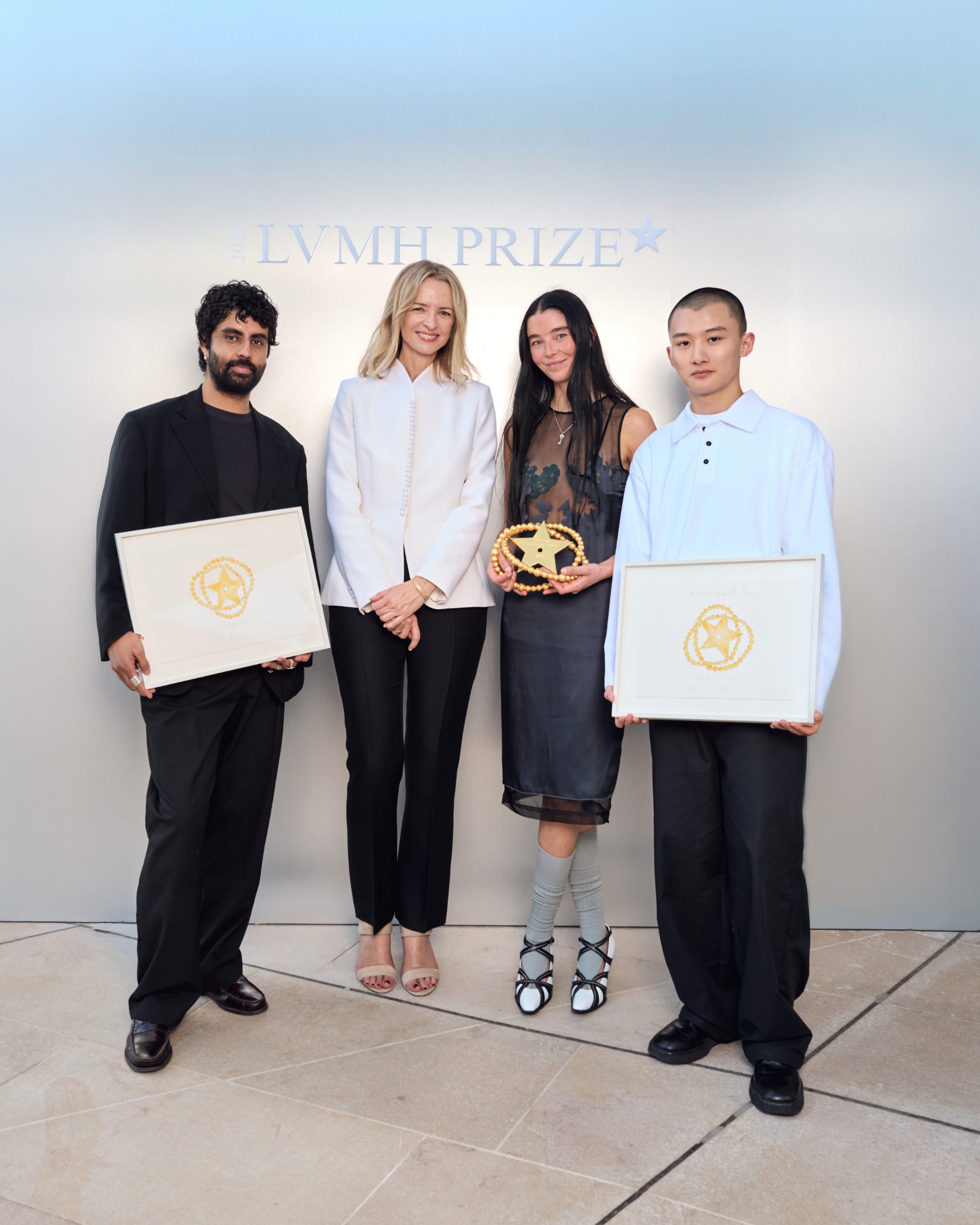
The Savoir-Faire Prize. Dedicated to artisanal excellence, technical innovation and sustainability, this prize celebrates the hands behind the beauty. This year, it went to Anil Padia for his label Yoshita 1967. The first Kenyan finalist in the Prize’s history, Padia was honoured for his embroidery work and his network of women artisans in Nairobi.
Built between Nairobi and Paris, and filtered through his own Kenyan-Indian heritage, Yoshita 1967 is a slow, deliberate project, built on long-term collaboration with women-led craft communities.
The Karl Lagerfeld Prize. Originally called the Special Prize, it was renamed in 2019 in honour of the legendary German designer and long-time jury member. It rewards bold creativity, originality, and a genuinely contemporary point of view. This year it went to Zane Li for his label Lii, which marries minimalism with architectural construction and a vivid, confident use of colour.
Li left his hometown of Chongqing, in central China, at 18, to study at New York’s Fashion Institute of Technology. His process starts not with a pattern, but with a shape – a square, a box, a strip – folded around the body until it becomes a garment.
Both prizes come with €20,000 and a year of mentorship. And then comes the position everyone is really there for.
The LVMH Prize itself. A €400,000 cheque, paired with a year of personalised mentoring from LVMH’s own experts. It was announced by Jennifer Lawrence, renowned Hollywood actress, Dior ambassador and, as it turns out, a genuinely funny woman. Mid-announcement, she got tangled up in her own words, sending a wave of laughter through a room otherwise thick with tension and suspense. Thank you, Jennifer Lawrence, for reminding the audience how to breathe.
The winner: Julie Kegels, for her eponymous label. A 27-year-old Belgian designer who cut her teeth at Alaïa before founding her own brand in 2024. At her young age, Kegels is already redefining contemporary luxury, blending classical elegance with sculptural silhouettes, ironic detailing, and a deep understanding of feminine multiplicity.
Every piece in her world shifts with the many identities a woman moves through in a single day. Formal beauty meets trompe-l’œil and unexpected detail: a padded, grained-leather Cushion Bag in camel, paired with an upcycled wool-blanket dress whose stitched label reads: Dream Big, Sleep Warm.
Elsewhere, a dress carved and polished entirely from wood panels, shaped around the body as though it were furniture rather than fabric.
Transformation is the word Kegels keeps coming back to, the idea that a woman can be a mother in the morning, a businesswoman by noon, a nightbird by evening, and that clothes should be able to hold all three.
Fashion Isn’t Football. But It Is.
Peel back the surface, and the most popular sport and the most glamorous job are chasing the same thing, which is exactly what makes it so hard: making someone feel something. That’s the heart of the matter: to give emotion, to move people, to touch something real. It’s exactly what the LVMH Prize celebrates and encourages. The rest is just wrapping paper.
Whether you’re a fashion designer or a professional footballer barely makes a difference: both run on the same fire, the same discipline, the same refusal to stop. Making it to Serie A is achieved by a vanishingly small fraction of the players who dream of it. Becoming a working, visible, respected fashion designer is arguably rarer still, and neither of them ever really considered giving up an option.
That’s precisely what makes the LVMH Prize so precious, and so quietly moving: it hands a microphone to a generation of designers who are talented and visionary, yes, but who are, above all, simply unable to live any other way.
The LVMH’s candidates, all of them, remind us of the literal meaning hiding inside that question we ask each other so casually: what do you do for a living? For them, there’s nothing metaphorical about it. Shaping cloth, bodies and ideas isn’t a career choice, it’s what they do to live.
Perhaps that’s the quiet lesson the LVMH Prize leaves us with, every single year: how rare it is to meet someone who could actually answer that question, literally.
ARTICLE BY Elena Cescon