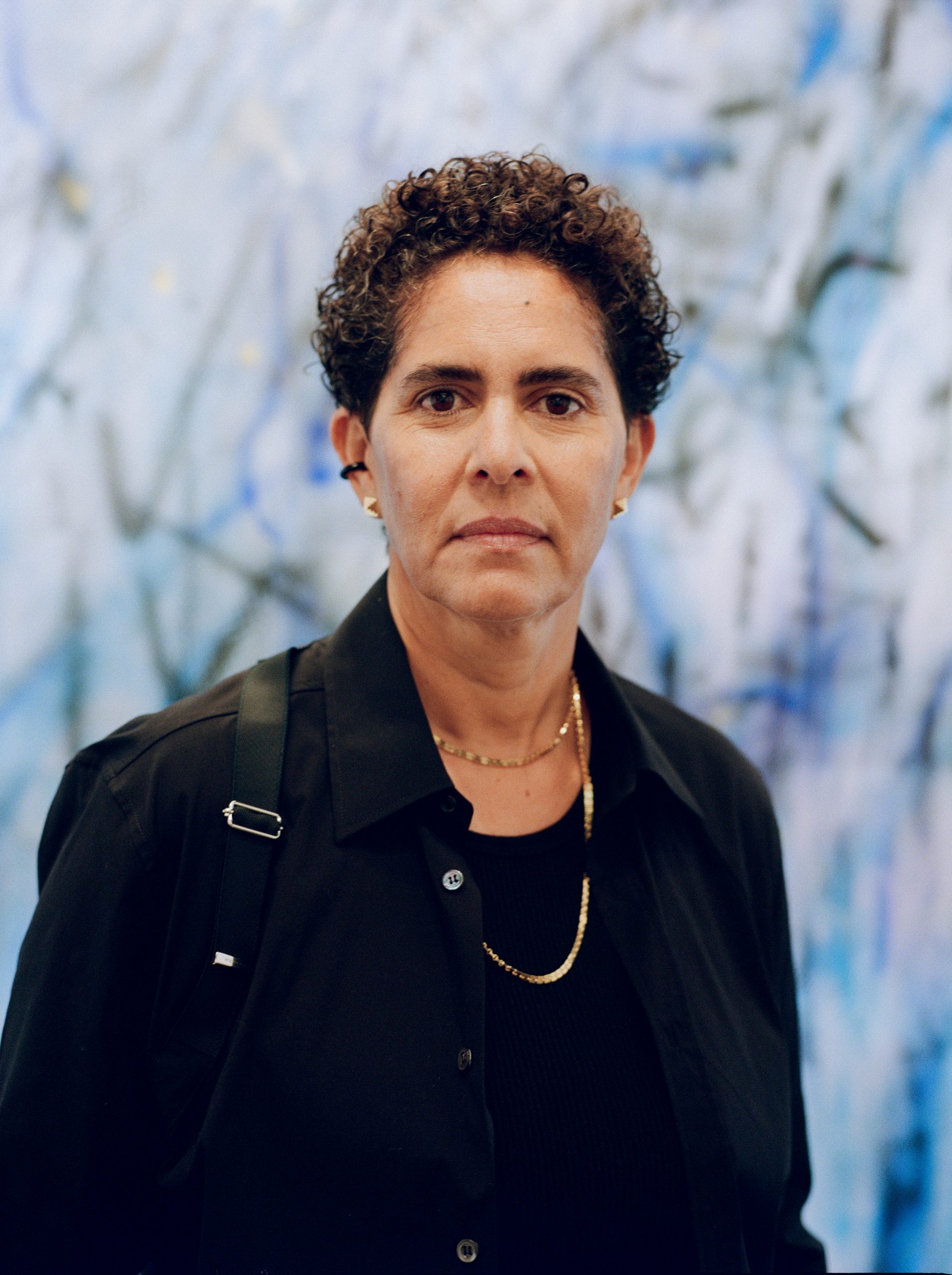
JULIE MEHRETU & JOHN JASPERSE AT MARIAN GOODMAN
WANDERINGS: MOVING THROUGH PARTIAL VISIBILITY By Lilas Privateer
Photographer : Helena Goñi
Makeup artist : Juan Jaar
Interview : Lilas Privateer
FOR HER LATEST EXHIBITION, OUR DAYS, LIKE A SHADOW (A NON-ABIDING HAUNTOLOGY) AT MARIAN GOODMAN GALLERY IN NEW YORK, ARTIST JULIE MEHRETU INVITED CHOREOGRAPHER JOHN JASPERSE TO CREATE WANDERING, THE FIRST DANCE WORK CONCEIVED IN DIALOGUE WITH HER PAINTINGS.
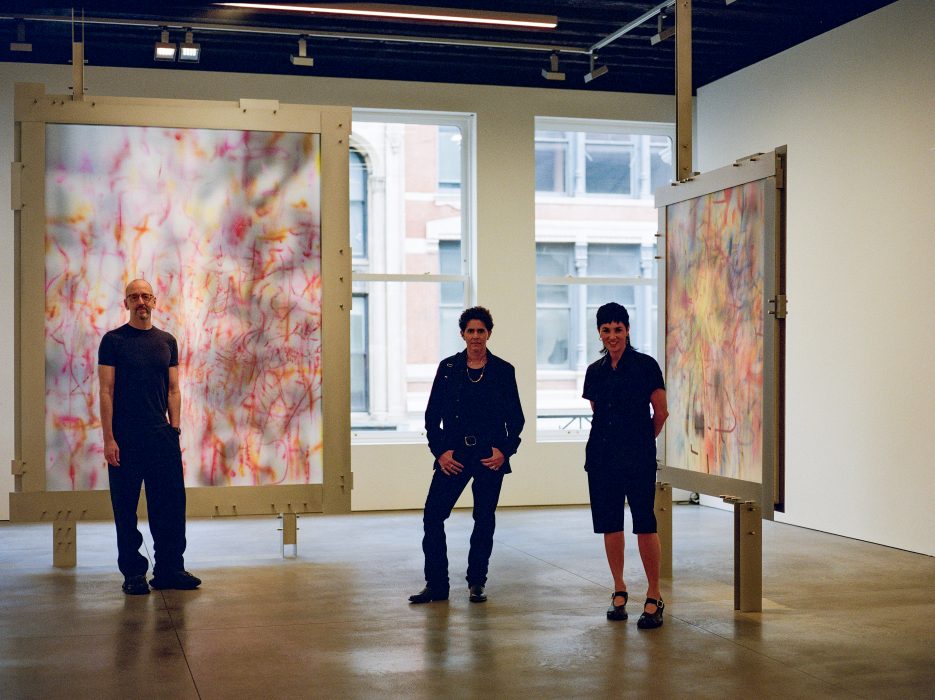
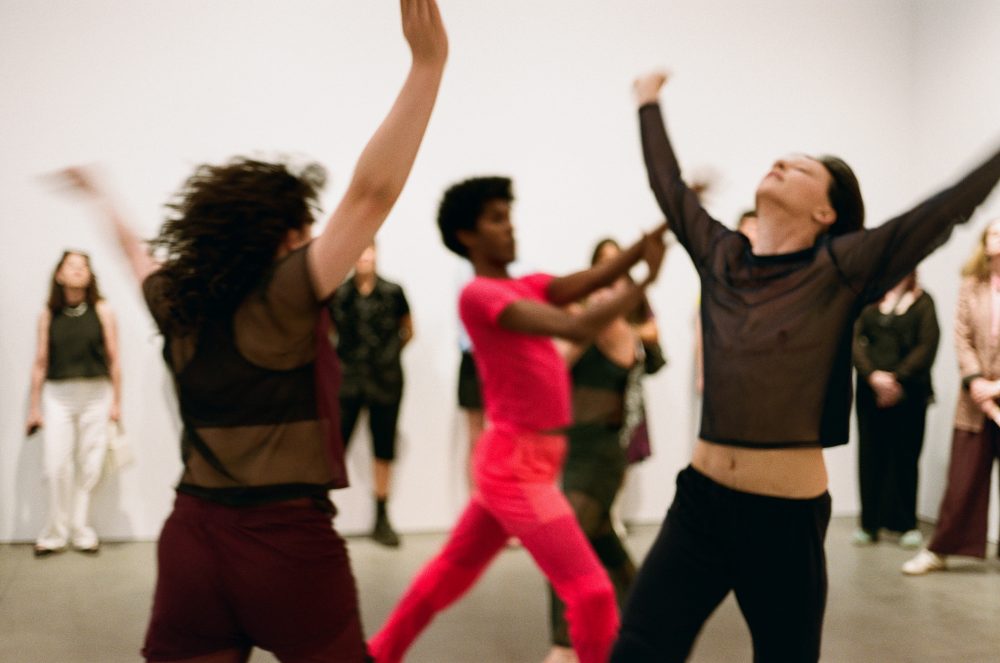
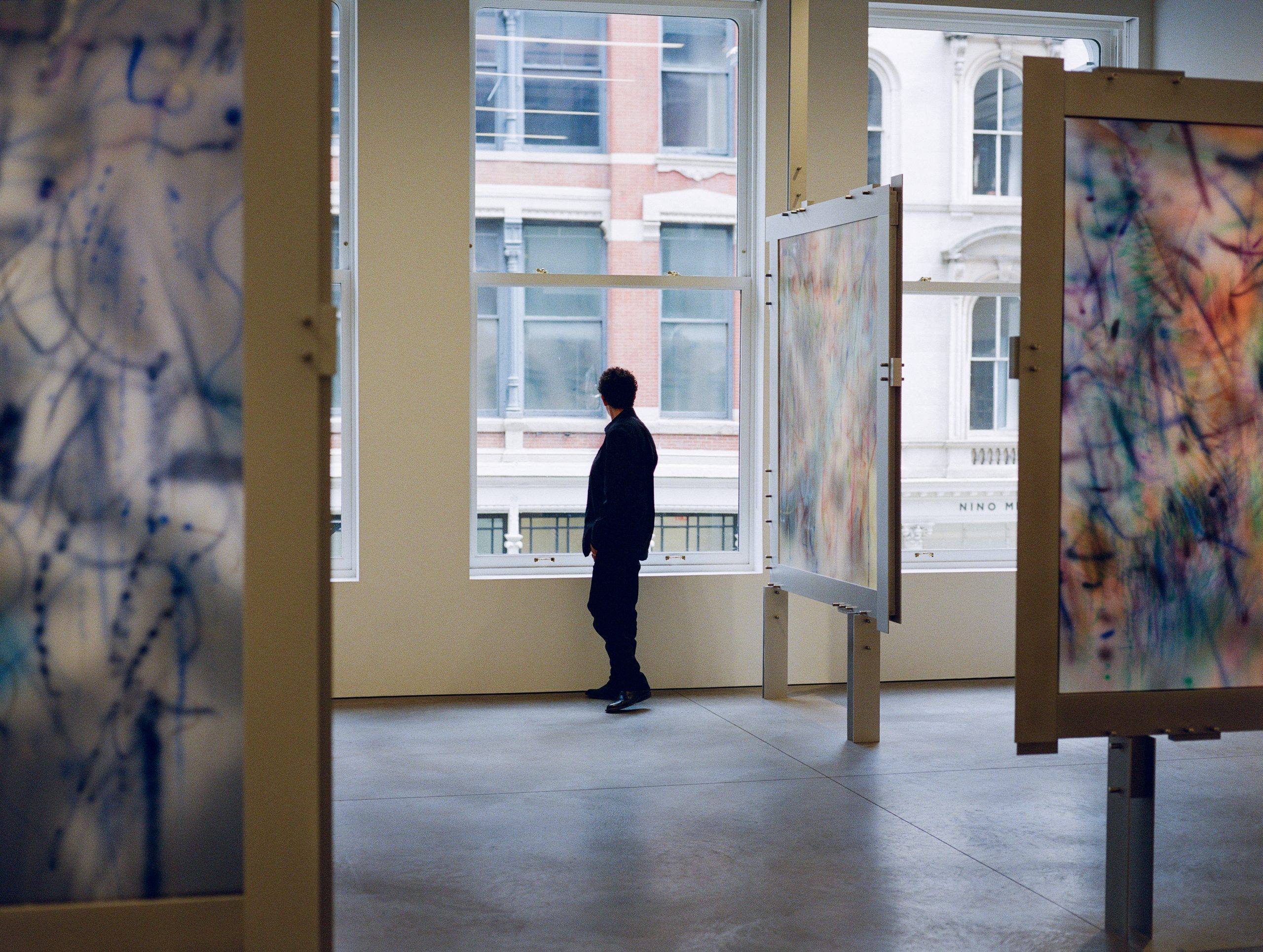
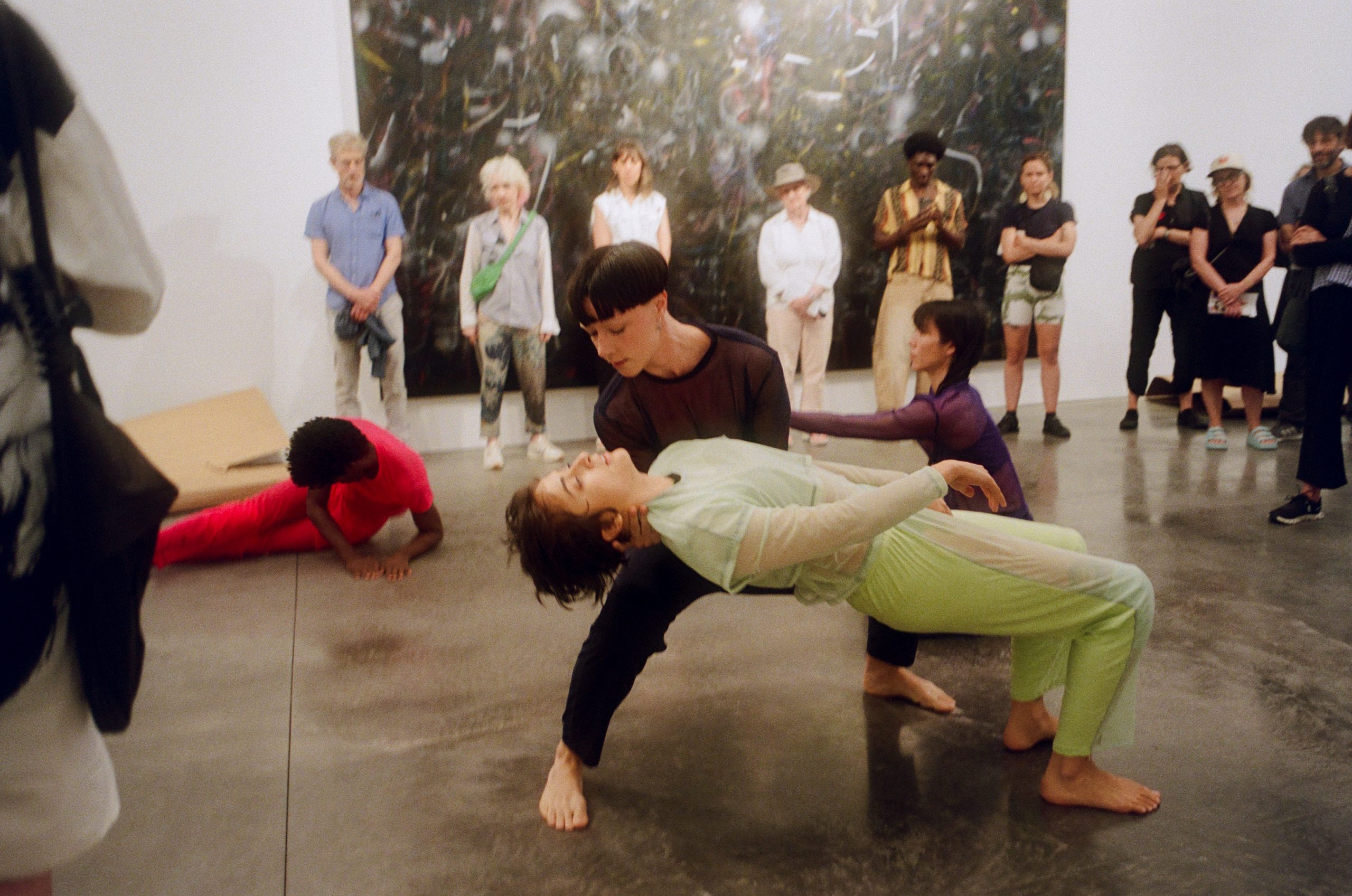
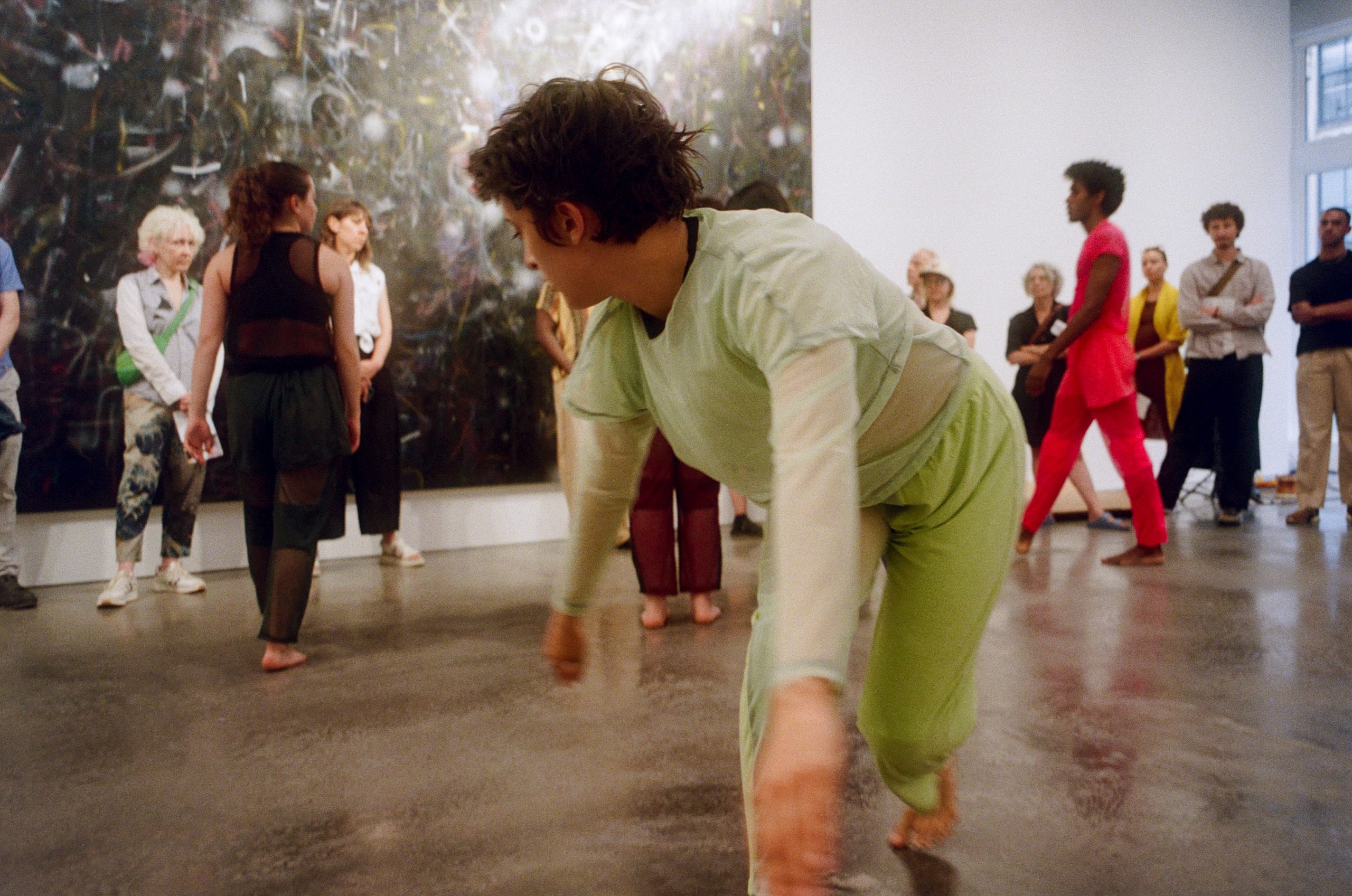
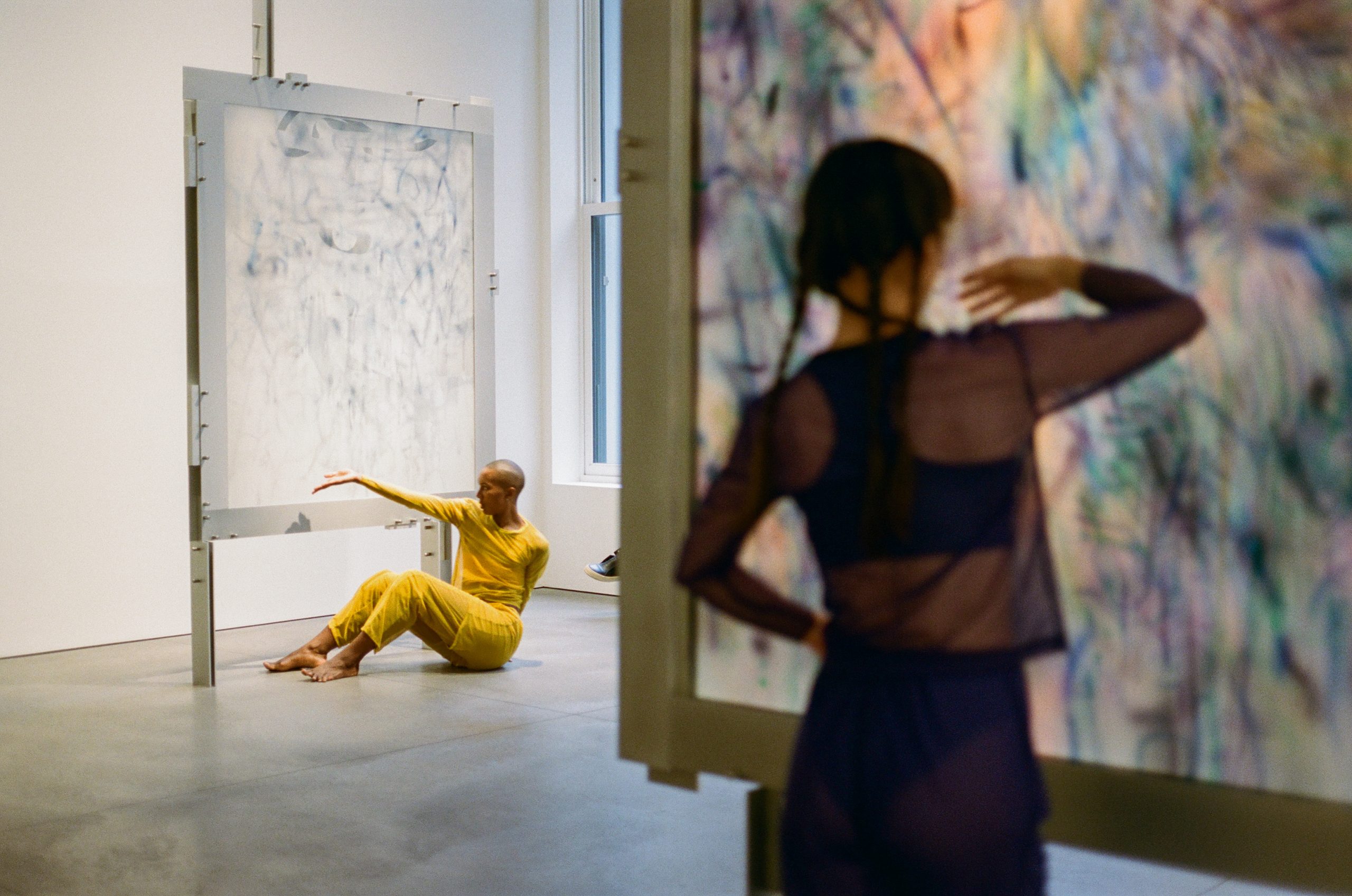
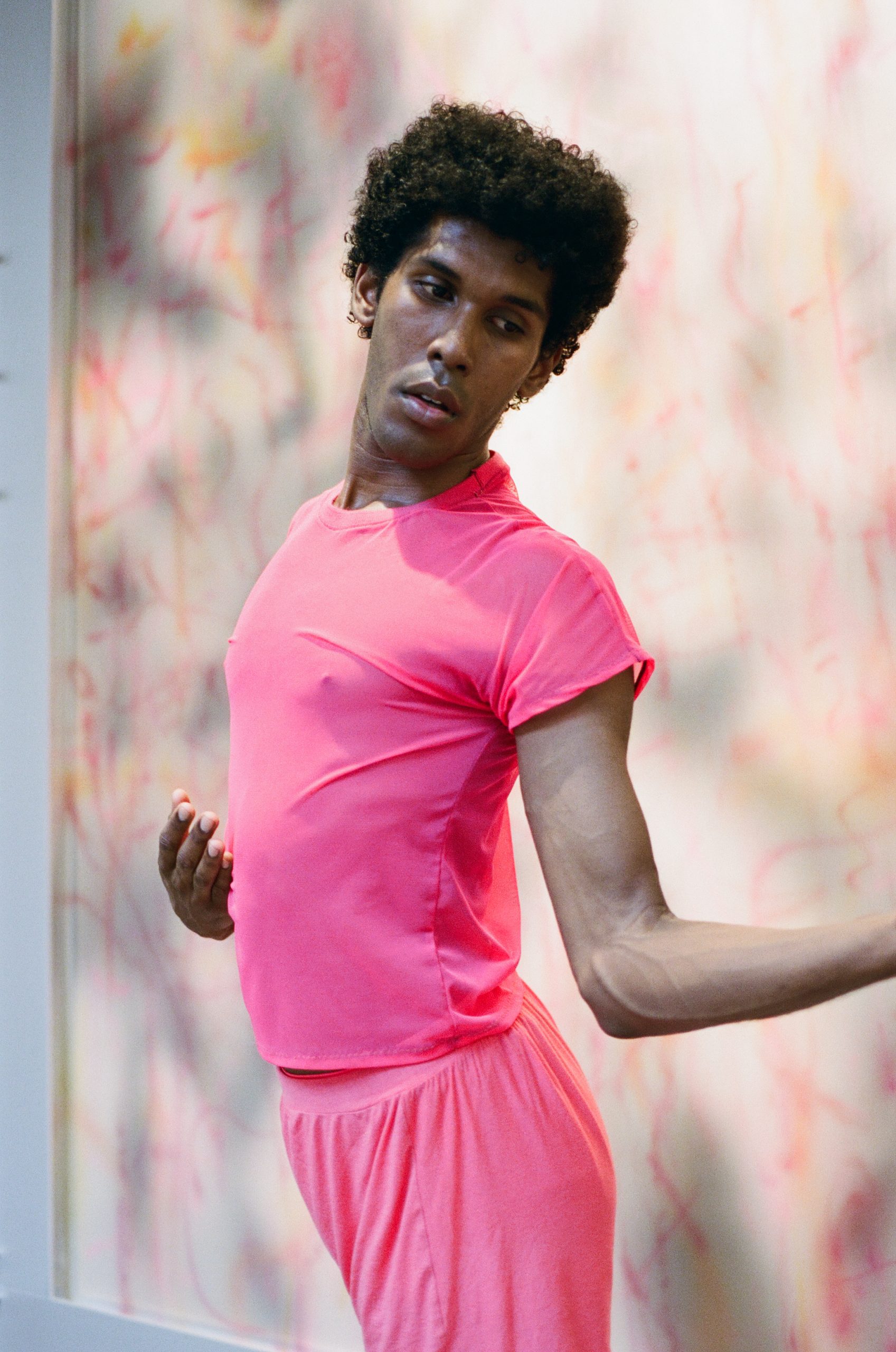
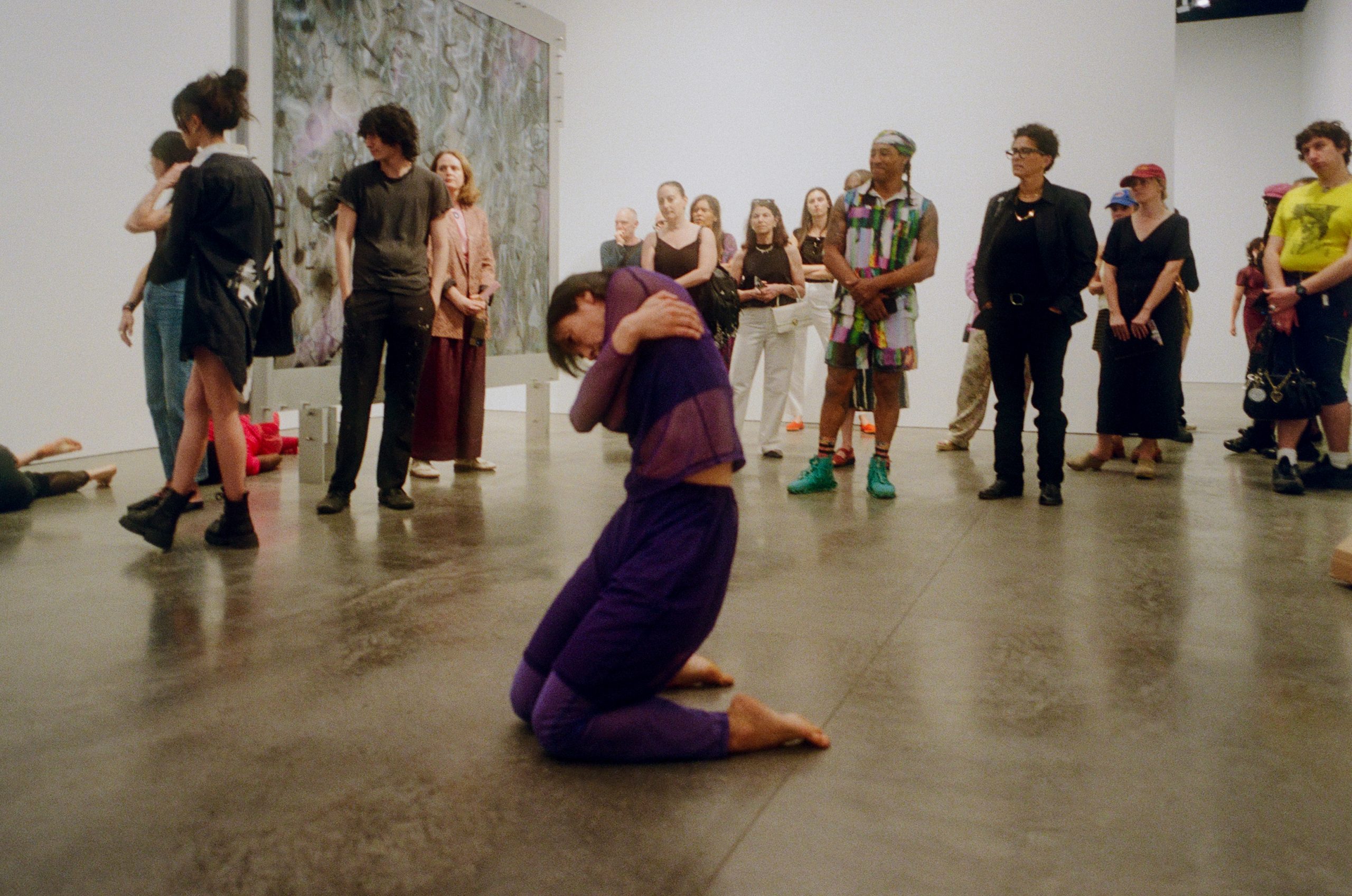
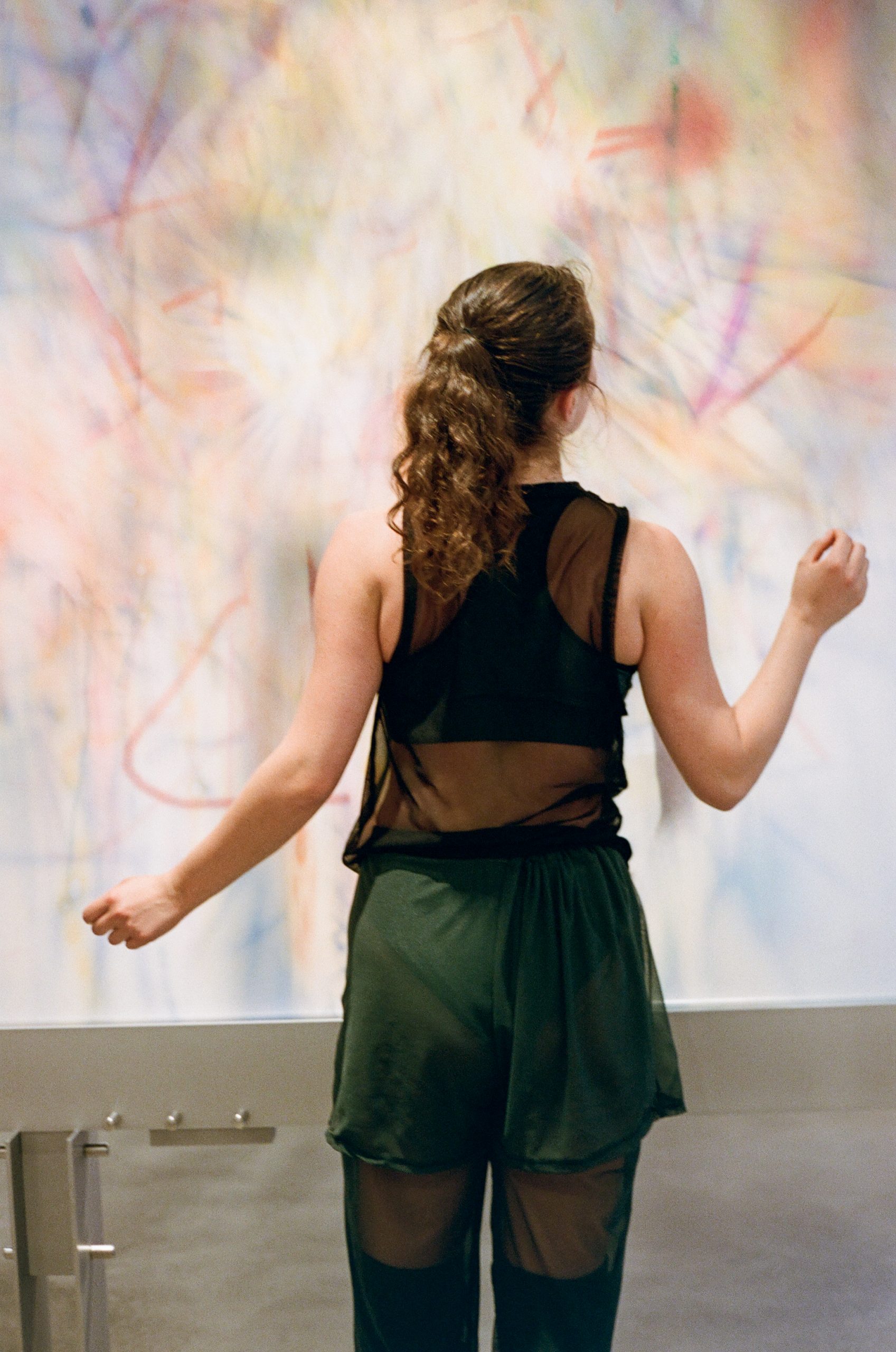
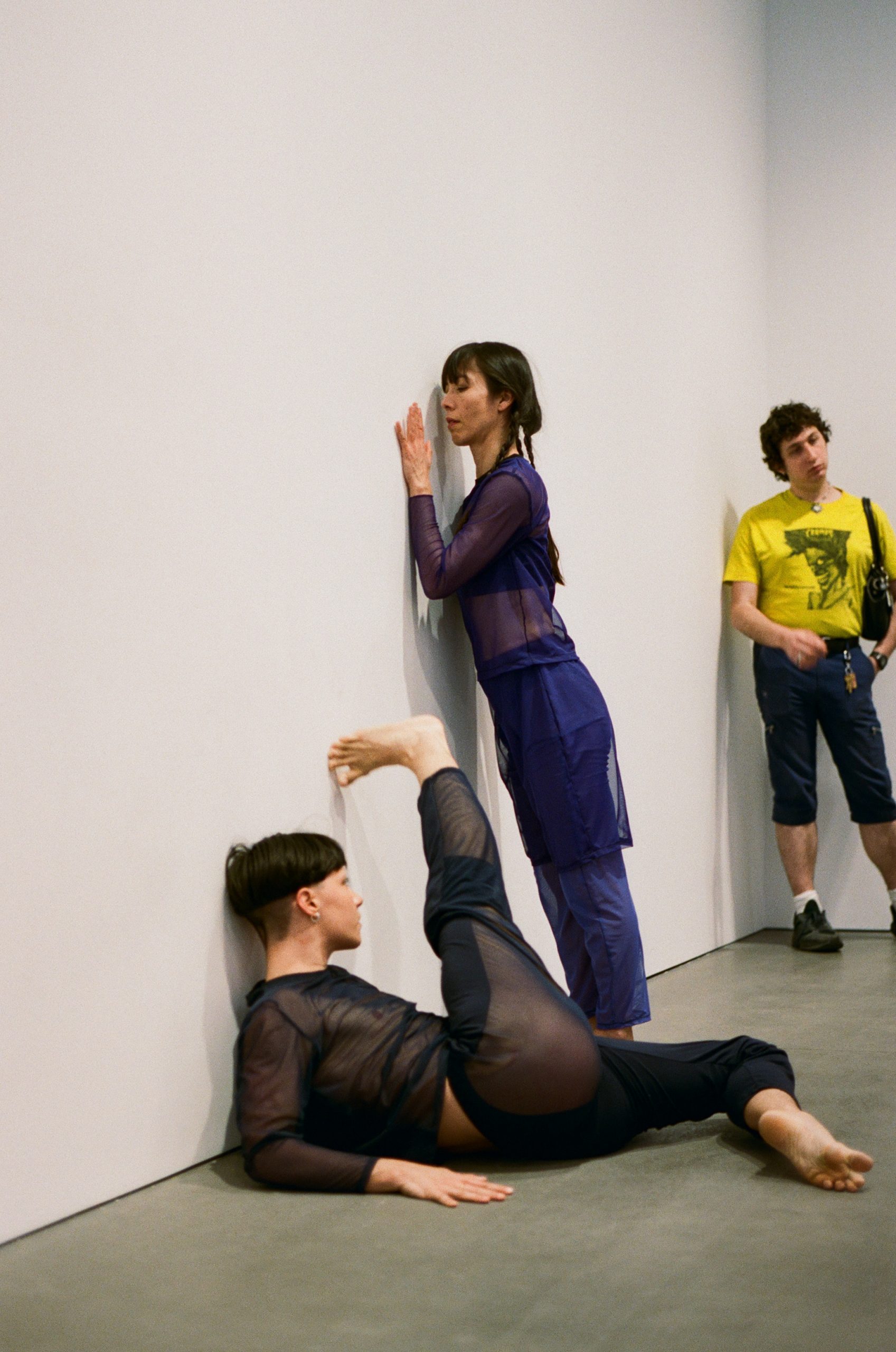
Unfolding across the gallery’s three floors, the performance will guide seven dancers through interconnected spaces where architecture, movement and Mehretu’s translucent TRANSpaintings continually reshape one another. Structured as a vertical progression, the work is experienced sequentially rather than simultaneously – floor one, then floor two, then floor three – each level holding its own choreographic and sonic atmosphere. Composer Hahn Rowe shapes the sound across the first two floors, while Will Johnson scores the third, where Mehretu’s black paintings anchor the final space.
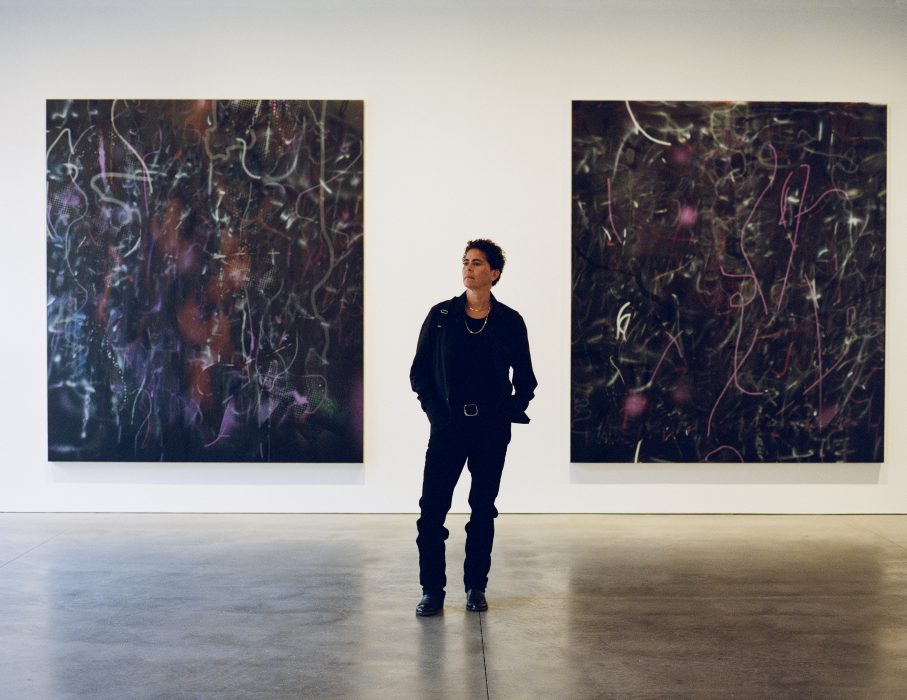
We first spoke with dramaturg and producer Ariel Osterweis, who has accompanied the project from its earliest conversations through to its final spatial choreography. She introduced her partner, the artist Julie Mehretu, to choreographer and longtime collaborator John Jasperse after recognising a shared investment in abstraction, and has since remained closely involved as the work took shape. “It is a project of intimacies,” they explain, built on trust, shared curiosity and time.
Less than an hour before Wandering premiered, dancers stretched quietly as Marian Goodman Gallery held the nervous anticipation of something about to begin. We met Julie Mehretu and John Jasperse in that suspended moment.
 I’m lucky enough to catch you just before opening night, moments before the work is shared with the public for the first time. How are you both feeling at this threshold?
Julie Mehretu: I’m excited and a little emotional. I’ve only ever experienced the work through video, never as a complete installation in the gallery with the dancers, the audience and the sound. Tonight will be the first time I’ll see it as it was meant to exist. I think I might cry.
John Jasperse: This project has always depended on the audience. From the beginning, we imagined viewers not as spectators but as participants – people whose movements through the gallery shape the choreography just as much as the dancers do. The work only really comes into being once it’s inhabited. That’s what makes tonight so exciting. We’ve spent months imagining this encounter, and now we’re finally about to discover what happens.
Julie: Because of the scale of the space, the audience can’t help but become implicated in the work.
John: Exactly. The choreography isn’t only about the dancers; it’s also about how everyone shares the space. The way people circulate, what they choose to look at, how they encounter the paintings and one another – all of that becomes part of the piece. That sense of cohabitation, of existing and moving together, has been at the heart of the collaboration from the start.
It’s also your first collaboration, a dialogue between a painter and a choreographer. How do you construct a dynamic when you’re working together for the very first time, and how does a shared language emerge?
John: One of the things that has been so fascinating – and that continues to unfold through the process – is discovering the touchstones we’ve each carried for years. Every so often we stumble across something that resonates immediately, something that has always felt like a beacon.
For example, there’s Walter Benjamin’s text on Paul Klee’s Angelus Novus and the idea of history as the accumulation of the wreckage of human action. I had no idea that one of Julie’s transpaintings carried a subtitle referring to that Klee painting, while Benjamin’s text had already served as the epigraph for one of my own works years ago. It’s been remarkable to discover things that feel like home in someone else’s imaginative world. That’s been the real surprise of this collaboration.
The audience also becomes part of that dialogue. Because of the scale of the gallery, nobody can ever see the whole work at once – you are always making choices about where to look. Early on, Julie pointed out the building’s original architecture, this former double-wide factory with its archways, and suddenly the space itself became another collaborator. It began to feel almost like an organism: doubled, stacked, compressing, almost undergoing mitosis. Those weren’t ideas I had initially, but they’ve become central to how I think about the choreography, the exhibition, and the relationship between them.
The audience’s movement changes my experience just as much as my actions shape theirs. A genuinely dialogic space emerges, where our actions reverberate through one another’s experience. We’re not occupying separate bubbles – we’re cohabitating in the construction of the work.
Julie: We kept realizing we were returning to shared references without ever having planned it. Caravaggio, for instance, has become such a touchstone for both of us.
But what feels genuinely new is the way this collaboration has opened up a different understanding of space. As John mentioned, I keep thinking about a sense of doubling: echoes, reverberations, the way something happens and then happens again. The paintings already play with those ideas in an oblique way, asking how we perceive something from the corner of our vision as much as head-on. Working with choreography has made that way of seeing much more tangible.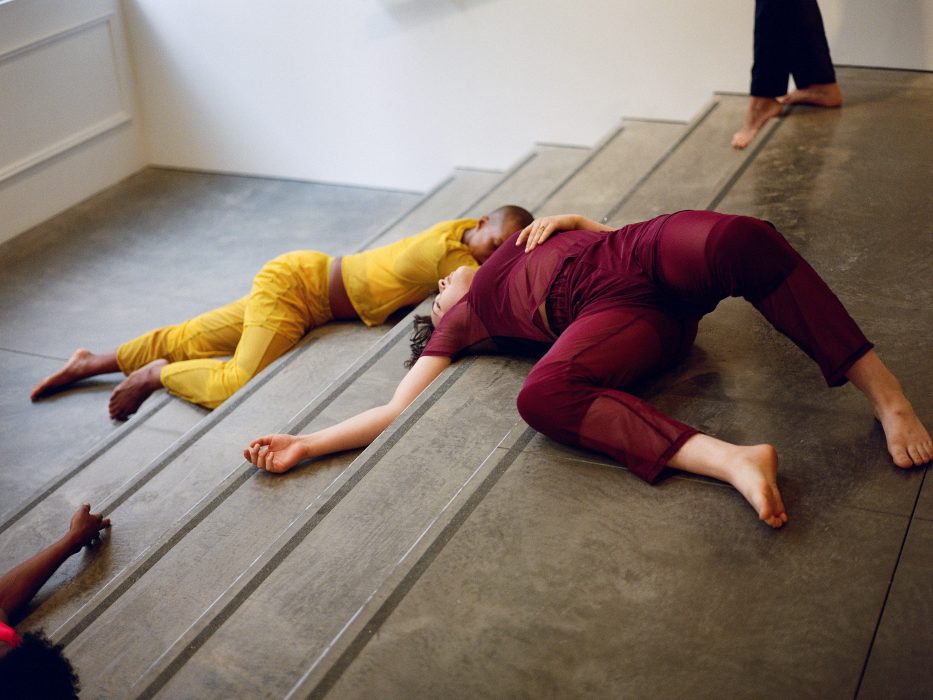
I’d like to dig into how working together influences each of you. Julie, what does the presence of live movement in the space might have opened up in your reading of the paintings? And John, what do the paintings reveal or intensify in your own choreographic practice?
John: The first time I encountered Julie’s work – it was at MoMA in the early 2000s – I recognised something immediately that felt almost choreographic. Even though I was looking at painting, there was this sense of energy, vector, organisation and mapping across the pictorial space. It felt very close to my own choreographic concerns. It was as if she was drawing energy itself.
Julie: That’s interesting, because similar readings started happening around the paintings I made for Documenta*. Jason Moran* once saw them and called them a score – he literally said, “This is a score.” He then brought another collaborator into the space and used them as a way of thinking through performance.
That idea of working alongside, rather than merging practices into one object, really interests me. When you are in conversation or proximity, something starts to bleed across practices even if you’re not making the same work.
And I also see a lot of Renaissance painting in John’s work. Caravaggio in particular feels relevant, because those images are already highly choreographed – yet they also exceed their structure. They’ve shaped so much of how we understand visual culture, from painting to contemporary media.
Even journalistic photography often carries that same inheritance: the way bodies gather, the way scenes are composed, the way narratives are staged. It’s all coming from a longer history of image construction that keeps circulating and reappearing in different forms.
There’s something cyclical about it – the way images we produce today are still structured by earlier ways of seeing, and then reprocessed again through contemporary life.
And with John’s work, what strikes me is this sense of an invisible space being activated. You feel as though the dancers are negotiating forces you can’t see – pulling against something architectural, like tension lines or invisible structures.
The bodies shift between being sculptural and being individual, then they dissolve again into collective form. That movement between states – between presence and abstraction – is what feels so compelling to me. It’s something I’m really excited to see unfold in the space tonight.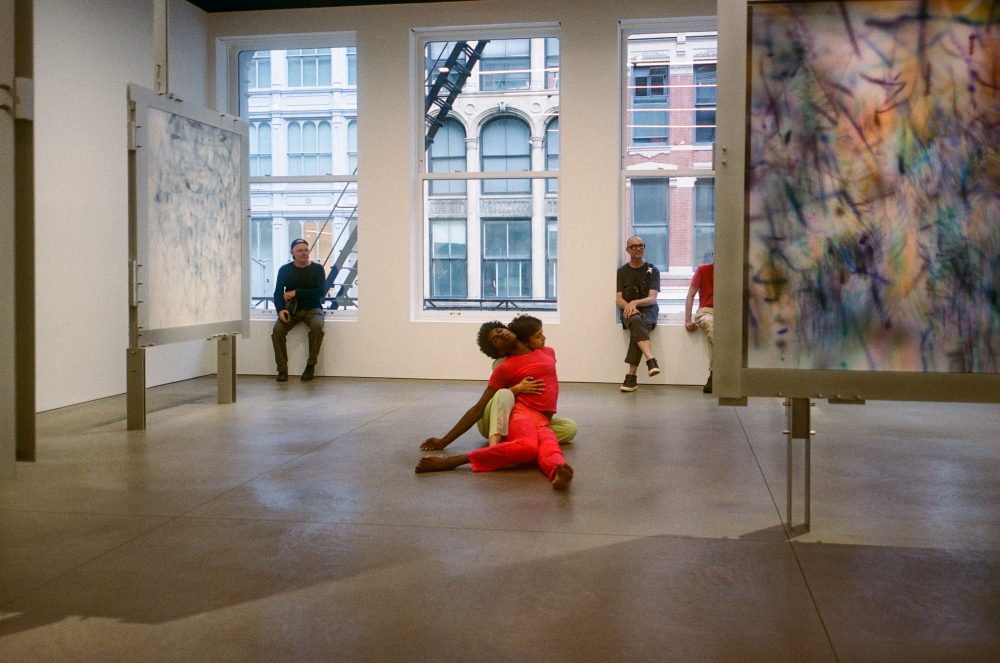
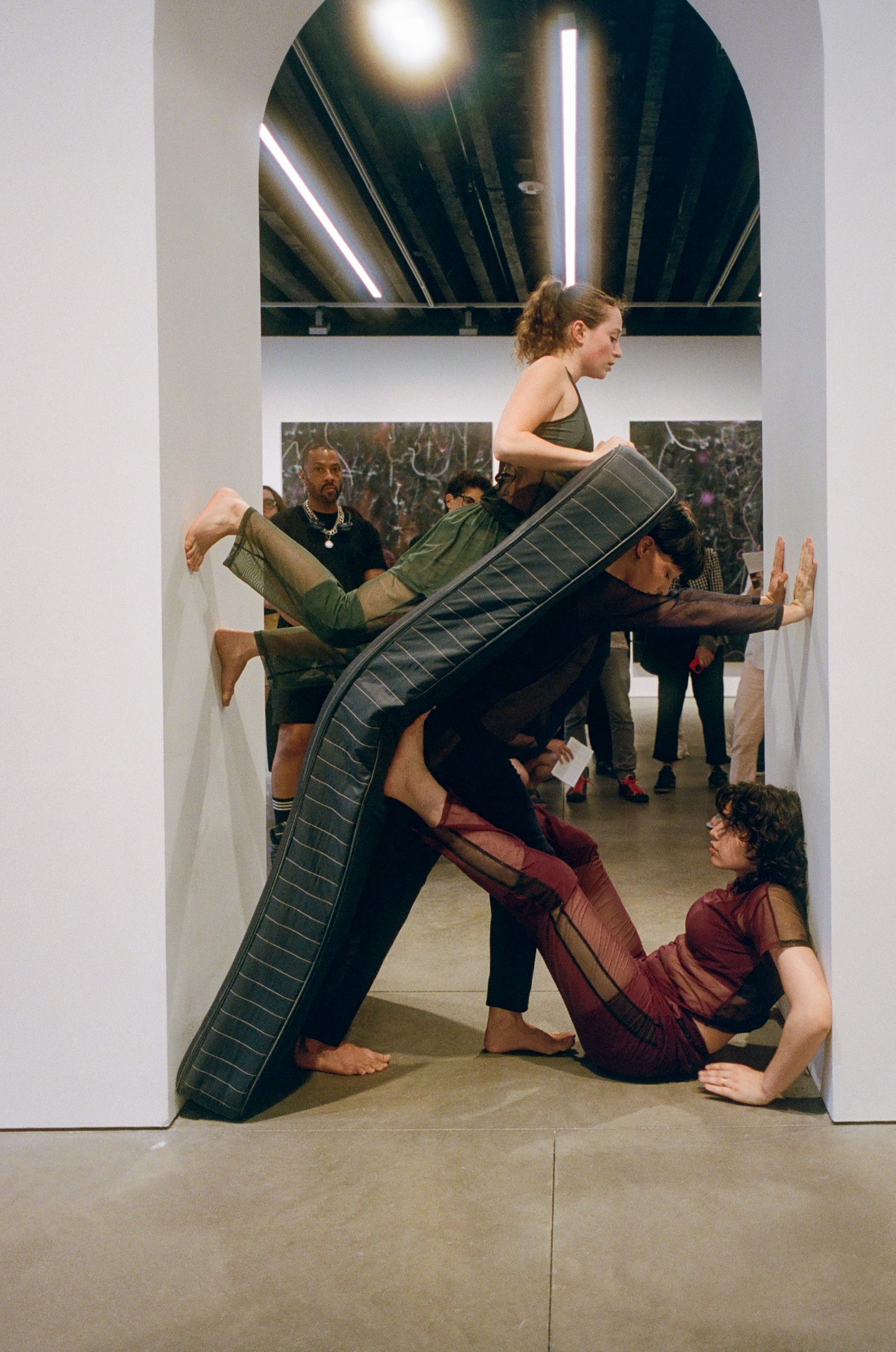
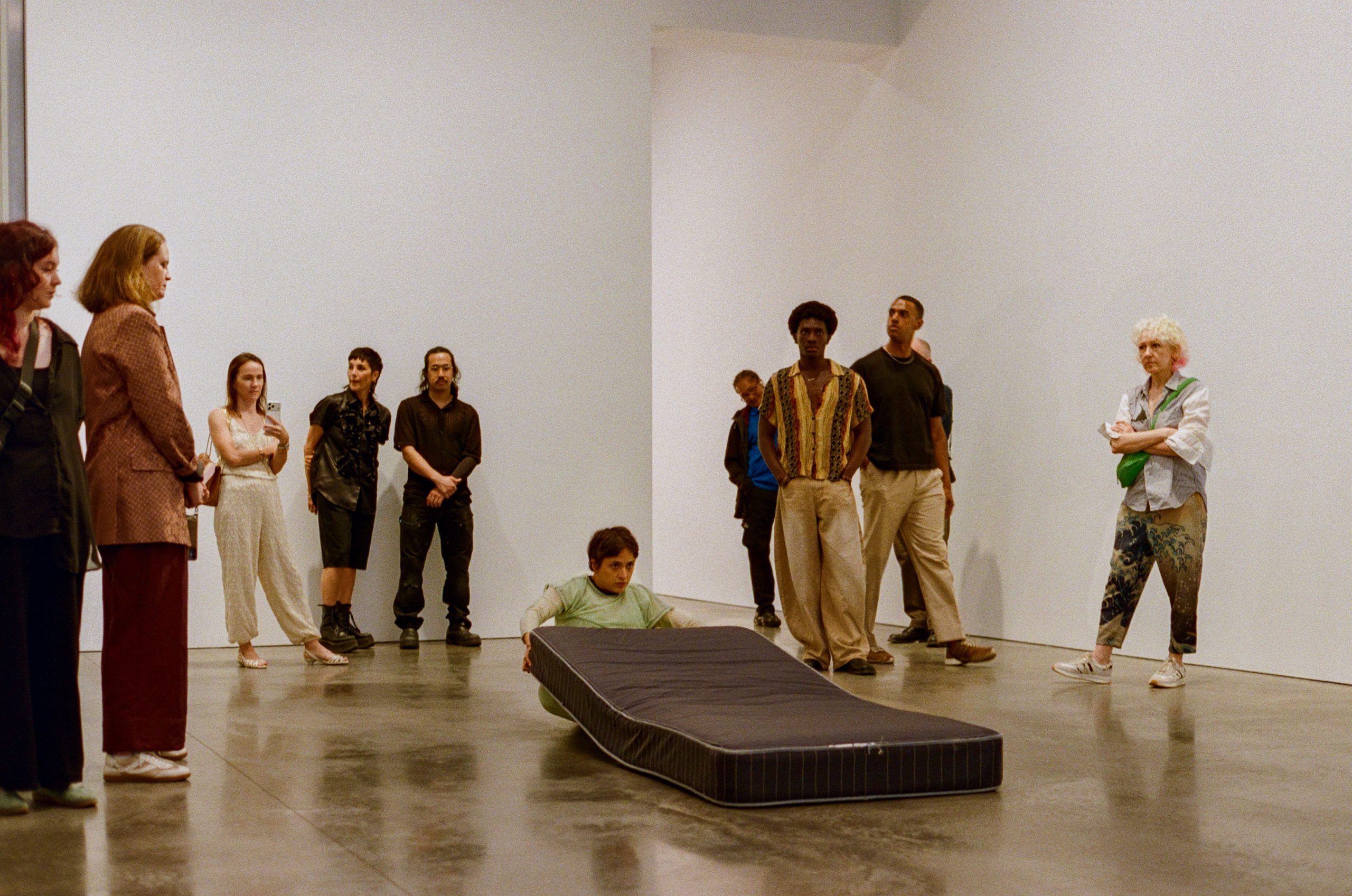
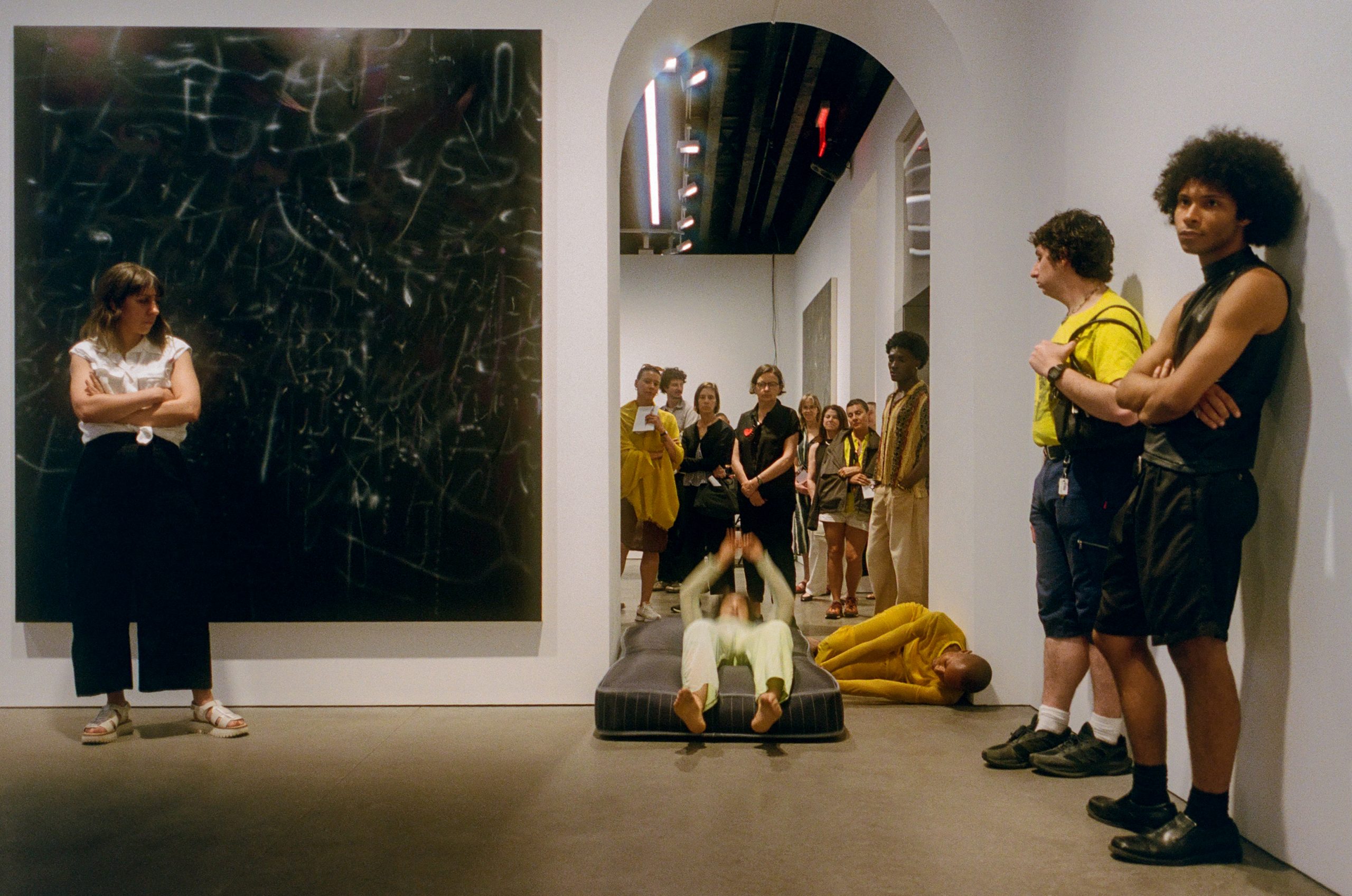
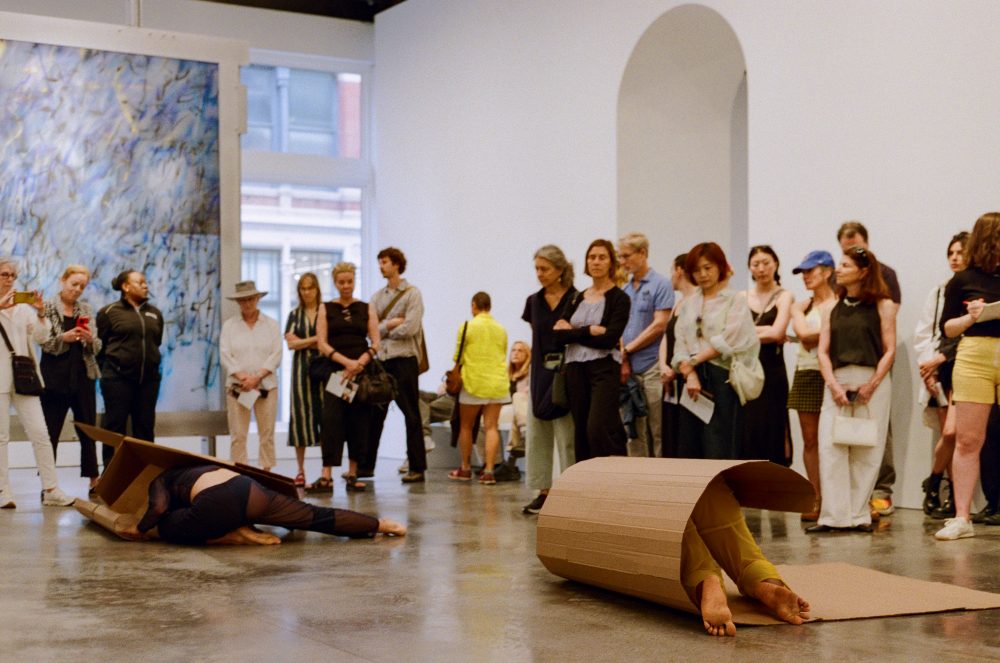
Returning to Wanderings and, somewhat counterintuitively after our discussion of opacity, I want to turn to its material dimension. In images from the work, dancers engage with a large cardboard structure and a mattress. Rather than asking what these objects mean, I’m wondering whether they function in any way as spatial or perceptual anchors for the viewer.
John: The starting point was very practical. We’re working in a gallery with concrete floors, and I needed to think about how the performers could have physical vitality without injuring themselves. So the idea of padding came first.
From there, we were looking at source imagery connected to Julie’s work* – photographic material that isn’t directly legible in the paintings but still leaves a trace. One image that stayed with me was of displaced people in a shelter space, where mattresses are laid out in rows. Each one becomes a kind of temporary home, almost like a raft or a surrogate structure of safety.
That led me to think about the mattress as a threshold object: something that creates a private zone inside a shared, exposed environment. And then, almost immediately, the question of the rectangle appeared – because the mattresses are rectangular, and so are the paintings, and so is the gallery space itself. Those formal correspondences start to generate meaning, but not in a fixed way.
The cardboard emerged alongside that as another material with a different kind of haptic and somatic quality. It’s fragile, protective, improvised. And yes, it also carries associations with how unhoused people use materials to shield themselves from environments that are not built for them.
But I’m careful here, because the moment you name those associations too directly, the work risks being fixed into a single reading. That’s not what we’re doing. There are associative threads, but they remain light and non-insistent.
So for me, it’s always both: material structure and formal relation – rectangles within rectangles – but also these wider resonances that are allowed to hover rather than resolve.
Julie: Yes, and I would agree. It is all of that, but it is also purely formal and material. The cardboard doesn’t function as a literal substitute for a dwelling, and the mattress doesn’t operate as a representation of housing either.
They become something else in the space – another body among bodies. The dancers fold into them, move with them. At the same time, of course, they still carry those wider social realities. We cannot completely separate them from what we see and experience in the world.
John: One thing I should say is that from the beginning I was aware of the risk of over-determining what these objects “mean.” The paintings are the primary visual field, and everything else has to remain careful not to overwhelm that.
What has been exciting in working with Julie is the openness – this sense of “let’s see what happens,” without needing to stabilise the work too early. That kind of trust is rare.
Julie: Yes, and it’s been very generative. Neither of us is interested in repeating what we’ve already done.