TO HERALD A STORM
By Emma Chauprade
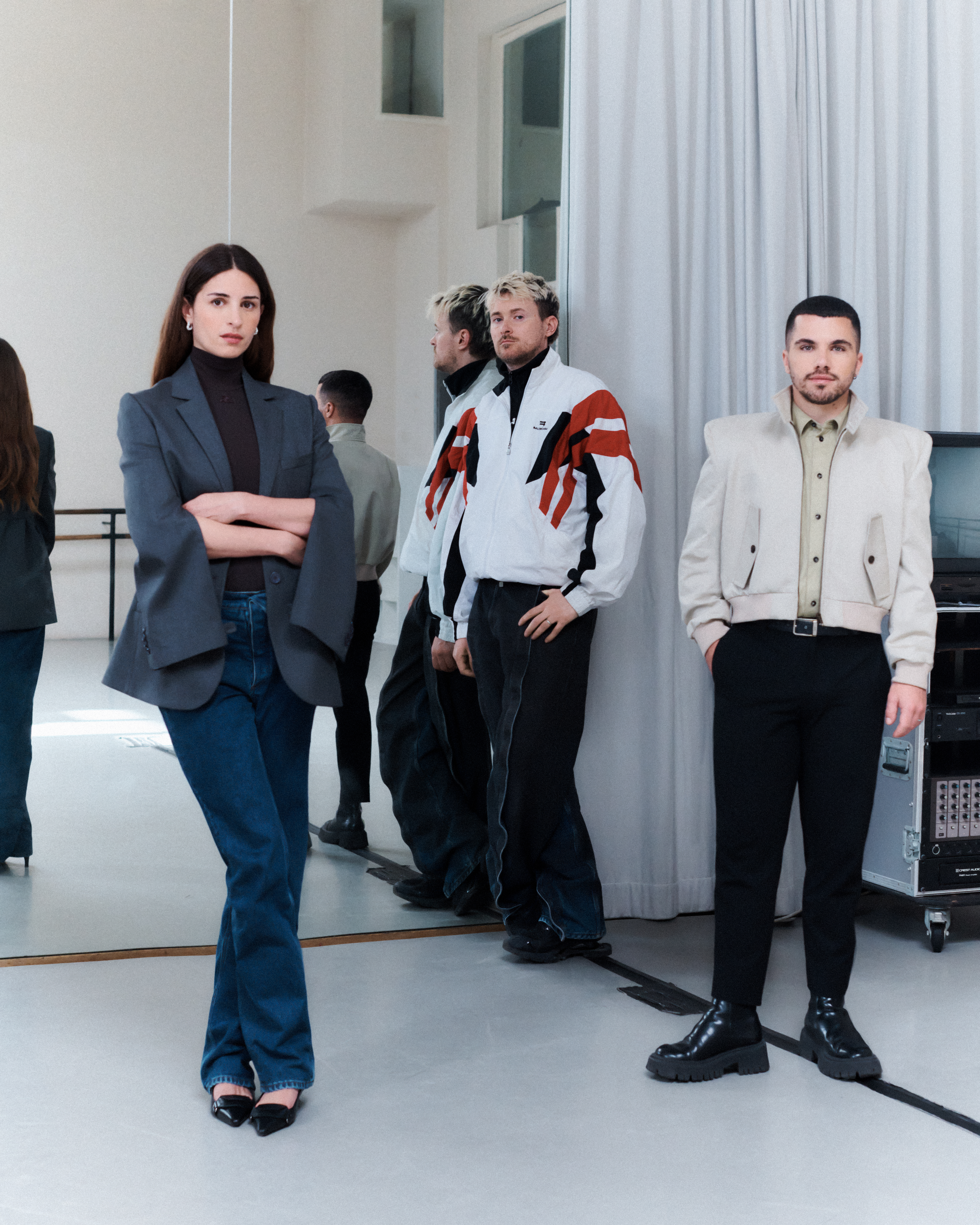
MARINE BRUTTI, JONATHAN DEBROUWER AND ARTHUR HAREL MET IN THEIR TWENTIES. MULTIDISCIPLINARY AND UNDISCIPLINED ARTISTS, THEY FOUNDED THE COLLECTIVE (LA)HORDE IN 2013. WHEN TELLING THE BEGINNING, THEN OFTEN LIKE TO MENTION THEIR INITIAL DESIRE TO COME TOGETHER AS SOMETHING GREATER THAN THEMSELVES, SOMETHING THAT WOULD ALLOW THEM TO EXPLORE THEIR SENSITIVITIES TOGETHER, WITH DANCE AT ITS CORE YET REACHING FAR BEYOND.
Après moi, le déluge seems to gauge the pulse of the world as it comes: ambiguous, strange, and human against all odds. The creation tells the disquiet story of our insatiable quest to enhance our sense of reality, whether through our modes of perception or our own bodies.
Pierre Martinez is co-director of the Agora, Cité Internationale de la Danse, alongside Jann Gallois, Dominique Hervieu and Hofesh Shechter. This year, the first edition of the Festival Montpellier Danse led under the curation of this collective leadership will present the world premiere of Après moi, le déluge: “We’re waiting for you.” Spoken with kindness, Pierre’s words sum up the current state of (LA)HORDE’s pathway: eagerly awaited and watched, with all the recognition, hope and pressure implied.
Après moi, le déluge is the third production presented by the trio in collaboration with the Ballet National de Marseille (BNM). Completing the trilogy started with Room With a View (2020) and Age of Content (2023), this work is the result of seven years of artistic direction led for the company, those they refer to as ‘experts’ and ‘thinkers of the body’. Alain Damasio calls them ‘alert dancers’. The science-fiction author and typopoet has witnessed the collective throughout the creation of Après moi, le déluge, for which he wrote the opening programme text. And what better writer to bring to life the dystopia that has been taking shape? The obvious connection between two different forms of creative expression, centred on a shared concern—what do we still have in common? comes full circle: “We owe our name partly to Alain: La Horde du Contrevent (publ. La Volte, 2004) traces the initiation journey of a group of individuals gathered to brave the wind and discover its source.” It is the story of a collective breakthrough, a crossing through movement.
The Battle for the Imagination
When the subject of stage and costume design comes up, Marine begins by pointing out that there is a whole ecosystem around each creation, to bring an aesthetic vision to life with unprecedented rigour and depth. The time devoted to these projects and the surrounding teams now enable them to realise their dreams, thanks to production resources that, even though certainly undermined by the precarity of the current cultural policy, remain essential. A long-term collaborative effort, such as with costume designer Salomé Poloudenny and composer Pierre Avia, with whom the trio has been working for years.
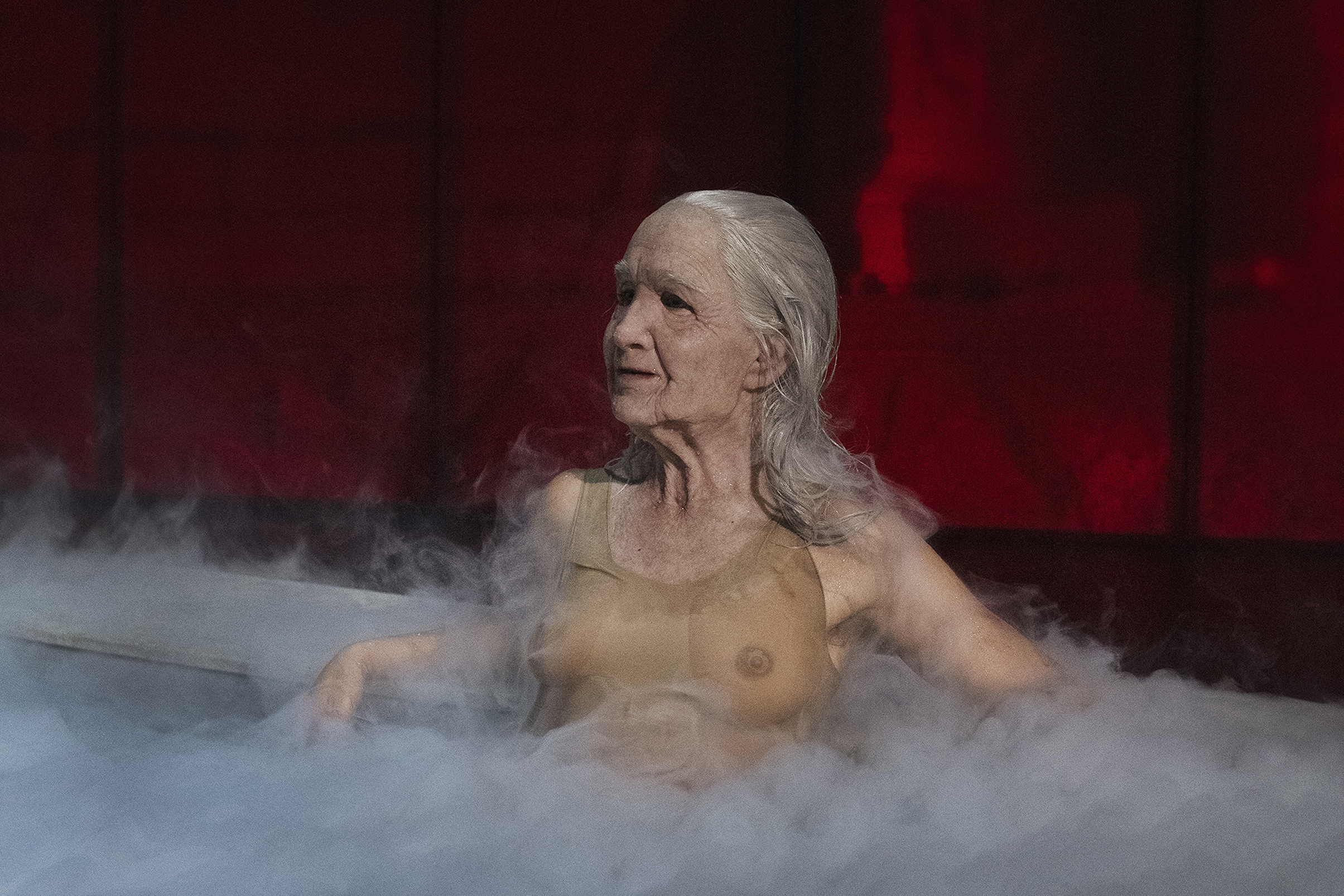
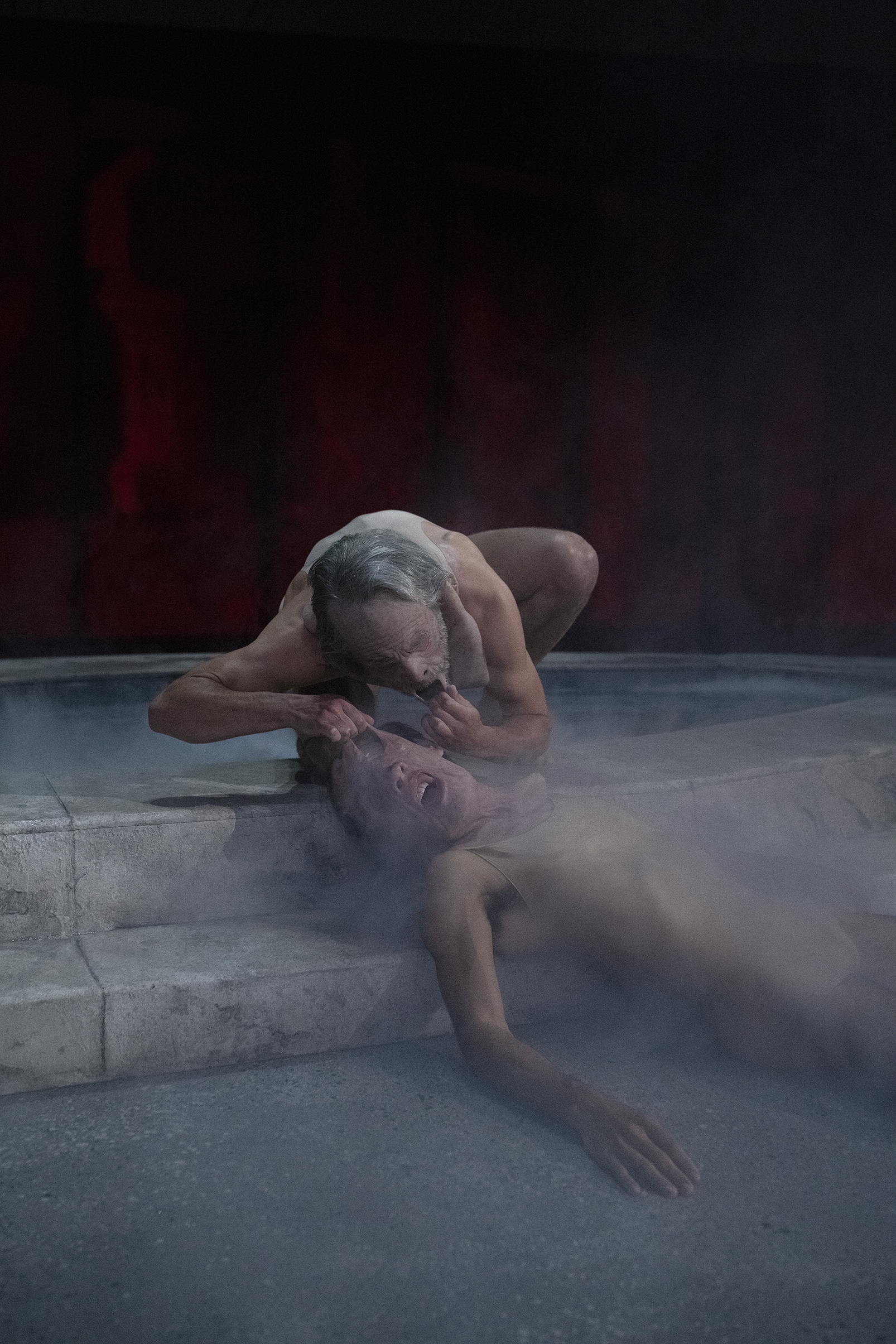
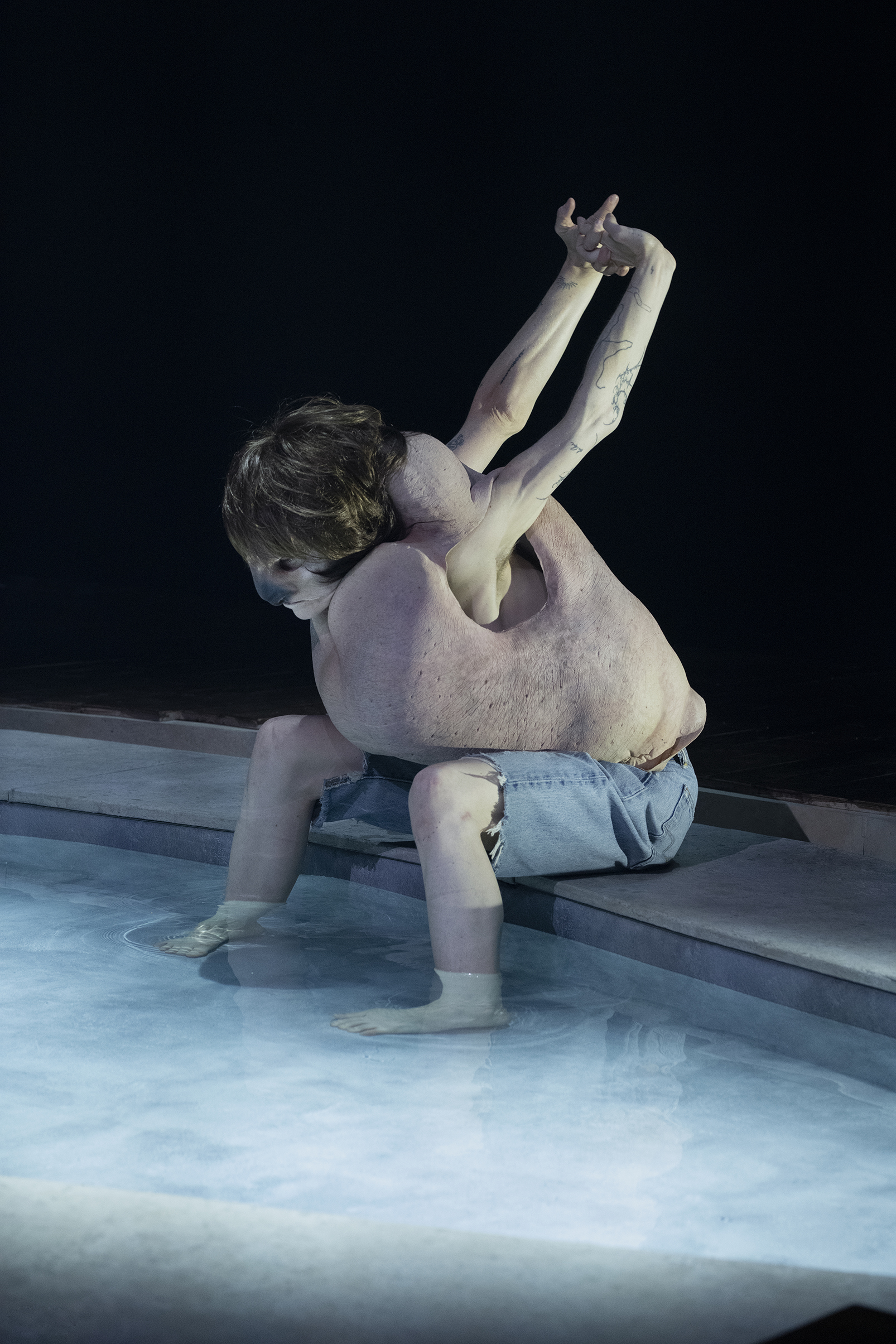
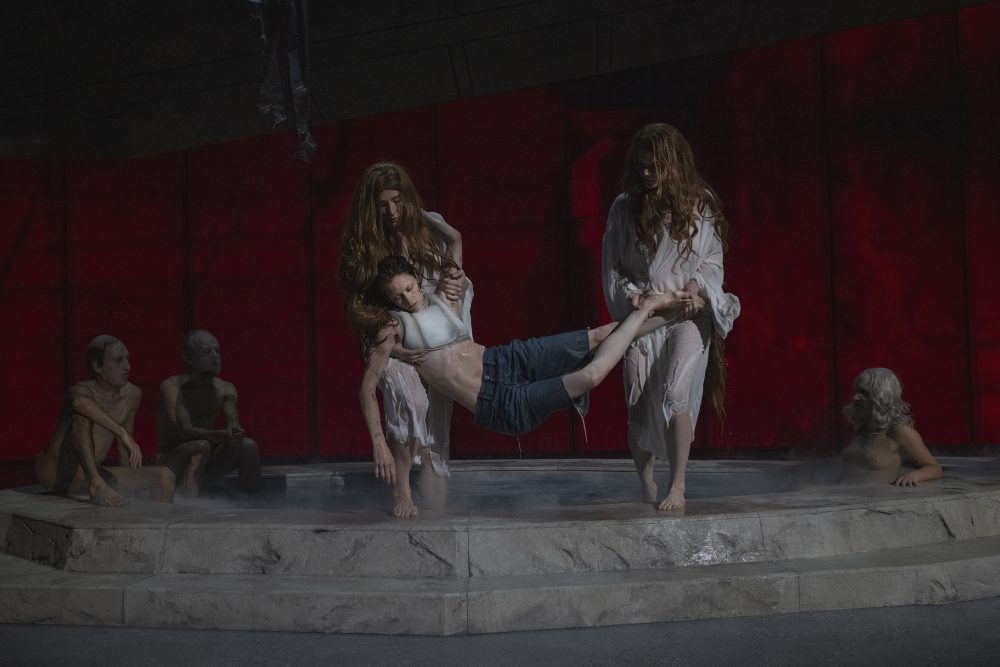
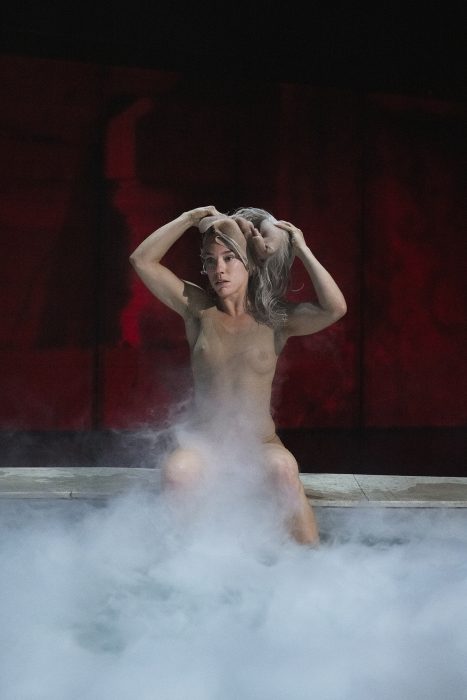
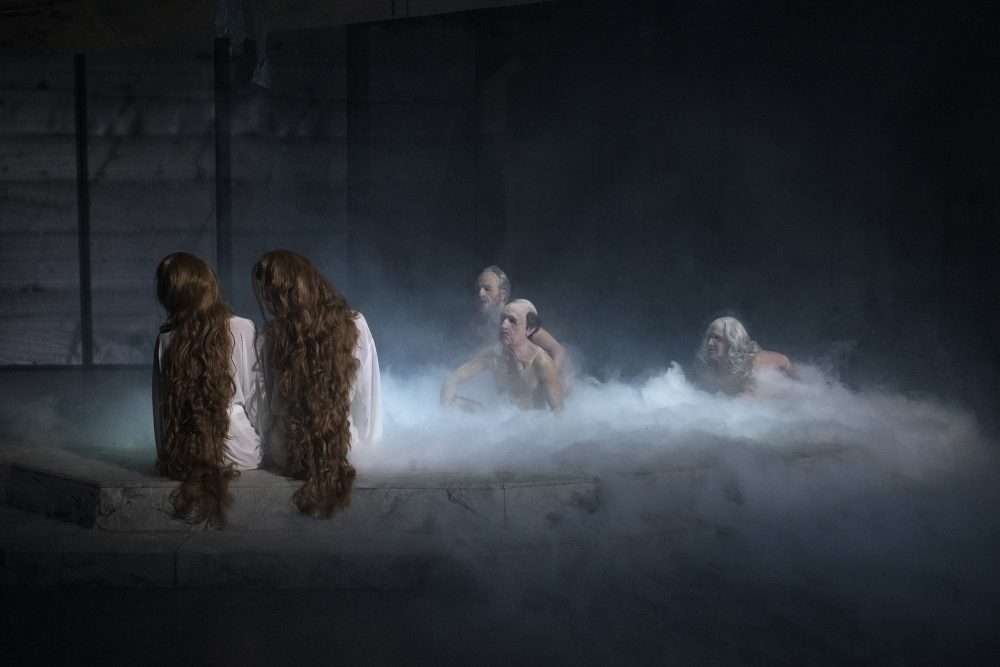
The commedia dell’arte (one of the key aspects of the creation’s universe) plays with ambivalence, caught between the art of the grotesque and a certain distance from its own caricature. As one of its motifs, the mask echoes the act of dissimulation, while prostheses turn the dancers into monsters, as external elements altering their movements—restraining or enhancing them. Theu so become chimeras evoking transhumanism and reflecting concerns about phenomena such as biohacking, pursued by the ultra-rich in their quest to abolish the passing of time and death.
Under the exploration of self-representation and politics, lies the idea of documenting current events through a cinematic lens. The interplay between fiction and testimony draws on cinematic references, which bring to build an shared imagination—among other movies, Elephant (Gus Van Sant), The Social Network (David Fincher), or Underground (Emir Kusturica).
The setting is not merely a backdrop or a simple context, but rather a theatrical device on its own. A dramatised space-time, far from being definite; one cannot assert whether this emerging hole is a basin, a swimming pool, a Fountain of Youth, an abyss or a jacuzzi. Costumes and set design help to outline an identity and convey something of an ambiguous and somewhat gloomy theatre, where nothing just stands still—moving, rather. Thanks to the stage machinery, the floor, goes up and down; the dancefloor becomes the ceiling. Thus, this ‘non-place’ where Après moi, le déluge unfolds continues the reflection on heterotopias (Michel Foucault) begun with the very first productions imagined by (LA)HORDE.
Meanwhile, a camera broadcasts live-recorded images. Already part of their artistic practice and featured in some works from their dance repertoire, the camera takes on a role and a freedom never seen before Après moi, le déluge: initially suspended from the curtain, it then moves around the stage, passes from one artist to another, and dances with the gaze of the audience. Its movements, broadcasts and close-ups not only explore the role of image interpretation and representation in a society of surveillance and self-performance—a society that pushes us to put ourselves constantly on display, and thereby gives us an unprecedented glimpse into intimacies.
Take care!
The choreographic material itself is steeped in pop culture. The piece draws from slam, a dance form to be found in concert crowds and pogo dancing. A vocabulary of movements explored from kicks to arm swings, expresses collapsing bodies as a social symptom. To translate this inspiration into choreographic language forces the dancers to manage their breathing and effort. With the virality of some movements on social media as a red thread, Age of Content and Après moi, le déluge echo each other: what we see are people trying not to finish out of breath.
Arthur puts their emotions, both individual and shared, at the heart of their work. By drawing on pop culture, the musical curation takes them back to their teenage years, rekindling deeply emotional memories.
As children of capitalism and teenagers immersed in the neo no futur movement, all three sense the danger of seeking refuge in the individualistic culture of care. This value, which the trio considers fundamental (particularly within the queer community in which they have evolved) is today exploited by the neoliberal system, which frames it less as a social than egocentric issue. For the sake of what kind of well-being, what kind of security, do we let ourselves be consumed by such solitary habits, rituals and practices? Alain Damasio highlights the importance of dance as a catharsis, at a time when the hegemony of body constraints and normativity aligns with that of artificial intelligence.
An invitation to cultivate caring as a collective act, that found its concrete ground during one of their trips to Japan. Jonathan recalls their encounter with a cultural system that places care at its very heart, and as a very different kind of value. He also highlights its ambivalence, while reflecting on Spirited Away (Hayao Miyazaki), in which care is pushed to the limits of the body—through caring for monsters. To demonst(e)rate care in front of “these predators we born from and within our education systems” (Alain Damasio), we must create spaces of kindness and trust.
What makes a horde?
We don’t get surprised enough that the word ‘movement’ refers both to an individual gesture and to a collective action. A mechanism that tends to be both personal and common, where single aspirations from dancers intertwine: the aim is to articulate them, by sharing knowledge and anger, experiences and feelings. Après moi, le déluge comes after seven years of collaboration with the BNM, and it shows through their work: their relationships are more direct, more intimate.
Once again, Marine reflects on their luck: “We’re part of an institution, we have job security, and we have to reinvent the system. Beyond the joy of collaborating with artists, we’ve implemented things.” She then refers to their intimacy coordinator Julie De Bohan for this creation, with whom the artists have been able to rediscover their voice, within the frame of a performance that is not a space for vanity—when prostheses challenge the relationship with their body, or when embodying characters they must be able and willing to take on.
These are all issues that arise during rehearsals, as in any creative process; Alain Damasio has strived to capture in writing this work in progress, still to be performed. His words hint at something rumbling somewhere, between the basin/swimming pool/jacuzzi and the dancefloor. Between breaths and rhythms, masks and monsters.
Art blossoms from radical fragility and movement. So how to start a horde? Start dancing.
© Benjamin Malapris
L’ORAGE QUI S’ANNONCE
MARINE BRUTTI, JONATHAN DEBROUWER ET ARTHUR HAREL SE SONT RENCONTRÉS DANS LEUR VINGTAINE. PLURIDISCIPLINAIRES ET INDISCIPLINÉS, ILS FORMENT LE COLLECTIF ARTISTIQUE (LA)HORDE DEPUIS 2013. ILS RACONTENT SOUVENT LEUR ENVIE PREMIÈRE DE SE RÉUNIR EN QUELQUE CHOSE DE PLUS GRAND QU’EUX, QUI PERMETTE D’EXPLORER LEURS SENSIBILITÉS ENSEMBLE, PARTANT ET PORTANT BIEN AU-DELÀ DE LA DANSE.
Après moi, le déluge semble prendre le pouls du monde tel qu’il vient : ambigu, étrange, humain. La pièce fait le récit inquiet de notre quête insatiable vers l’augmentation de notre réalité, que ce soit par nos modes de perception ou nos propres corps.
Pierre Martinez co-dirige l’Agora, Cité Internationale de la Danse auprès de Jann Gallois, Dominique Hervieu et Hofesh Shechter. Cette année, la première édition du Festival Montpellier Danse portée par cette direction collégiale présentera Après moi, le déluge en première mondiale : « Vous êtes attendus. » Affirmée avec bienveillance, une parole qui résume bien l’état des lieux pour (LA)HORDE aujourd’hui : on les attend, avec tout ce que ça implique de reconnaissance, d’espoir et de pression.
Après moi, le déluge est la troisième pièce présentée par le trio avec le Ballet National de Marseille. Un dernier opus après Room With a View (2020) et Age of Content (2023) qui vient compléter la trilogie, en sept ans de direction artistique et de collaboration avec celles et ceux qu’ils appellent les experts, les penseurs du corps. Alain Damasio les appelle les danseurs d’alerte. L’auteur de science-fiction et typoète a accompagné le collectif tout au long de la conception d’Après moi, le déluge, dont il a écrit le premier texte de salle. Et quel meilleur écrivain pour sublimer la dystopie qui se trame ? L’évidence d’un pont entre deux expressions créatives différentes, autour d’un même souci : ce qu’il nous reste de commun, rejoint la beauté d’une boucle bien bouclée : « C’est en partie à Alain qu’on doit notre nom : La Horde du Contrevent (éd. La Volte, 2004) retrace le parcours initiatique d’un groupe, d’individus formés en masse pour braver le vent et trouver son origine. » C’est l’histoire d’une traversée, d’une percée collective par le mouvement.
La bataille de l’imaginaire (Alain Damasio)
Quand on aborde la question des décors et des costumes, Marine commence par rappeler que c’est tout un monde autour de chaque création qui permet de traduire une vision esthétique avec une exigence et une profondeur inédites. Le temps qui leur est dédié et les équipes qui gravitent autour de leurs projets aujourd’hui les autorisent à réaliser leurs rêves, grâce à des moyens de production certes fragilisés par l’état actuel des politiques culturelles, mais qui n’en restent pas moins essentiels. Un travail collectif au long cours, notamment auprès de la costumière Salomé Poloudenny et du compositeur Pierre Avia, avec qui le trio collabore depuis des années.
La commedia dell’arte (l’une des influences de l’univers esthétique de la pièce) est habitée par une forme d’ambivalence, à la fois prise dans l’art du grotesque et d’un certain recul dans la caricature. L’un des motifs de ce thème, le masque, invoque le jeu de la dissimulation, tandis que des prothèses transforment les danseurs en monstres. Des éléments extérieurs qui altèrent leurs mouvements, les empêchent ou les amplifient. Des chimères qui évoquent le transhumanisme et reflètent l’inquiétude face à des phénomènes comme le biohacking, ambitionnés par les ultra-riches pour abolir la vieillesse et la mort.
Derrière cette pensée autour de la projection de soi et de la politique, il y a l’idée de documenter ce qui est en cours par un prisme cinématographique. L’articulation entre la fiction et le témoignage se nourrit de références cinématographiques, qui font émerger un imaginaire commun – entre autres films, Elephant (Gus Van Sant), The Social Network (David Fincher) ou encore Underground (Emir Kusturica).
Le décor n’est pas un cadre, un simple contexte mais bien un dispositif en soi, théâtral. Un espace-temps théâtralisé, loin d’être univoque ; on ne saurait dire si ce trou qui émerge est un bassin, une piscine, une fontaine de jouvence, un gouffre ou un jacuzzi. Costumes et décor participent à figer une identité, à raconter quelque chose de la pièce. Un théâtre équivoque et un peu glauque, où le décor n’est pas seulement planté – il se meut. Grâce à la machinerie, le sol qui reprend le motif du parquet de danse se lève et s’abaisse, devient plafond. Ainsi peut-on voir dans ce non-lieu d’Après moi, le déluge le prolongement d’une réflexion sur les hétérotopies (Michel Foucault) initiée dès les premières mises en scène imaginées par (LA)HORDE.
Une caméra retranscrit en direct les images qu’elle enregistre. Déjà bien ancrée dans la pratique artistique du collectif et présente dans des créations de leur répertoire de danse, elle prend dans Après moi, le déluge une place et une liberté encore inédite : d’abord suspendue au rideau, elle circule ensuite sur scène, passe entre les mains des artistes, danse avec le regard des spectateurs. Ses mouvements, retransmissions et nombreux gros plans interrogent la part de l’interprétation des images, mais aussi nos modes de monstre-ation dans une société de surveillance et de performance de soi – qui nous pousse à nous mettre en scène, et par là nous donne un droit de regard sur nos moments de vie les plus intimes, jamais accessibles auparavant.
Prenez soin de vous !
La matière chorégraphique en elle-même est imprégnée de la pop culture. La création part du slam, une matière-danse qui emprunte aux foules de concerts et aux pogos. Une exploration menée à partir d’un lexique de gestes, à coups de jambes et jetés de bras, exprime l’effondrement des corps comme symptôme social. Tout l’enjeu de sa transposition en langage chorégraphique, croisée avec la viralité des mouvements sur les réseaux sociaux (dans la continuité d’Age of Content) : garder son souffle.
Arthur place leurs émotions respectives et partagées au cœur de leur travail. En faisant appel à la pop culture, la curation musicale les bascule dans des souvenirs d’adolescence, chargés d’affects.
Enfants du capitalisme, ayant baigné pendant l’adolescence dans le néo no futur, ils avertissent tous les trois du danger qu’ils pressentent à se réfugier dans une culture individualiste du care. Cette valeur que le trio considère fondamentale, notamment en milieu queer dans lequel ils évoluent, est instrumentalisée par le système néolibéral qui en fait moins une question de société qu’un appel au repli de soi. Au nom de quel bien-être, de quelle sécurité se laisse-t-on habiter par des réflexes, des rituels, des quotidiens solitaires ? Alain Damasio invoque l’importance de la danse comme exutoire, quand l’hégémonie des corps sous contraintes et sous canons concorde avec celle de l’intelligence artificielle.
Une invitation à sortir le soin de la culture individualiste pour le re-cultiver collectivement. Au cours d’un de leurs voyages au Japon, Jonathan se souvient de leur rencontre avec un système culturel qui porte au cœur le soin comme une valeur très différente. Il en souligne aussi l’ambivalence, et pense au Voyage de Chihiro (Hayao Miyazaki) qui, en soignant les monstres, pousse le soin aux limites du corps. Pour dé-monstrer le soin face à « ces prédateurs qu’on fabrique avec nos éducations » (Alain Damasio), il faut créer des espaces bienveillants, de confiance.
Qu’est-ce qui fait horde ?
On ne s’étonne pas assez que le mot mouvement réfère à un geste individuel et à une action groupée. Une mécanique individuelle et collective tout à la fois, où des aspirations très personnelles se croisent entre les penseurs du corps : il s’agit de les articuler et de mettre en partage leurs connaissances et leurs colères, leurs vécus et leurs ressentis. Après moi, le déluge arrive après sept ans de collaboration avec le BNM, et ça se ressent dans le travail : leurs rapports sont plus directs, plus intimes.
De nouveau, Marine mesure leur chance : « On est dans une institution, on a la permanence de l’emploi, et on doit réinventer le système. Au-delà de notre joie de collaborer avec des artistes, on a mis des choses en place. » Notamment avec la coordinatrice d’intimité Julie De Bohan, auprès de qui les artistes redécouvrent leur parole, dans le cadre d’une performance qui n’est pas un espace de vanité – des prothèses viennent questionner un rapport au corps, ils doivent incarner des personnages qu’il faut pouvoir et vouloir assumer.
Autant de problématiques qui s’éprouvent en répétition comme dans tout processus créatif ; Alain Damasio s’est attaché à mettre écriture de ce geste en cours, pas encore présenté. Ses mots annoncent quelque chose qui gronde quelque part, entre le bassin-piscine-jacuzzi et le parquet de danse. Entre les souffles et les cadences, les masques et les monstres.
L’art est le fruit de fragilité et de circulations radicales. Alors comment faire horde ? En dansant.
© Gaël•le Astier-Perret