
JOHAN CRETEN AT PERROTIN
LES CHIENS DE PAVLOV
CREDITS
PHOTOGRAPHY BY ARTHUR DELLOYE
ARTISTIC DIRECTION BY MINSK STUDIO / FAHD EL JAOUDI
MAKEUP BY SALOI JEDDI
STYLIST : PAULINE MOSCONI
SHOES : Jacob Lesman Amsterdam
Special thanks to perrotin and johan creten studio teams
CONVERSATION
ON THE OCCASION OF HIS EXHIBITION LES CHIENS DE PAVLOV (PAVLOV’S DOGS) AT PERROTIN, JOHAN CRETEN WELCOMED US AMID THE EXCITEMENT OF THE DAYS LEADING UP TO THE OPENING.
EXUBERANT, GENEROUS, AND FULLY TRUE TO HIMSELF, THE ARTIST THREW HIMSELF INTO THE CONVERSATION WITH INFECTIOUS ENERGY. THE ENCOUNTER QUICKLY BECAME A SPACE FOR REFLECTION, WHERE WORDS, LIKE THE MATERIAL IN HIS WORK, ARE SHAPED, RESIST, AND OVERFLOW. WITH CRETEN, NOTHING SEEMS ABLE TO REMAIN INERT: NOT THE FORMS, NOT THE SYMBOLS, NOT THE IDEAS. OUT OF THIS ENERGY CAME A DENSE EXCHANGE, RUN THROUGH WITH DESIRE, VIOLENCE, AND THE AMBIGUOUS FORCES THAT SILENTLY SHAPE OUR TIMES.
INTERVIEW
À L’OCCASION DE SON EXPOSITION LES CHIENS DE PAVLOV À LA GALERIE PERROTIN, JOHAN CRETEN NOUS A ACCUEILLIS DANS L’EFFERVESCENCE DES JOURS QUI PRÉCÈDENT LE VERNISSAGE. EXALTÉ, GÉNÉREUX, PLEINEMENT FIDÈLE À LUI-MÊME, L’ARTISTE S’EST PRÊTÉ AU JEU AVEC UNE ÉNERGIE COMMUNICATIVE. LA RENCONTRE S’EST RAPIDEMENT TRANSFORMÉE EN UN ESPACE DE RÉFLEXION, OÙ LA PAROLE, COMME LA MATIÈRE DANS SON ŒUVRE, SE MODÈLE, RÉSISTE ET DÉBORDE. CHEZ CRETEN, RIEN NE SEMBLE POUVOIR RESTER INERTE : NI LES FORMES, NI LES SYMBOLES, NI LES IDÉES. DE CETTE ÉNERGIE EST NÉ UN ÉCHANGE DENSE, TRAVERSÉ PAR LE DÉSIR, LA VIOLENCE ET LES FORCES AMBIGUËS QUI TRAVAILLENT SILENCIEUSEMENT NOTRE ÉPOQUE.
RENCONTRE
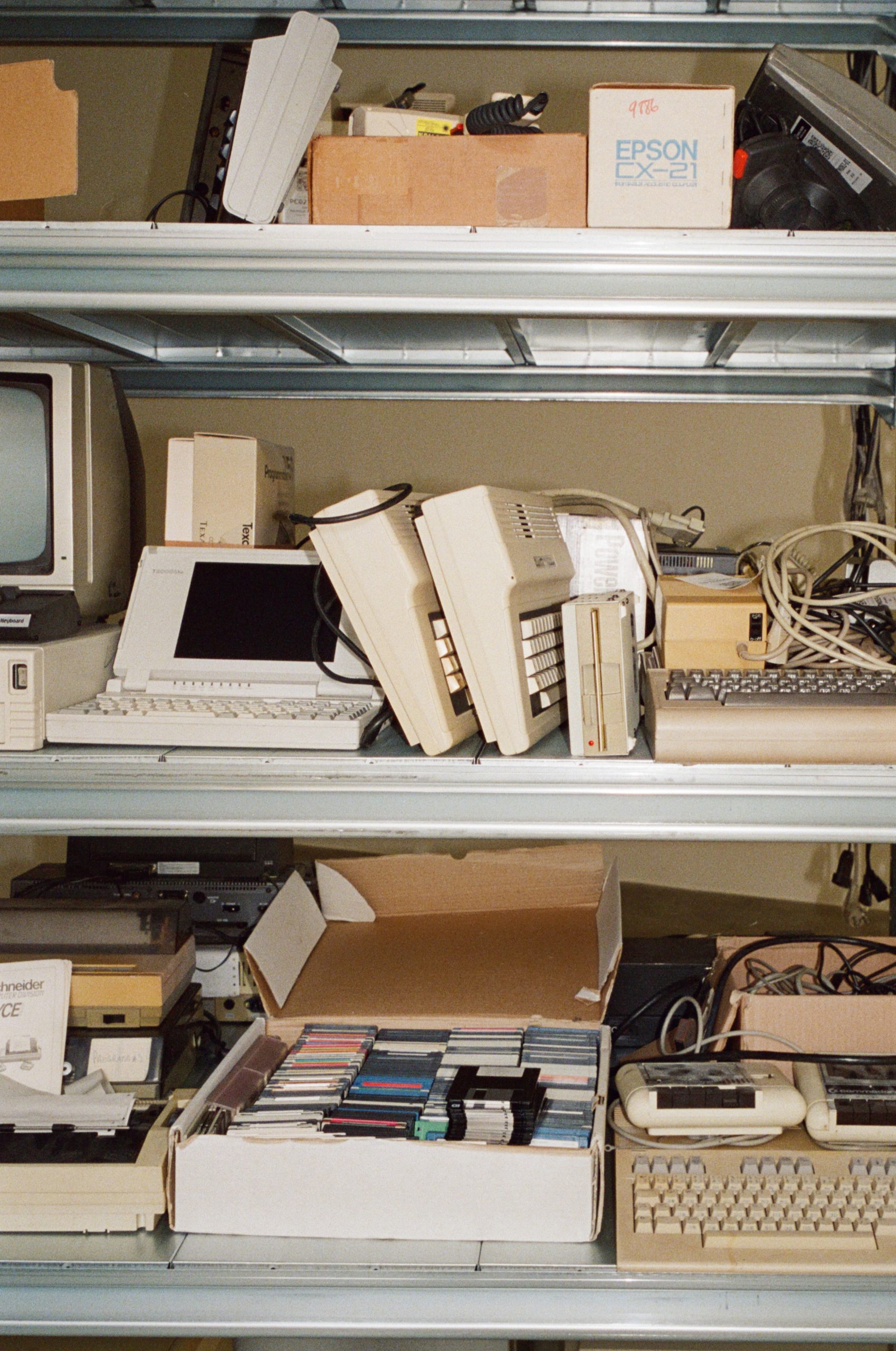
The Pavlov’s Dogs takes as its starting point the collection of old computers your father built up over more than forty years. How did you transform this family legacy — with all its emotional weight, its bulkiness and perhaps its irrational aspect — into artistic material?
My father died three years ago, and he left behind a huge collection of computers in a building he had specifically built to store them. For three years, we had absolutely no idea what to do with them. The computers were there, covered in dust and completely abandoned. It was at once a very tangible legacy, an extremely cumbersome one, and, of course, a deeply emotionally charged one.
At a certain point, we thought we should perhaps try to do something with them. My sister found someone who, with the help of artificial intelligence, managed to identify the machines and draw up an inventory. I actually find it rather beautiful and paradoxical that it was artificial intelligence that enabled us to identity these computers, which had become almost unreadable.
Then, I asked my sisters and my nephews to pack around a hundred of these machines, which were transported to Paris. They became the raw material for a large installation, a sort of wall, but which is also, for me, a portrait of my father and a form of in memoriam.
What appeals to me was precisely not trying to erase the cluttered, absurd or emotional nature of this collection. On the opposite, the accumulation itself becomes the work of art. I incorporated a few of my own ceramic pieces into it, and, very subtly, a bronze. So it is not simply a collection of computers on exhibition: it has become a work of art exploring memory, transmission and time.
LES CHIENS DE PAVLOV PREND POUR POINT DE DÉPART LA COLLECTION D’ANCIENS ORDINATEURS CONSTITUÉE PENDANT PLUS DE QUARANTE ANS PAR VOTRE PÈRE. COMMENT AVEZ-VOUS TRANSFORMÉ CET HÉRITAGE FAMILIAL — AVEC CE QU’IL PORTE D’AFFECTIF, D’ENCOMBRANT ET PEUT-ÊTRE D’IRRATIONNEL — EN MATÉRIAU ARTISTIQUE ?
Mon père est décédé il y a trois ans et il a laissé derrière lui, dans un bâtiment qu’il avait construit spécialement, une immense collection d’ordinateurs. Pendant trois ans, nous ne savions absolument pas quoi en faire. Les machines étaient là, couvertes de poussière, sans entretien. C’était à la fois un héritage très concret, extrêmement encombrant, et évidemment très chargé émotionnellement.
À un moment donné, nous nous sommes dit qu’il fallait peut-être essayer d’en faire quelque chose. Ma sœur a trouvé quelqu’un qui, avec l’aide de l’intelligence artificielle, a réussi à identifier les machines et à établir un inventaire. Je trouve d’ailleurs assez beau et paradoxal que ce soit l’intelligence artificielle qui nous ait permis de retrouver l’identité de ces ordinateurs devenus presque illisibles.
J’ai ensuite demandé à mes sœurs et à mes neveux d’emballer une centaine de ces machines, qui ont été transportées à Paris. Elles sont devenues la matière première d’une grande installation, une sorte de mur, mais qui est aussi, pour moi, un portrait de mon père et une forme d’in memoriam.
Ce qui m’intéressait était précisément de ne pas essayer d’effacer le caractère encombrant, absurde ou affectif de cette collection. Au contraire, l’accumulation elle-même devient le travail. J’y ai intégré quelques-unes de mes propres céramiques et, très discrètement, un bronze. Ce n’est donc pas seulement une collection d’ordinateurs exposée : c’est devenu une œuvre sur la mémoire, la transmission et le temps.
The wall of computers standing in the centre of the exhibition can be seen as an archive, a technological ruin or a funerary monument. What role does grief perform in this installation, and what does it mean to you to publicly exhibit such an intimate memory?
I think grief lies at the heart of this installation, but I did not realise that straight away. At first, I was working with these computers almost as if they were a form of material. It was only during the installation, and even afterwards, that I realise just how closely this work was connected to my father’s death and, above all, to his illness.
My father was an intellectual. He lived surrounded by books, computers, research and his knowledge. And towards the end of his life, that memory gradually began to fade. Suddenly, these machines by now obsolete and out of reach, whose data we can sometimes no longer even read, became to me an incredibly direct allegory of what had happened to him.
There was a rather strange moment that helped me understand this. During the installation, I was in a very gloomy state of mind. One evening, on my way home, I walked past a butcher’s shop in Saint-Paul that was selling lambs’ brains. It reminded me of my childhood: on Wednesday lunchtimes, we used to eat lambs’ brains on toast. I bought some, thinking that this happy memory might do me some good.
Whilst cooking them, I suddenly thought of the expression “fried brain”. A burnt-out brain. But “fried” is also the word we use when an electronic component, a light bulb or a computer burns out. And suddenly everything connected. I realised that this installation was also about that: my father’s brain, his memory that had faded, and all those machines that had themselves lost their memory or become impossible to read.
From that moment on, exhibiting this intimate memory no longer felt to me like simply putting something private on display. It became something far more universal: a work about disappearance, memory and what remains of us.
LE MUR D’ORDINATEURS PLACÉ AU CENTRE DE L’EXPOSITION PEUT ÊTRE REGARDÉ COMME UNE ARCHIVE, UNE RUINE TECHNOLOGIQUE OU UN MONUMENT FUNÉRAIRE. QUELLE PLACE OCCUPE LE DEUIL DANS CETTE INSTALLATION, ET QUE SIGNIFIE POUR VOUS LE FAIT D’EXPOSER PUBLIQUEMENT UNE MÉMOIRE AUSSI INTIME ?
Je crois que le deuil est au cœur de cette installation, mais je ne l’ai pas compris immédiatement. Au départ, je travaillais avec ces ordinateurs presque comme une matière. Ce n’est que pendant l’installation, et même après, que j’ai compris à quel point ce travail était lié à la mort de mon père et surtout à sa maladie.
Mon père était un intellectuel. Il vivait entouré de livres, d’ordinateurs, de recherches, de connaissances. Et à la fin de sa vie, cette mémoire s’est progressivement désintégrée. Tout à coup, ces machines devenues obsolètes, inaccessibles, dont on ne peut parfois même plus lire les données, sont devenues pour moi une métaphore extrêmement directe de ce qui lui était arrivé.
Il y a eu un moment assez étrange qui m’a permis de comprendre cela. Pendant l’installation, j’étais dans un état très sombre. Un soir, en rentrant chez moi, je suis passé devant un boucher à Saint-Paul qui vendait des cervelles d’agneau. Cela m’a rappelé mon enfance : le mercredi midi, nous mangions des cervelles d’agneau sur des toasts. J’en ai acheté en pensant que ce souvenir heureux me ferait du bien.
En les faisant cuire, j’ai soudain pensé à l’expression fried brain. Le cerveau grillé. Mais fried est aussi le mot que l’on emploie lorsqu’un composant électronique, une lampe ou un ordinateur grille. Et là, tout s’est connecté. J’ai compris que cette installation parlait aussi de cela : du cerveau de mon père, de sa mémoire qui s’était effacée, et de toutes ces machines qui avaient elles-mêmes perdu leur mémoire ou étaient devenues impossibles à lire.
À partir de ce moment-là, exposer cette mémoire intime ne m’a plus semblé être simplement exposer quelque chose de privé. Cela devenait quelque chose de beaucoup plus universel : une œuvre sur la disparition, sur la mémoire et sur ce qu’il reste de nous.
Your father collected these machines at a time when computing still embodied the promise of an almost limitless future. Today, they appear as relics of a form of progress that very quickly became obsolete. Does the exhibition convey a sense of disappointment with the modern narrative of technology?
My father did indeed collect these machines, but not like a collector obsessed with the objects themselves. Rather, he collected them like someone obsessed with the pursuit of truth, or at least with the pursuit of knowledge. The idea of progress was what really fascinated him. Every new machine represented a new opportunity to explore, to understand, and to gain further knowledge.
And that progress continues to help me today, actually. For this interview, for example, as I am Flemish, I’m using artificial intelligence to help me translate my thoughts into French, to correct spelling mistakes and certain linguistic awkwardness. And in doing so, I see something extremely positive.
Do these computers appear to me today as remnants of a form of progress that has become obsolete? No, not really. Perhaps, I see them more as the husks left behind by seeds once the tree or plant has grown. They are still there, as material traces of the various stages of an evolution that itself continues.
What is, in fact, rather beautiful and paradoxical is that it was precisely artificial intelligence that has enabled us to identify and catalogue these old machines today. Contemporary technology thus helps us to recover and understand the material traces of the technologies that preceded it. There is a kind of continuity there, rather than a break.
I therefore do not see the exhibition as an expression of disillusionment with the technological narrative. On the contrary, I perhaps see it more as a warning. Because this relationship between the brain, technology and the machine was already present in my work for a very long time.
In the same room, for example, there are two drawings from 1988 for which my father helped me write small programmes that generated computer drawings, which I then incorporated into my own drawings. In one of them, a skull literally has computer images in place of its brain. In a way, that drawing was already addressing the danger of machines replacing our own thinking — something which, today, is no longer fiction at all but a very concrete reality.
There is also the project I carried out for Dior around the Lady Dior bag, which I called Artificial Intelligence, about fifteen years ago, at a time when the technical means did not yet really allow me to realise what I had imagined.
So, for me, there is a genuine ambivalence, but not disillusionment. I can use artificial intelligence today, be fascinated by its possibilities and see it as a continuation of that idea of progress which interested my father so deeply, while remaining very aware of the danger that arises as soon as we begin to hand over our own capacity for thought to machines.
VOTRE PÈRE COLLECTIONNAIT CES MACHINES AU MOMENT OÙ L’INFORMATIQUE INCARNAIT ENCORE LA PROMESSE D’UN AVENIR PRESQUE ILLIMITÉ. AUJOURD’HUI, ELLES APPARAISSENT COMME LES VESTIGES D’UN PROGRÈS RAPIDEMENT DEVENU OBSOLÈTE. L’EXPOSITION TRADUIT-ELLE UNE FORME DE DÉSILLUSION FACE AU RÉCIT TECHNOLOGIQUE MODERNE ?
Mon père collectionnait effectivement ces machines, mais pas comme un collectionneur fétichiste de l’objet. Il les collectionnait plutôt comme quelqu’un obsédé par la recherche de la vérité, ou en tout cas par la recherche de la connaissance. C’était vraiment l’idée du progrès qui l’intéressait profondément. Chaque nouvelle machine représentait pour lui une nouvelle possibilité de chercher, de comprendre, d’accéder à davantage de connaissances.
Et ce progrès continue d’ailleurs à m’aider aujourd’hui. Pour cette interview, par exemple, comme je suis flamand, j’utilise l’intelligence artificielle pour m’aider à transposer ma pensée en français, à corriger les fautes d’orthographe et certaines maladresses de langue. Et là-dedans, je vois quelque chose d’extrêmement positif.
Est-ce que ces ordinateurs m’apparaissent aujourd’hui comme les vestiges d’un progrès devenu obsolète ? Non, pas vraiment. Je les vois peut-être davantage comme les enveloppes laissées par des graines après que l’arbre ou la plante a poussé. Elles sont toujours là, comme les traces matérielles des différentes étapes d’une évolution qui, elle, continue.
Ce qui est d’ailleurs assez beau et paradoxal, c’est que c’est précisément l’intelligence artificielle qui nous a permis d’identifier et de répertorier aujourd’hui ces anciennes machines. Une technologie contemporaine nous aide ainsi à retrouver et à comprendre les traces matérielles des technologies qui l’ont précédée. Il y a là une sorte de continuité plutôt qu’une rupture.
Je ne vois donc pas l’exposition comme l’expression d’une désillusion face au récit technologique. Au contraire, j’y vois peut-être davantage un message d’avertissement. Car ce rapport entre le cerveau, la technologie et la machine était déjà présent dans mon travail il y a très longtemps.
Dans la même salle, par exemple, il y a deux dessins de 1988 pour lesquels mon père m’avait aidé à écrire de petits programmes générant des dessins informatiques que j’intégrais ensuite dans mes propres dessins. Dans l’un d’eux, un crâne a littéralement des images informatiques à la place du cerveau. Ce dessin parlait déjà, d’une certaine manière, du danger de voir la machine remplacer notre propre réflexion — ce qui, aujourd’hui, n’est plus du tout une fiction mais une réalité très concrète.
Il y a également le projet que j’avais réalisé pour Dior autour du Lady Dior et que j’avais intitulé Artificial Intelligence, il y a environ quinze ans, à une époque où les moyens techniques ne permettaient pas encore réellement de réaliser ce que j’imaginais.
Il y a donc pour moi une véritable ambivalence, mais pas une désillusion. Je peux utiliser l’intelligence artificielle aujourd’hui, être fasciné par ses possibilités et y voir la continuation de cette idée de progrès qui intéressait tant mon père, tout en restant très conscient du danger qui apparaît dès que nous commençons à abandonner à la machine notre propre capacité de penser.
The title The Pavlov’s Dogs refers to conditioned behaviour and automatic responses. What contemporary forms of conditioning do you have in mind: those brought about by technology, by political power, by the art market, or by our own habits of observing?
Obviously, I’m thinking of the vibrations from Instagram notifications, the sounds made by dating apps, the mechanisms of advertising, all those little signals that constantly keep us on alert, in a state of anticipation or desire.
What interests me about the idea of Pavlov’s dogs is that conditioning is no longer something abstract, or something that happens only in a laboratory. We experience it constantly. A vibration, a sound, an image, a like, a notification – any one of these is enough to trigger an almost immediate reaction. We look at our phones before we have even really decided to do so. The body sometimes reacts before the mind does.
And obviously, this is not just about Instagram, dating apps or consumerism. These mechanisms also have political implications. They influence the way we receive information, the way we react to an image or an event, the way we form our opinions, and even the way we see the world.
These mechanisms of conditioned behaviour are therefore deeply connected to the way we experience contemporary life, at pretty much every level. Perhaps that is what interests me most about the title: we like to think that we are free to make our own choices and have our own desires, whilst part of our reactions is constantly triggered, stimulated and conditioned by systems that we hardly notice any more.
LE TITRE LES CHIENS DE PAVLOV RENVOIE AUX COMPORTEMENTS CONDITIONNÉS ET AUX RÉACTIONS AUTOMATIQUES. À QUELS CONDITIONNEMENTS CONTEMPORAINS PENSEZ-VOUS : CEUX PRODUITS PAR LES TECHNOLOGIES, PAR LE POUVOIR POLITIQUE, PAR LE MARCHÉ DE L’ART, OU PAR NOS PROPRES HABITUDES DE REGARD ?
Évidemment, je pense aux vibrations des notifications d’Instagram, aux sons des applications de rencontre, aux mécanismes de la publicité, à tous ces petits signaux qui nous mettent constamment en état d’alerte, d’attente ou de désir.
Ce qui m’intéresse dans l’idée des chiens de Pavlov, c’est que le conditionnement n’est plus aujourd’hui quelque chose d’abstrait ou qui se passe uniquement dans un laboratoire. Nous le vivons en permanence. Une vibration, un son, une image, un like, une notification suffisent à provoquer une réaction presque immédiate. Nous regardons notre téléphone avant même d’avoir véritablement décidé de le faire. Le corps réagit parfois avant la pensée.
Et évidemment, cela ne concerne pas seulement Instagram, les applications de rencontre ou la consommation. Ces mécanismes ont aussi des implications politiques. Ils influencent la manière dont nous recevons l’information, dont nous réagissons à une image ou à un événement, dont nous formons nos opinions, et même la manière dont nous regardons le monde.
Ces mécanismes de comportement conditionné sont donc profondément liés à la façon dont nous faisons l’expérience de la vie contemporaine, à pratiquement tous les niveaux. C’est peut-être cela qui m’intéresse le plus dans le titre : nous aimons penser que nous sommes libres de nos choix et de nos désirs, alors qu’une partie de nos réactions est continuellement provoquée, stimulée et conditionnée par des systèmes que nous ne voyons presque plus.
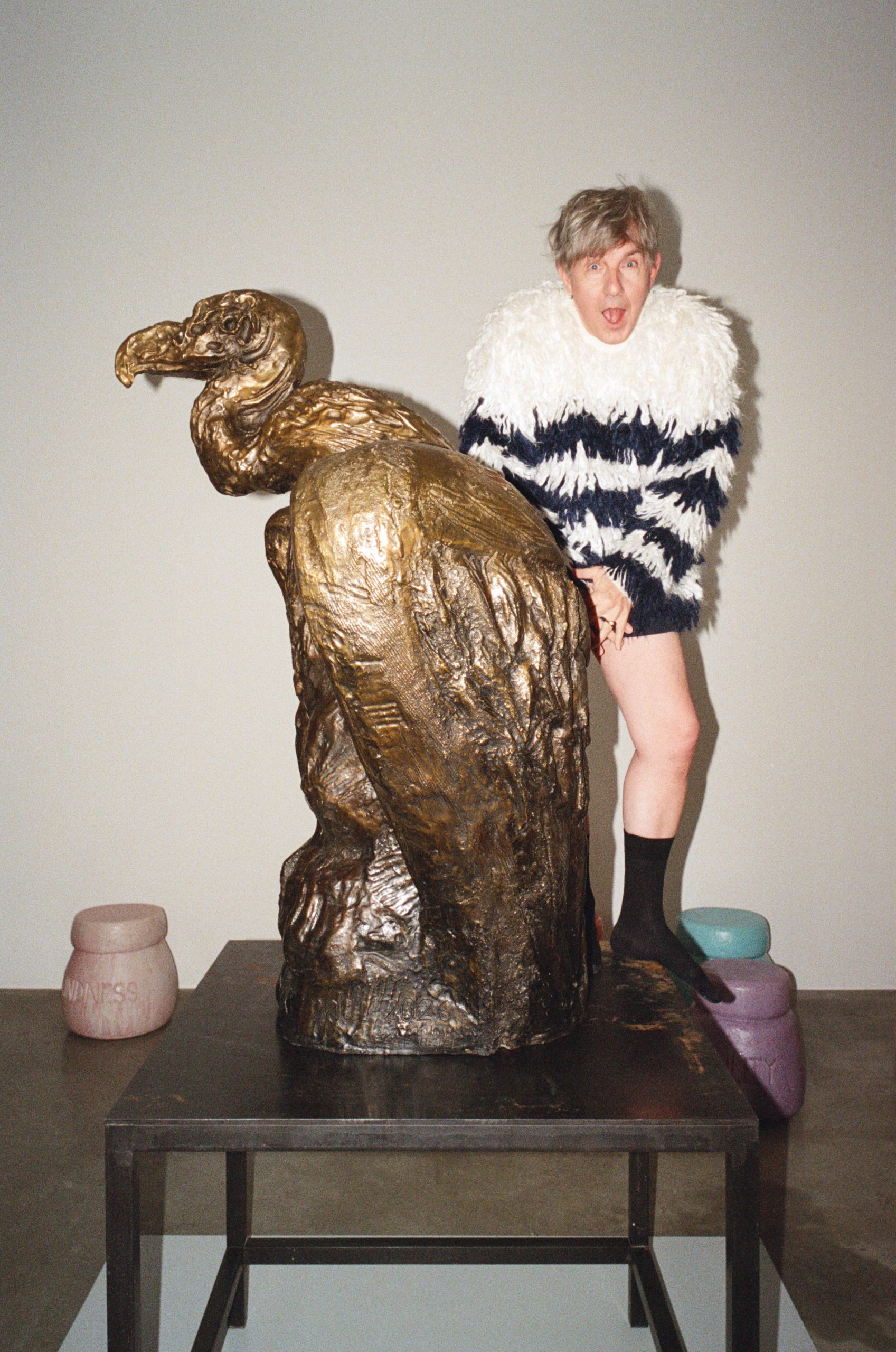
The exhibition brings together recent works with older pieces, such as Miami Eagle / Le Con-dort, originally conceived in 2002 and revived in 2026. When you revisit a work twenty years later, are you seeking to extend it, contradict it, or gauge how the world has altered its meaning?
I have always been very slow in creating my artworks. There is often an idea, a desire that appears very early on, but it can take years before it finds its final form.
That is the case with Miami Eagle / Le Con-dort. I first made this work in 2002, in Miami, where I lived for two or three years whilst taking part in an exhibition at the Bass Museum. At the time, I made a version in clay and ceramic, which was shown at the museum. But I already had the desire to one day turn it into a proper bronze sculpture, which might eventually find its place in the natural world, in a city or within an urban landscape.
I have only been able to realise it now, because I produce my sculptures using my own resources, and that inevitably takes a long time.
But including Le Con-dort in the exhibition at Perrotin today holds real significance to me. I think the political content of this work —which is quite committed and perhaps even somewhat prescient—has become particularly relevant in light of political changes around the world, and especially the transformation of the American landscape.
There is, of course, the pun in the title: “le con dort” — the fool is asleep, the man is asleep; he does not see, or does not want to see, the changes taking place around him. This idea struck me as so relevant to the present day that I was determined to include this work in the exhibition.
In the gallery, it is placed in relation to the Seven Virtues, seven seats that also become observation points on which visitors can sit, as well as this red cross-shaped piece, hung very high on the wall. Opposite it is the large banner that echoes the exhibition’s title, The Pavlov’s Dogs.
This banner almost naturally becomes the place where visitors take photographs of themselves, where they take their selfies, and where some press photographs are also taken. And that creates an image that I find very interesting: Pavlov’s dogs above, and the visitors below, with their phones, their cameras, their reflexes.
At that point, the title no longer refers merely to a scientific experiment or to a phenomenon beyond us. Pavlov’s dogs today are us. We have all, in one way or another, become the Pavlov’s dogs of the contemporary world.
L’EXPOSITION MÊLE DES ŒUVRES RÉCENTES À DES PIÈCES PLUS ANCIENNES, COMME MIAMI EAGLE / LE CON-DORT, CONÇUE INITIALEMENT EN 2002 ET RÉACTIVÉE EN 2026. LORSQUE VOUS REPRENEZ UNE ŒUVRE VINGT ANS PLUS TARD, CHERCHEZ-VOUS À LA PROLONGER, À LA CONTREDIRE, OU À MESURER LA MANIÈRE DONT LE MONDE A MODIFIÉ SA SIGNIFICATION ?
J’ai toujours été très lent dans le développement de mes œuvres. Il y a souvent une idée, un désir qui apparaît très tôt, mais qui peut prendre des années avant de trouver sa forme définitive.
C’est le cas de Miami Eagle / Le Con-dort. J’ai réalisé cette œuvre pour la première fois en 2002, à Miami, où j’ai vécu deux ou trois ans à l’occasion d’une exposition au Bass Museum. À l’époque, j’en avais réalisé une version en terre, en céramique, qui avait été montrée au musée. Mais j’avais déjà le désir d’en faire un jour une véritable sculpture en bronze, qui pourrait éventuellement se retrouver dans la nature, dans une ville ou dans un paysage urbain.
Je n’ai pu la réaliser que maintenant, parce que je produis mes sculptures avec mes propres moyens, et cela prend forcément beaucoup de temps.
Mais inclure Le Con-dort aujourd’hui dans l’exposition chez Perrotin a pour moi un véritable sens. Je pense que le contenu politique de cette œuvre, assez engagé et peut-être même un peu prémonitoire, est devenu particulièrement pertinent au regard des changements politiques dans le monde, et surtout de la transformation du paysage américain.
Il y a évidemment le jeu de mots du titre : le con dort, l’homme dort, il ne voit pas ou ne veut pas voir les transformations qui se produisent autour de lui. Cette idée me semblait tellement actuelle que je voulais absolument que cette œuvre soit présente dans l’exposition.
Dans la salle, elle est mise en relation avec les Sept Vertus, sept sièges qui deviennent aussi des points d’observation sur lesquels les visiteurs peuvent s’asseoir, ainsi qu’avec cette pièce en forme de croix rouge, accrochée très haut sur le mur. En face se trouve la grande bannière qui rappelle le titre de l’exposition, Les Chiens de Pavlov.
Cette bannière devient presque naturellement l’endroit où les visiteurs se photographient, où ils font leurs selfies, où sont prises aussi certaines photos de presse. Et cela crée une image qui m’intéresse beaucoup : les chiens de Pavlov au-dessus, et les visiteurs en dessous, avec leurs téléphones, leurs appareils photo, leurs réflexes.
À ce moment-là, le titre ne désigne plus seulement une expérience scientifique ou un phénomène extérieur à nous. Les chiens de Pavlov, aujourd’hui, c’est nous. Nous sommes tous, d’une manière ou d’une autre, devenus les chiens de Pavlov du monde contemporain.
Your work often involve shifts in meaning: a flower can become a body, an animal a political figure, a title a corrosive pun. Is this ambiguity, a way for you to resist overly simplistic interpretations and rigid ideological narratives?
Absolutely. I love that shift in interpretation, and the fact that something beautiful, seductive or seemingly innocent can in reality speak of much more complex, even disturbing, matters.
I have often said that beauty is a kind of lubricant for me: it allows more difficult ideas, through a kind of trickery, to enter people’s minds. The viewer is first attracted or seduced by something, and only afterwards may discover what lies behind that beauty.
That is why some of my earlier works bear titles such as The Trojan Horse. It was a large black torso made entirely out of flowers. The work was seductive, almost decorative at first glance, but behind that appearance lay precisely the idea of the Trojan horse: beauty as a vehicle for deceit, as something we let in because we do not immediately perceive what it contains.
This idea of trickery and manipulation strikes me as hugely relevant today. We now live with machines that listen to us, that get to know us and that, increasingly, seem to understand us.
And then, of course, the allure of technology itself become a kind of Trojan horse. We willingly bring these machines into our lives because they are fascinating, useful, seductive, sometimes even marvellous. But within that seduction there is also manipulation, and dangers that we do not yet fully understand — right up to the far more dizzying question of the disappearance of certain aspects of humanity, or even its possible destruction.
VOS ŒUVRES PROCÈDENT SOUVENT PAR GLISSEMENTS : UNE FLEUR PEUT DEVENIR UN CORPS, UN ANIMAL UNE FIGURE POLITIQUE, UN TITRE UN JEU DE MOTS CORROSIF. CETTE AMBIGUÏTÉ EST-ELLE POUR VOUS UNE MANIÈRE DE RÉSISTER AUX INTERPRÉTATIONS TROP IMMÉDIATES ET AUX DISCOURS IDÉOLOGIQUES FERMÉS ?
Tout à fait. J’adore ce glissement d’interprétation, et le fait qu’une chose belle, séduisante ou apparemment innocente puisse en réalité parler de choses beaucoup plus complexes, voire inquiétantes.
J’ai souvent dit que la beauté était pour moi une sorte de lubrifiant : elle permet à des idées plus difficiles, par une forme de ruse, d’entrer dans l’esprit des gens. Le spectateur est d’abord attiré ou séduit par quelque chose, et ce n’est qu’ensuite qu’il découvre éventuellement ce qui se cache derrière cette beauté.
C’est pour cela que certaines de mes œuvres anciennes portent des titres comme Le Cheval de Troie. C’était un grand torse noir entièrement composé de fleurs. L’œuvre était séduisante, presque décorative au premier regard, mais derrière cette apparence se trouvait précisément l’idée du cheval de Troie : la beauté comme véhicule d’une ruse, comme quelque chose que l’on laisse entrer parce qu’on ne perçoit pas immédiatement ce qu’elle contient.
Cette idée de la ruse et de la manipulation me semble d’une actualité énorme aujourd’hui. Nous vivons désormais avec des machines qui nous écoutent, qui apprennent à nous connaître et qui, de plus en plus, semblent nous comprendre.
Et là, évidemment, la séduction technologique peut elle aussi devenir une sorte de cheval de Troie. Nous faisons entrer volontairement ces machines dans nos vies parce qu’elles sont fascinantes, utiles, séduisantes, parfois même merveilleuses. Mais à l’intérieur de cette séduction se trouvent aussi la manipulation et des dangers que nous ne mesurons pas encore complètement — jusqu’à la question, beaucoup plus vertigineuse, de la disparition de certaines dimensions de l’humain, voire de sa destruction éventuelle.
Seats dedicated to the Seven Virtues invite the visitor to slow down, but also, quite literally, to “take a stand”. What role do you attribute to the viewer’s body in an exhibition that specifically questions obedience, passivity and individual responsibility?
Seating is something I have been using for a long time in my exhibitions, and which, incidentally, has sparked a sort of trend in Paris and elsewhere. In my early exhibitions, and particularly in the installation at the Musée d’Art Moderne, I called them “Observation Points”.
This term is important to me, because sitting down first allows time to slow down. It invites the viewer to pause, to take the time to look at a work and engage in a kind of individual and personal conversation with it. But it also allows one to strike up a conversation with others: with the person sitting opposite, with someone one invites to sit down, or with the group that forms around the work.
In this exhibition, the seats indeed become metaphors for everything you describe: the passivity of those who allow themselves to be overwhelmed by the avalanche of information on Instagram, obedience to certain conditioning mechanisms, or even the addiction to consumption that machines are increasingly imposing on us.
But I think the key question is perhaps that of individual responsibility. Faced with all these changes, are we simply passive, or are we all, individually, responsible for the direction things might take? The viewer is therefore both the observer and the one who is themselves involved in what they are looking at.
This is also how the exhibition is structured into four chapters. It tells a story in which all these themes — memory, conditioning, technology, passivity, desire and responsibility — almost unconsciously shift from one room to another. The visitor physically moves through this story, but in a sense also becomes one of its protagonist.
DES ASSISES CONSACRÉES AUX SEPT VERTUS INVITENT LE VISITEUR À RALENTIR, MAIS AUSSI, LITTÉRALEMENT, À « PRENDRE POSITION ». QUEL RÔLE ATTRIBUEZ-VOUS AU CORPS DU SPECTATEUR DANS UNE EXPOSITION QUI INTERROGE PRÉCISÉMENT L’OBÉISSANCE, LA PASSIVITÉ ET LA RESPONSABILITÉ INDIVIDUELLE ?
Les assises sont quelque chose que j’utilise depuis longtemps dans mes expositions et qui a d’ailleurs déclenché une sorte de mode à Paris et ailleurs. Dans mes premières expositions, et notamment dans l’installation qui se trouve au Musée d’Art Moderne, je les appelais des Points d’observation.
Ce terme est important pour moi, parce que l’assise permet d’abord de ralentir le temps. Elle invite le spectateur à s’arrêter, à prendre le temps de regarder une œuvre et d’engager avec elle une sorte de conversation individuelle et personnelle. Mais elle permet aussi d’engager une conversation avec les autres : avec celui qui est assis en face, avec celui qu’on invite à s’asseoir, ou avec le groupe qui se forme autour de l’œuvre.
Dans cette exposition, ces assises deviennent effectivement aussi des métaphores de tout ce que vous décrivez : la passivité de celui qui se laisse submerger par l’avalanche d’informations d’Instagram, l’obéissance à certains mécanismes de conditionnement, ou encore l’addiction à la consommation que la machine nous impose de plus en plus.
Mais je pense que la question essentielle est peut-être celle de notre responsabilité individuelle. Face à tous ces changements, sommes-nous simplement passifs ou sommes-nous tous, individuellement, responsables de la direction que cela peut prendre ? Le spectateur est donc à la fois celui qui regarde et celui qui est lui-même impliqué dans ce qu’il regarde.
C’est aussi de cette manière que l’exposition se construit en quatre chapitres. Elle raconte une histoire dans laquelle tous ces thèmes — la mémoire, le conditionnement, la technologie, la passivité, le désir, la responsabilité — glissent presque inconsciemment d’une salle à l’autre. Le visiteur traverse cette histoire physiquement, mais il en devient aussi, d’une certaine manière, l’un des acteurs.
You were one of the artists who reintroduce ceramics into the field of contemporary art at a time when it was still largely relegated to craftsmanship or the Decorative Arts. Do you feel that its current recognition represents a victory, or are you concerned that it has in turn into a trend, and therefore a new form of conditioning?
I would go even further than that. I have often been described as one of the pioneers of the revival of ceramics in contemporary art. And I do think that, for nearly forty years, I have been the one breaking the ground. I had to face all the contempt, and sometimes even a form of hatred, from the “serious” contemporary art world towards this medium.
Over the past ten years or so, there has been a huge change. Ceramics has regained an important place in contemporary art, particularly amongst young artists.
Symbolically, one could say that the fact that it is handmade – that it is random, unpredictable, physical and raw – makes it a sort of antidote to the polished nature of machines, but also to the sometimes overly polished quality of a certain kind of figurative and illustrative painting. Clay resists. You can never control it totally. And in that sense, it also speaks of a form of freedom that strikes me extremely important today.
Has ceramics become a trend? Yes, certainly. And like every trend, it will probably be replaced by another. We can already see textiles coming back more strongly, for example, and young artists naturally exploring other forms of expression.
What I simply hope is that this change will have been deep enough to prevent ceramics from being sent back into its ghetto. We have seen something similar with photography: for a while, it truly entered the world of museum, into the white gallery of so-called ‘serious’ institutions, before once again, to some extent, relegated back to its own territory.
I therefore hope I have done enough work over all these years – together with others, of course –
to ensure that this return to the ghetto does not happen for clay. And all above that, so that it is no longer regarded as a category apart, but simply as one material amongst others with which an artist can think, speak and work freely.
VOUS AVEZ ÉTÉ L’UN DES ARTISTES À RÉINTRODUIRE LA CÉRAMIQUE DANS LE CHAMP DE L’ART CONTEMPORAIN À UNE ÉPOQUE OÙ ELLE ÉTAIT ENCORE LARGEMENT RELÉGUÉE À L’ARTISANAT OU AUX ARTS DÉCORATIFS. AVEZ-VOUS LE SENTIMENT QUE SA RECONNAISSANCE ACTUELLE CONSTITUE UNE VICTOIRE, OU CRAIGNEZ-VOUS QU’ELLE NE SOIT DEVENUE À SON TOUR UNE TENDANCE ET DONC UNE NOUVELLE FORME DE CONDITIONNEMENT ?
Je dirais même plus que cela. On m’a souvent présenté comme l’un des précurseurs de ce renouveau de la céramique dans l’art contemporain. Et je pense qu’effectivement, pendant près de quarante ans, j’ai essuyé les plâtres. J’ai dû affronter tout le mépris, et parfois même une forme de haine, du monde de l’art contemporain « sérieux » à l’égard de cette matière.
Depuis une dizaine d’années, il y a eu un changement énorme. La céramique a retrouvé une place importante dans l’art contemporain, surtout auprès des jeunes artistes.
Symboliquement, on pourrait dire que le fait qu’elle soit faite à la main, qu’elle soit aléatoire, imprévisible, physique et brute, en fait une sorte d’antidote au caractère lisse des machines, mais aussi au côté parfois très lisse d’une certaine peinture figurative et illustrative. La terre résiste. On ne peut jamais la contrôler complètement. Et en cela, elle parle aussi d’une forme de liberté qui me paraît extrêmement importante aujourd’hui.
Est-ce que la céramique est devenue une tendance ? Oui, certainement. Et comme toutes les tendances, elle sera probablement remplacée par une autre. On voit déjà revenir davantage le textile, par exemple, et les jeunes artistes explorent naturellement d’autres formes d’expression.
Ce que j’espère simplement, c’est que ce changement aura été suffisamment profond pour que la céramique ne retourne pas dans son ghetto. On a vu quelque chose de comparable avec la photographie : pendant un moment, elle est véritablement entrée dans le monde des musées, dans les salles blanches des institutions dites sérieuses, avant d’être à nouveau, dans une certaine mesure, renvoyée vers son propre territoire.
J’espère donc avoir fait suffisamment de travail pendant toutes ces années, avec d’autres évidemment, pour que ce retour au ghetto ne se produise pas pour la terre. Et surtout pour qu’on ne la considère plus comme une catégorie à part, mais simplement comme un matériau parmi d’autres avec lequel un artiste peut penser, parler et travailler librement.
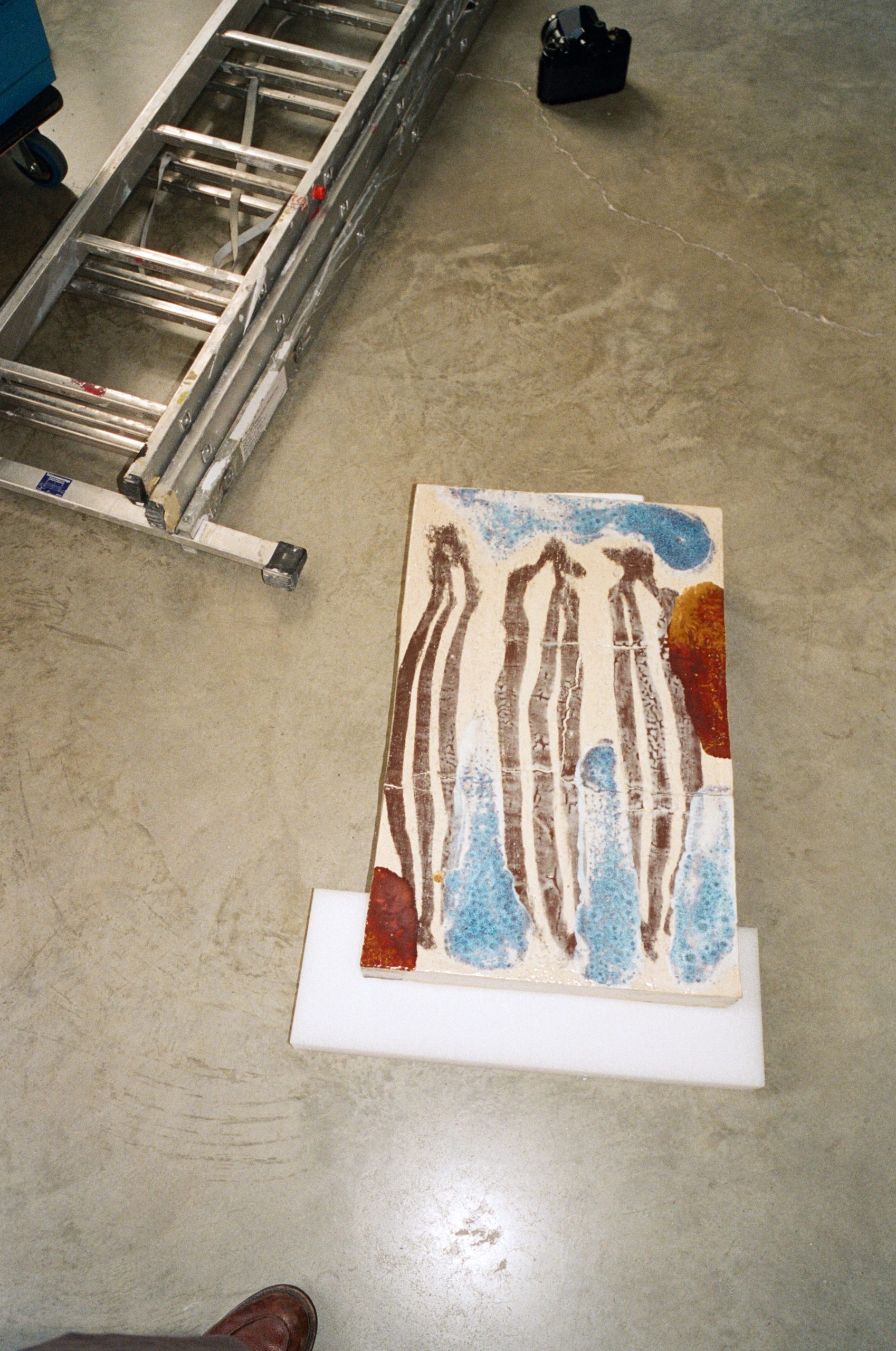
You trained as a painter and attach great importance to glaze, colour and the unexpected results of firing. Do you approach the surface of a sculpture in the way a painter might work on a canvas, or do the material and the fire force you to relinquish a degree of control?
I have never studied ceramics, which perhaps gave me a certain freedom in the way I approached this material.
I love glaze, and the use of colour in my sculptures is indeed very close to the way a painter uses colour. But for me, it is above all about the “skin”. The glaze truly becomes the skin of the sculpture.
I am thinking, for example, of Rodin when he experimented with assembled sculptures by dipping them into a very liquid plaster. This plaster creates a new skin that unifies the various elements and gives the sculpture a single outer layer. With Medardo Rosso, something similar happens with wax. In my own work, I think it is the glaze that plays that role. It covers, unites and transforms the sculpture, but above all it gives it a living, almost organic quality.
There is another dimension that has been very important to me. As a painter, I was always held back by the finality of the last brushstroke. At a certain point, it is up to you to decide: that’s it, the painting is finished. That final brushstroke still belongs entirely to the painter.
With ceramics, something eludes me. Once the work goes into the kiln, the fire takes over. There is randomness, accident, chance, and sometimes even failure. You never completely control what is going to happen.
And ironically, that loss of control has given me another kind of freedom. The fire almost becomes a collaborator: it provides the final touch that, as a painter, I found so difficult to decide on myself.
VOUS ÊTES PEINTRE DE FORMATION ET VOUS ACCORDEZ À L’ÉMAIL, AUX COULEURS ET AUX ACCIDENTS DE CUISSON UNE IMPORTANCE DÉTERMINANTE. ABORDEZ-VOUS LA SURFACE D’UNE SCULPTURE COMME UN PEINTRE TRAVAILLERAIT UNE TOILE, OU LA MATIÈRE ET LE FEU VOUS OBLIGENT-ILS À RENONCER À UNE PART DE MAÎTRISE ?
Je n’ai jamais fait d’études de céramique, ce qui m’a peut-être justement donné une certaine liberté dans ma manière d’aborder cette matière.
J’adore l’émail, et l’utilisation de la couleur dans mes sculptures est effectivement très proche de la manière dont un peintre utilise la couleur. Mais pour moi, il y a surtout une histoire de peau. L’émail devient véritablement la peau de la sculpture.
Je pense par exemple à Rodin lorsqu’il fait certaines expériences avec des sculptures assemblées qu’il trempe dans un plâtre très liquide. Ce plâtre crée une nouvelle peau qui vient unifier les différents éléments et donner à la sculpture une seule enveloppe. Chez Medardo Rosso, quelque chose de comparable se produit avec la cire. Chez moi, je pense que c’est l’émail qui joue ce rôle. Il recouvre, rassemble et transforme la sculpture, mais surtout il lui donne un côté vivant, presque organique.
Il y a aussi une autre dimension qui a été très importante pour moi. En tant que peintre, j’étais toujours bloqué par la finalité de la dernière touche. À un certain moment, c’est vous qui devez décider : voilà, la peinture est terminée. Cette dernière touche appartient encore entièrement au peintre.
Avec la céramique, quelque chose m’échappe. À partir du moment où l’œuvre entre dans le four, le feu intervient. Il y a l’aléatoire, l’accident, la chance, parfois même l’échec. On ne contrôle jamais complètement ce qui va se passer.
Et paradoxalement, cette perte de contrôle m’a donné une autre forme de liberté. Le feu devient presque un collaborateur : il apporte cette dernière touche que, comme peintre, j’avais tellement de difficulté à décider moi-même.
Your work combines beauty, seduction and unease — indeed, you have said that
“Beauty is a lubricant”. Does beauty allow you to subtly introduce a political dimension into your work, or does it also pose a danger: that of numbing the critical gaze you are precisely trying to awaken?
As I have already said, for me beauty is a sort of lubricant. It allows more complex, more unsettling, sometimes even more dangerous elements to get through. I have never thought it was necessary to make pamphlets or in-your-face works in order to make people think, or perhaps even to bring about change. Beauty can be a ruse: it attracts, it seduces, and then it allows something else to enter the mind.
But perhaps I am wrong. And that is a question I find myself asking more and more these days.
Faced with what is happening in the world, perhaps the only thing we can still do is, in fact, to resist. And perhaps beauty – or at least beauty alone – is no longer enough as a form of resistance.
Perhaps at a certain point, it is no longer enough to seduce, to suggest or smuggle things in through trickery. Perhaps we will have to take action.
VOTRE TRAVAIL ASSOCIE BEAUTÉ, SÉDUCTION ET INQUIÉTUDE — VOUS AVEZ D’AILLEURS CETTE FORMULE : « BEAUTY IS A LUBRICANT ». LA BEAUTÉ PERMET-ELLE D’INTRODUIRE SUBREPTICEMENT UNE CHARGE POLITIQUE DANS L’ŒUVRE, OU REPRÉSENTE-T-ELLE ÉGALEMENT UN DANGER, CELUI D’ENDORMIR LE REGARD CRITIQUE QUE VOUS CHERCHEZ PRÉCISÉMENT À RÉVEILLER ?
Comme je l’ai déjà dit, pour moi, la beauté est une sorte de lubrifiant. Elle permet de faire passer des éléments plus complexes, plus dérangeants, parfois même plus dangereux. Je n’ai jamais pensé qu’il était nécessaire de faire des pamphlets ou des œuvres in your face pour faire réfléchir ou éventuellement faire changer les choses. La beauté peut être une ruse : elle attire, elle séduit, et elle permet ensuite à autre chose d’entrer dans l’esprit.
Mais peut-être que je me trompe. Et c’est une question que je me pose de plus en plus aujourd’hui.
Face à ce qui se passe dans le monde, peut-être que la seule chose qu’on puisse encore faire est effectivement de résister. Et peut-être que la beauté, ou en tout cas la beauté seule, n’est plus suffisante comme forme de résistance.
Peut-être qu’à un certain moment, il ne suffit plus de séduire, de suggérer ou de faire entrer les choses par la ruse. Peut-être qu’il va falloir passer à l’action.
Johan Creten, avec l’aide de ChatGPT
LES CHIENS DE PAVLOV
PERROTIN PARIS
until October 10, 2026
PERROTIN | www.perrotin.com
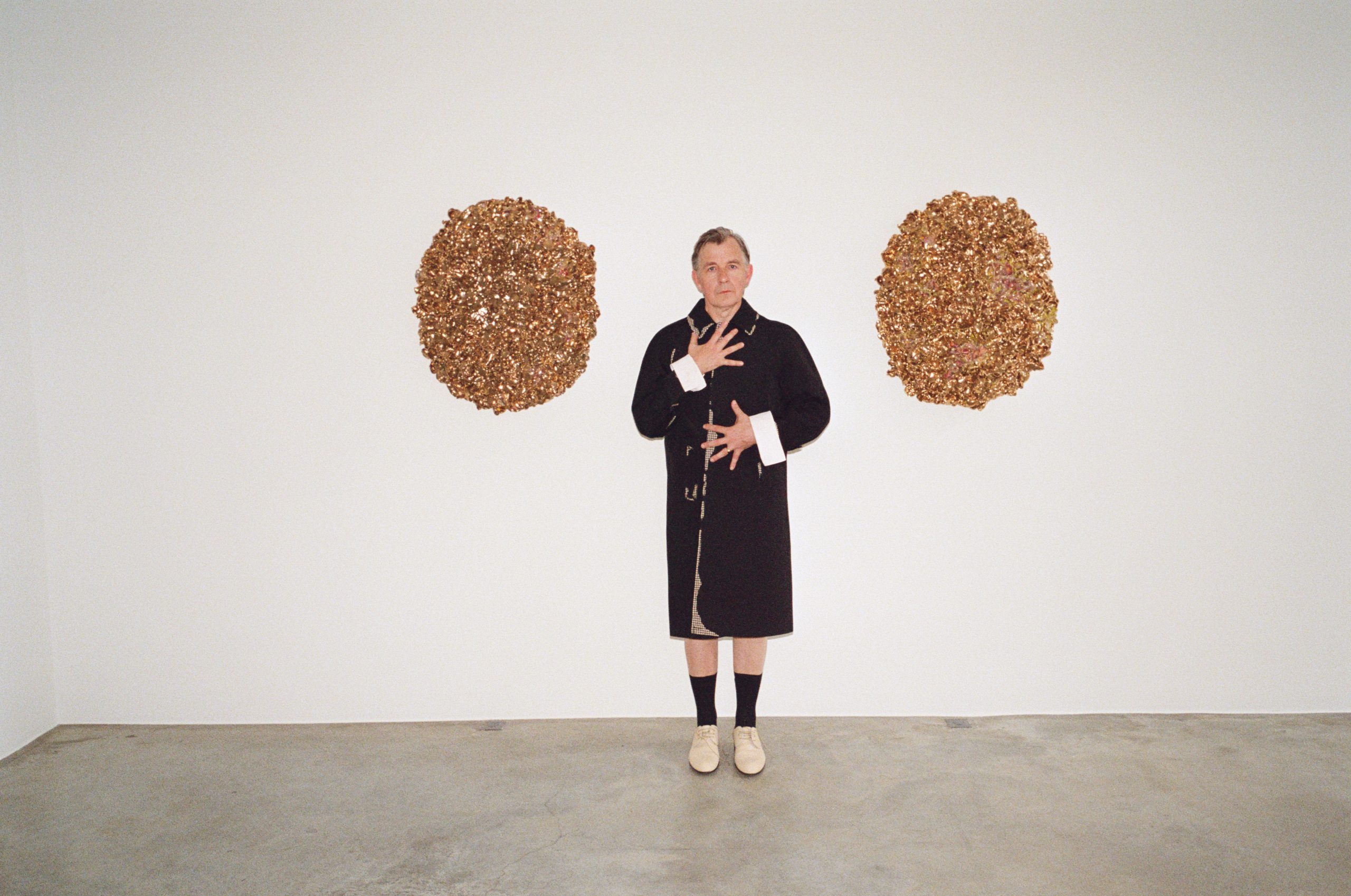
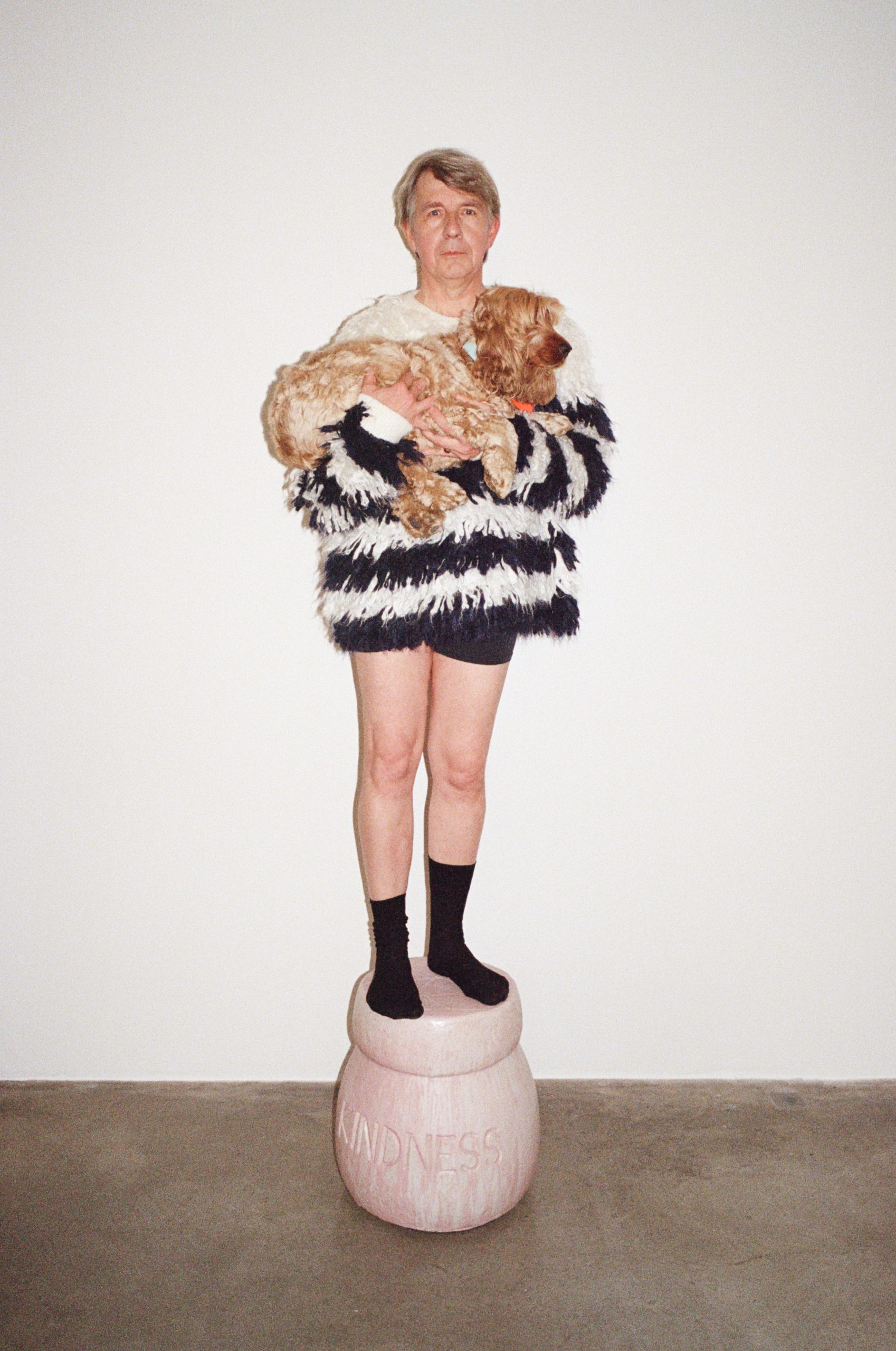
Johan Creten, wearing Dior
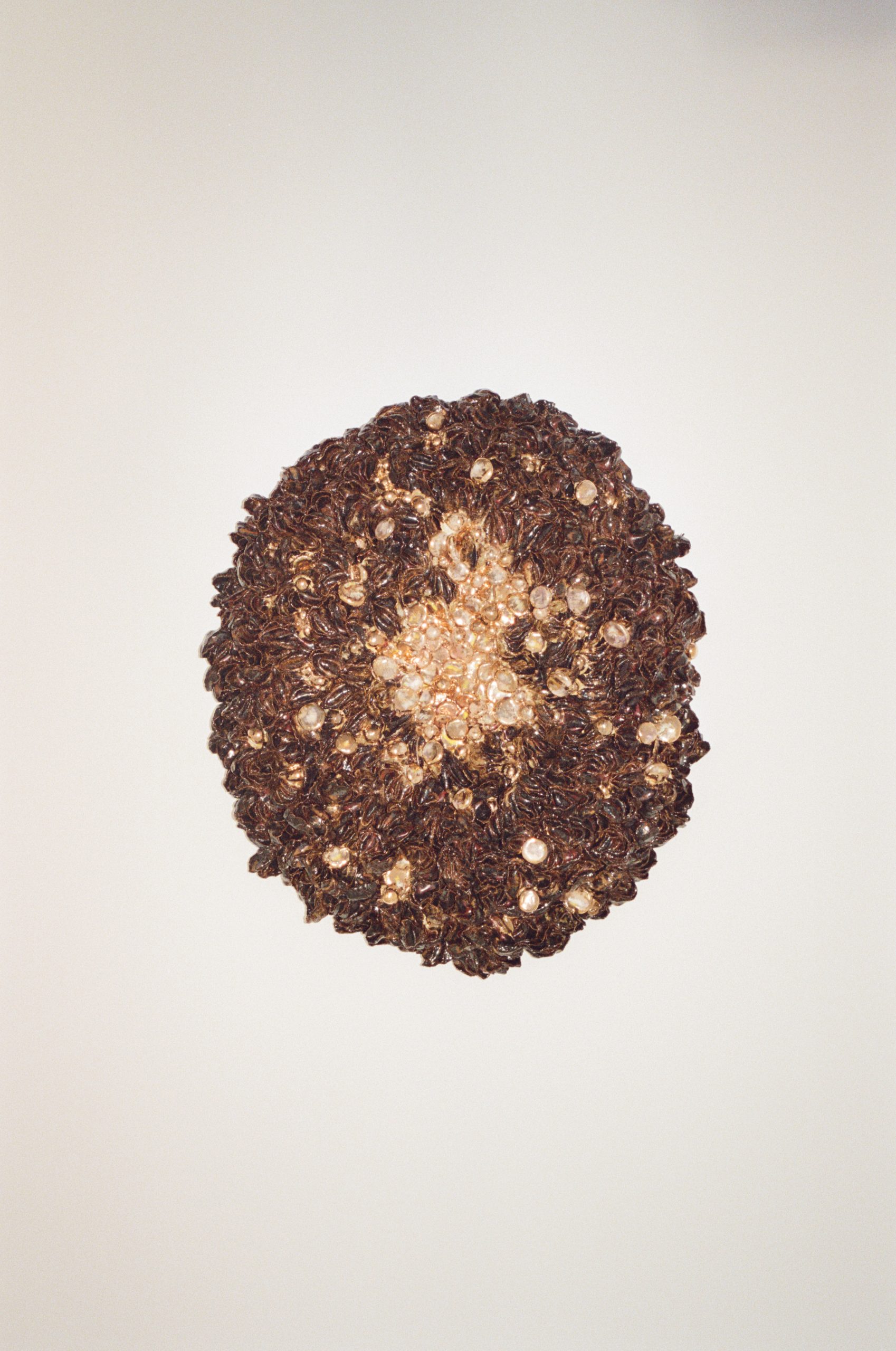
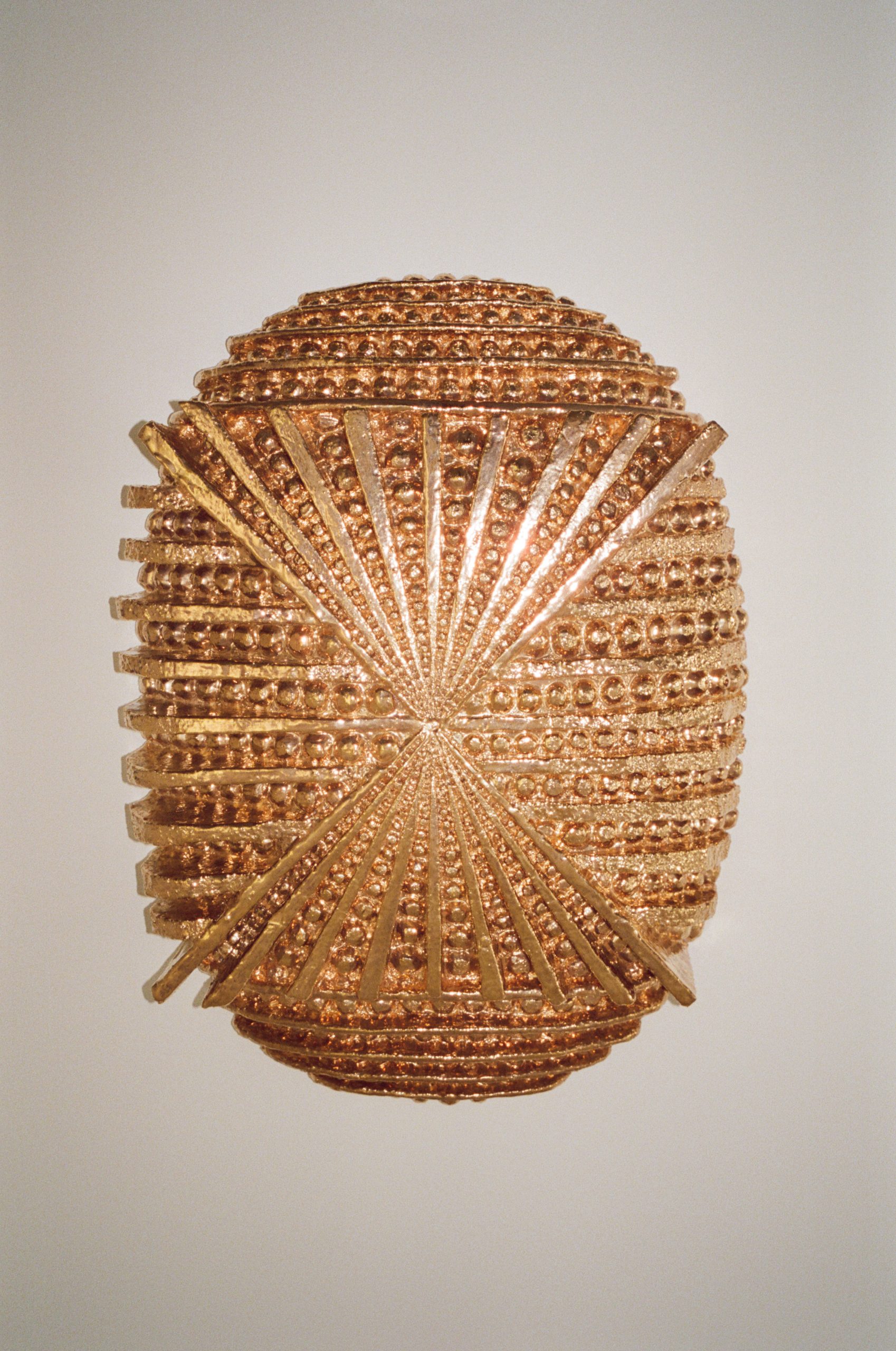
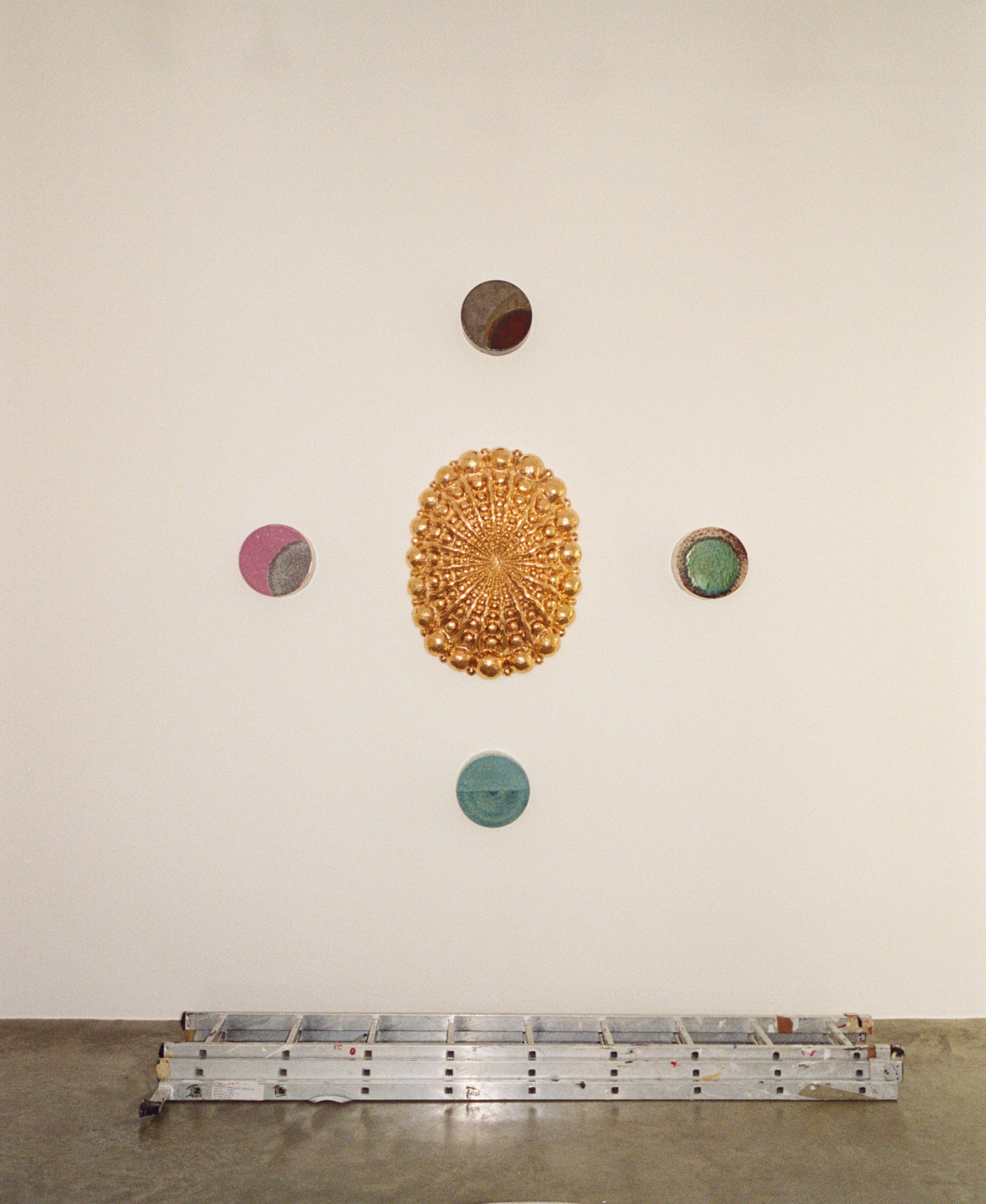
Johan Creten, Odore di Femina - Golden Rain,2025. Photo : Arthur Delloye. © Johan Creten/ ADAGP, Paris 2026. Courtesy of the artist and Perrotin
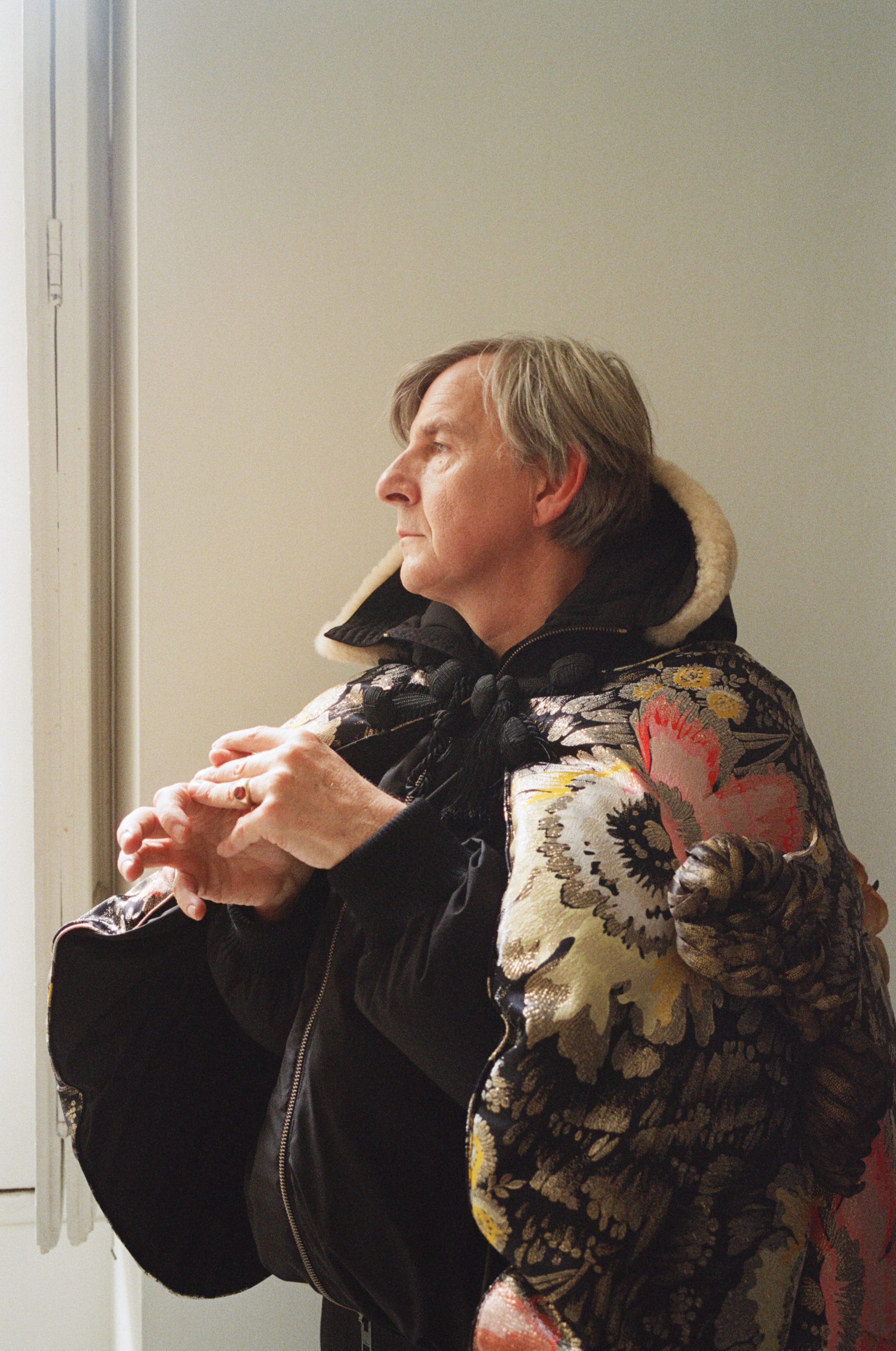
Johan Creten, wearing Dior
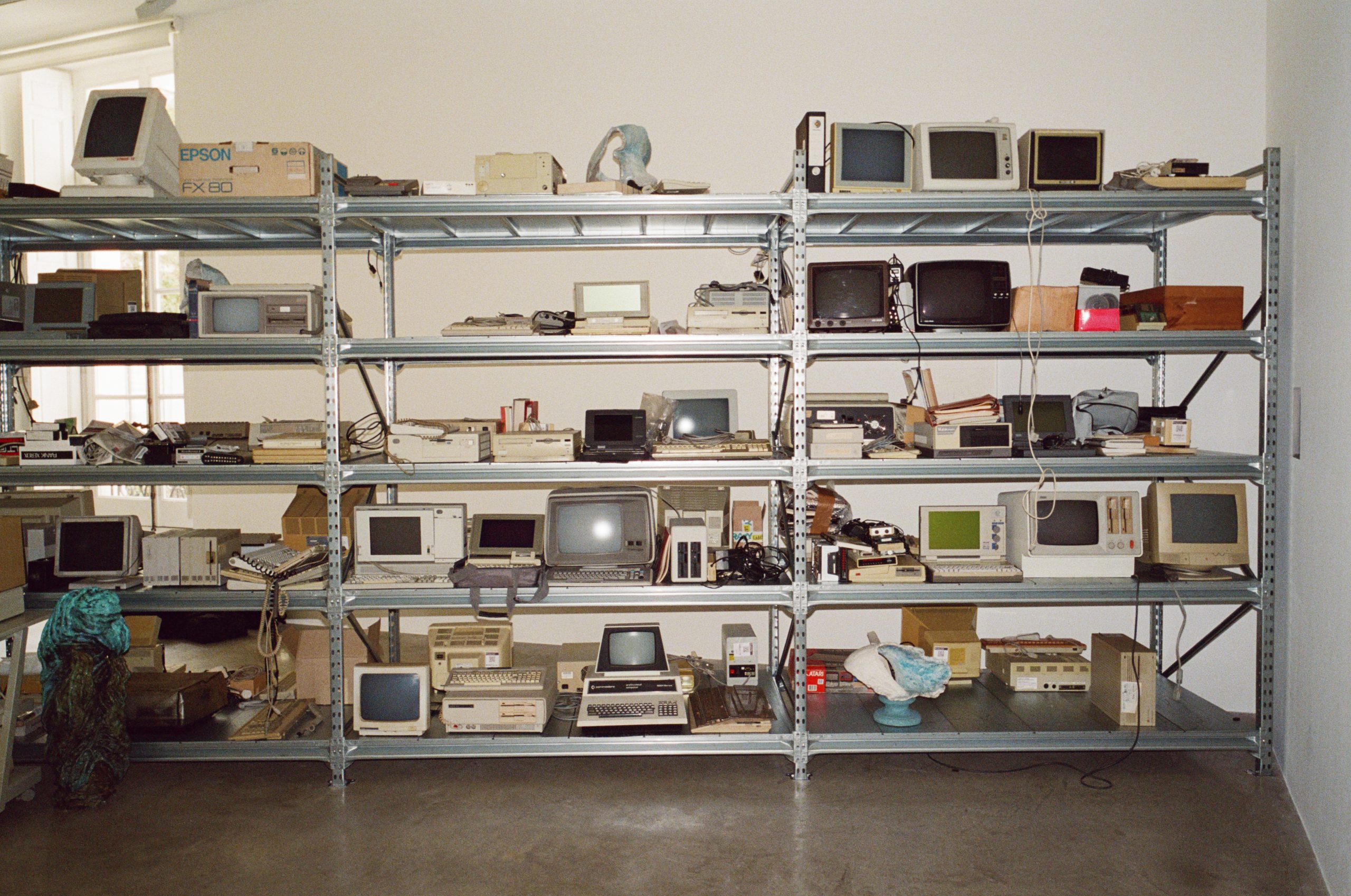
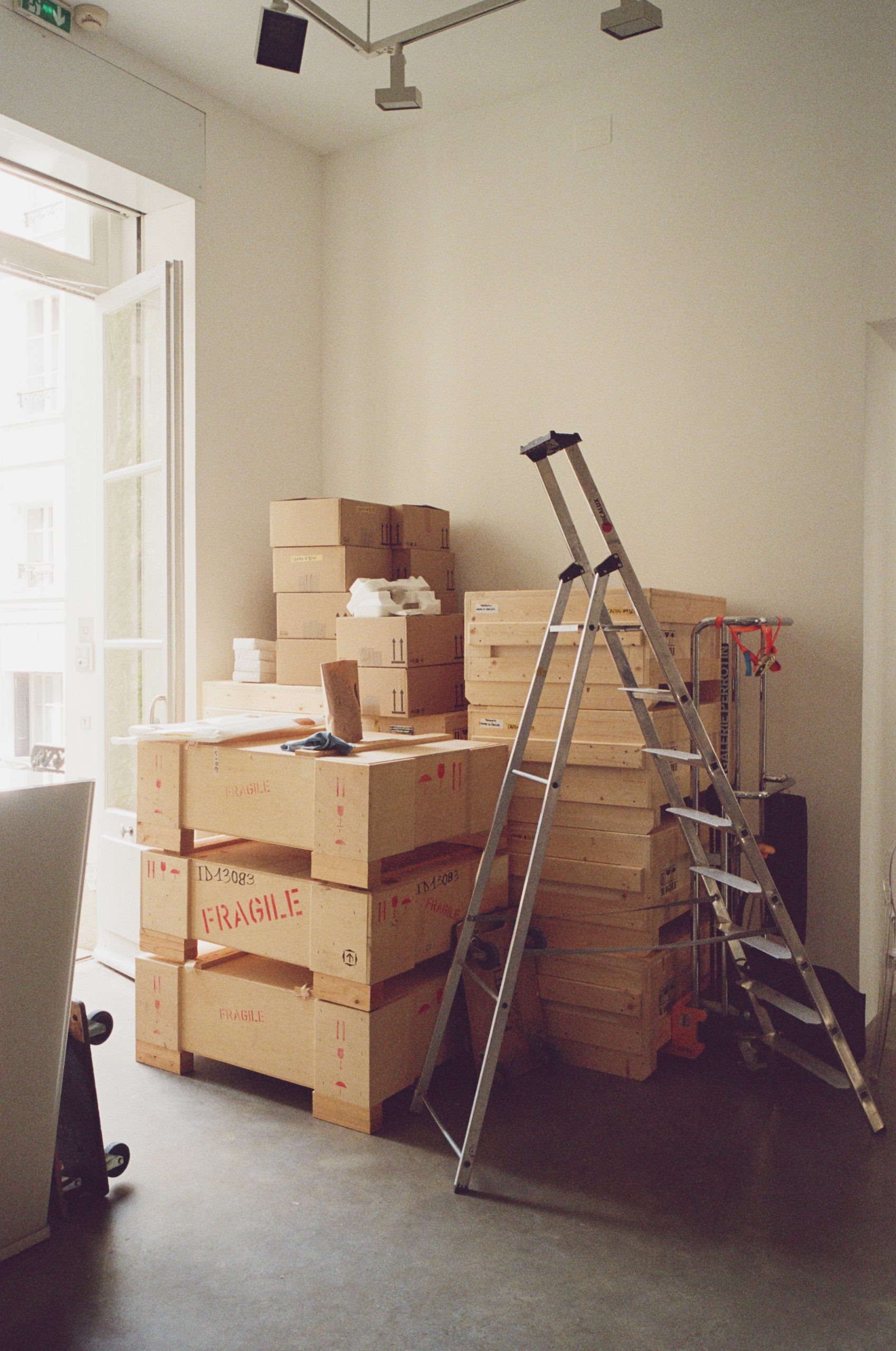
Johan Creten, Installation pour l'exposition "Les Chiens de Pavlov", 2026, Computers and various elements. Photo : Arthur Delloye. Collection of the artist's family / @Creten Legacy.
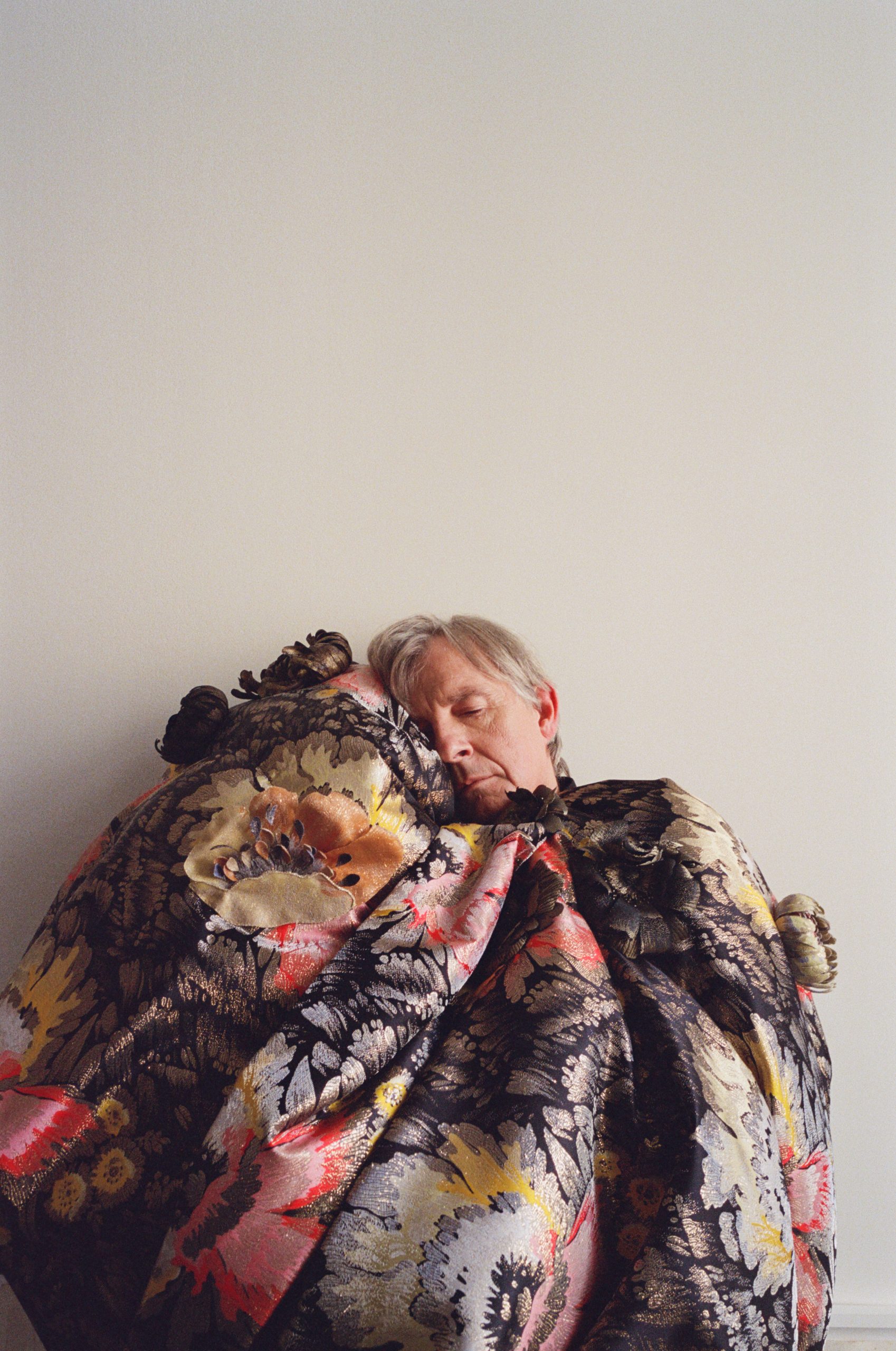
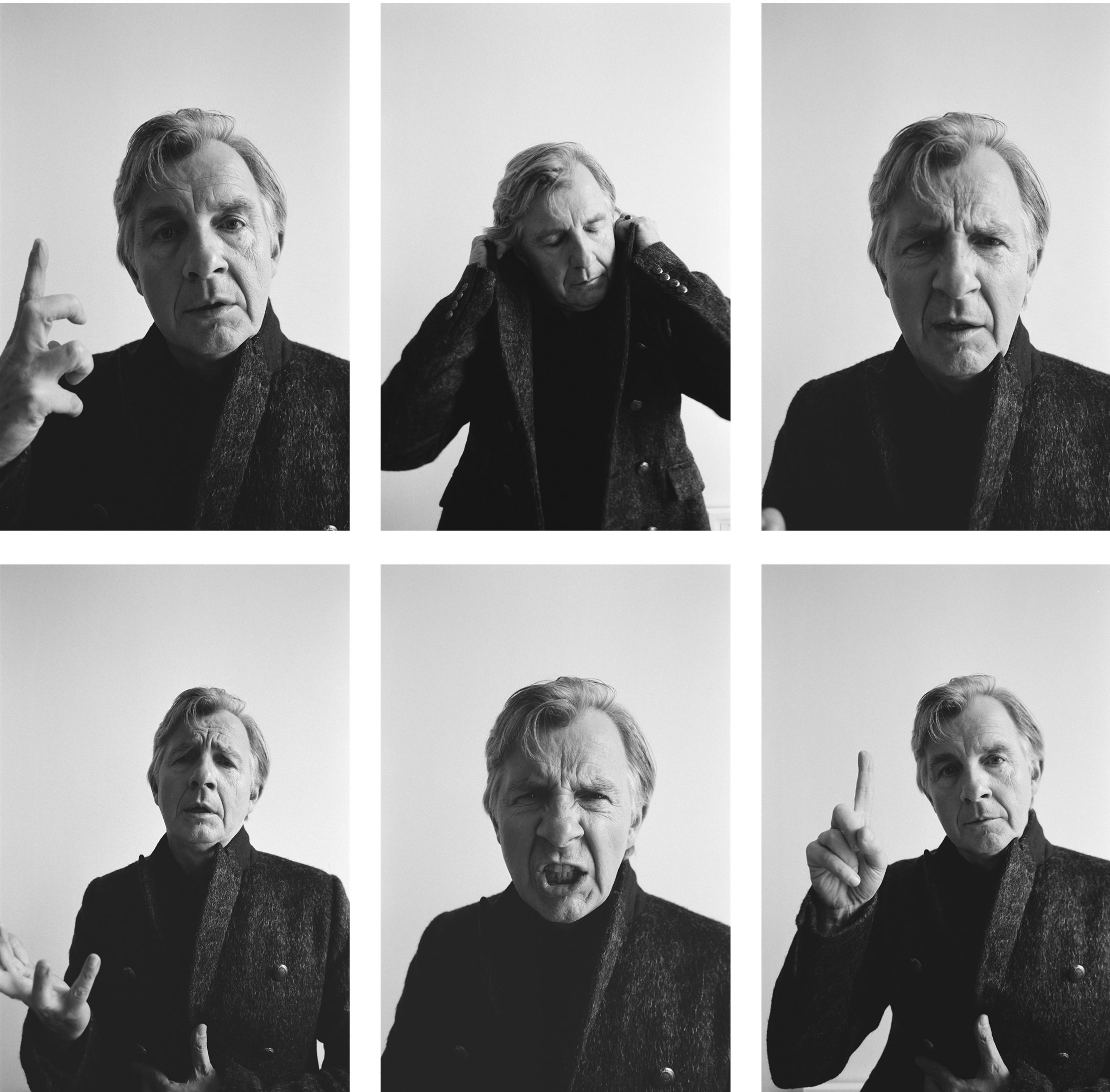
Johan Creten, wearing Dior
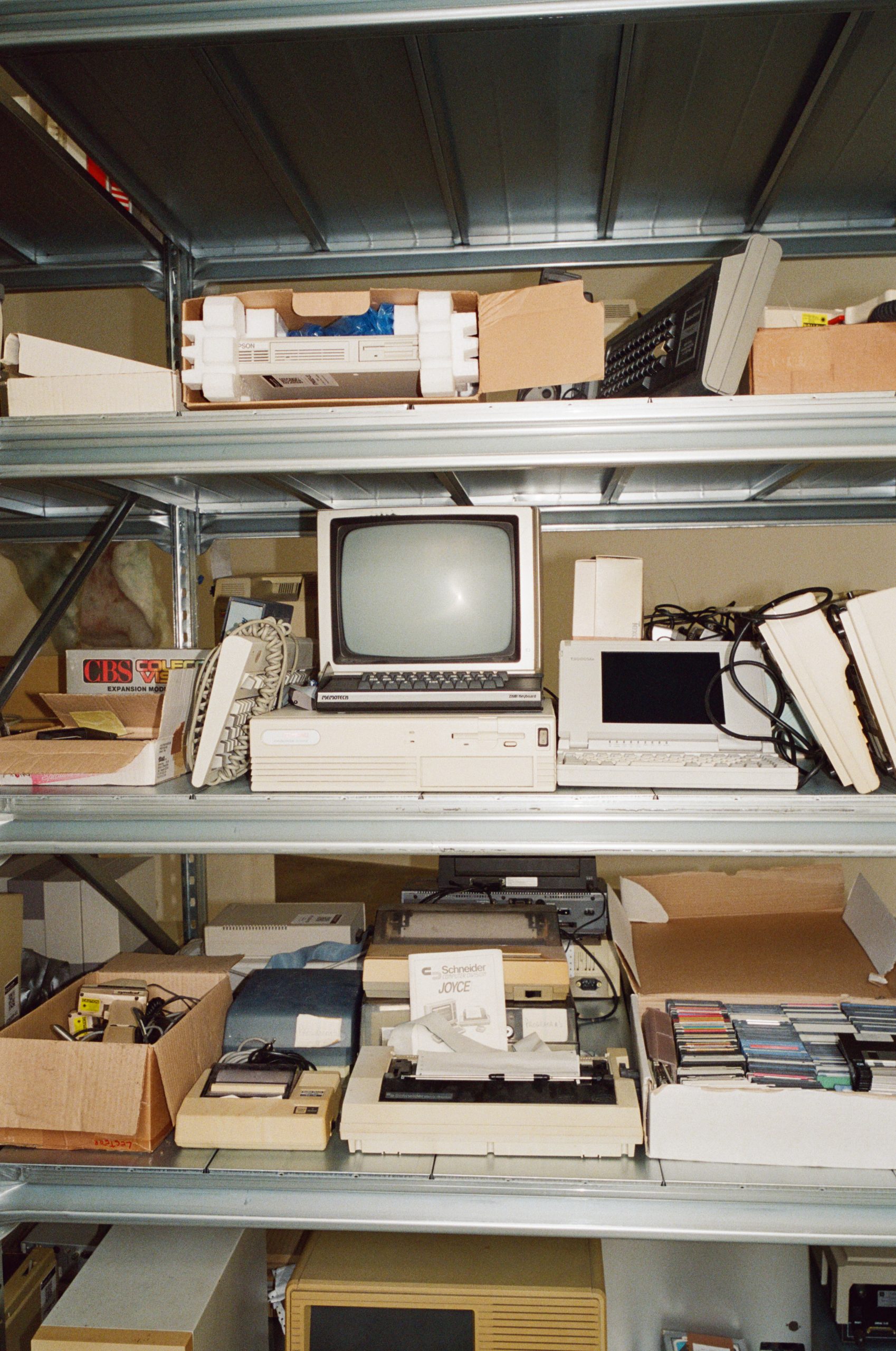
Johan Creten, Installation pour l'exposition "Les Chiens de Pavlov", 2026, Computers and various elements. Photo : Arthur Delloye. Collection of the artist's family / @Creten Legacy. Photo : Arthur Delloye. Collection of the artist's family / @Creten Legacy.
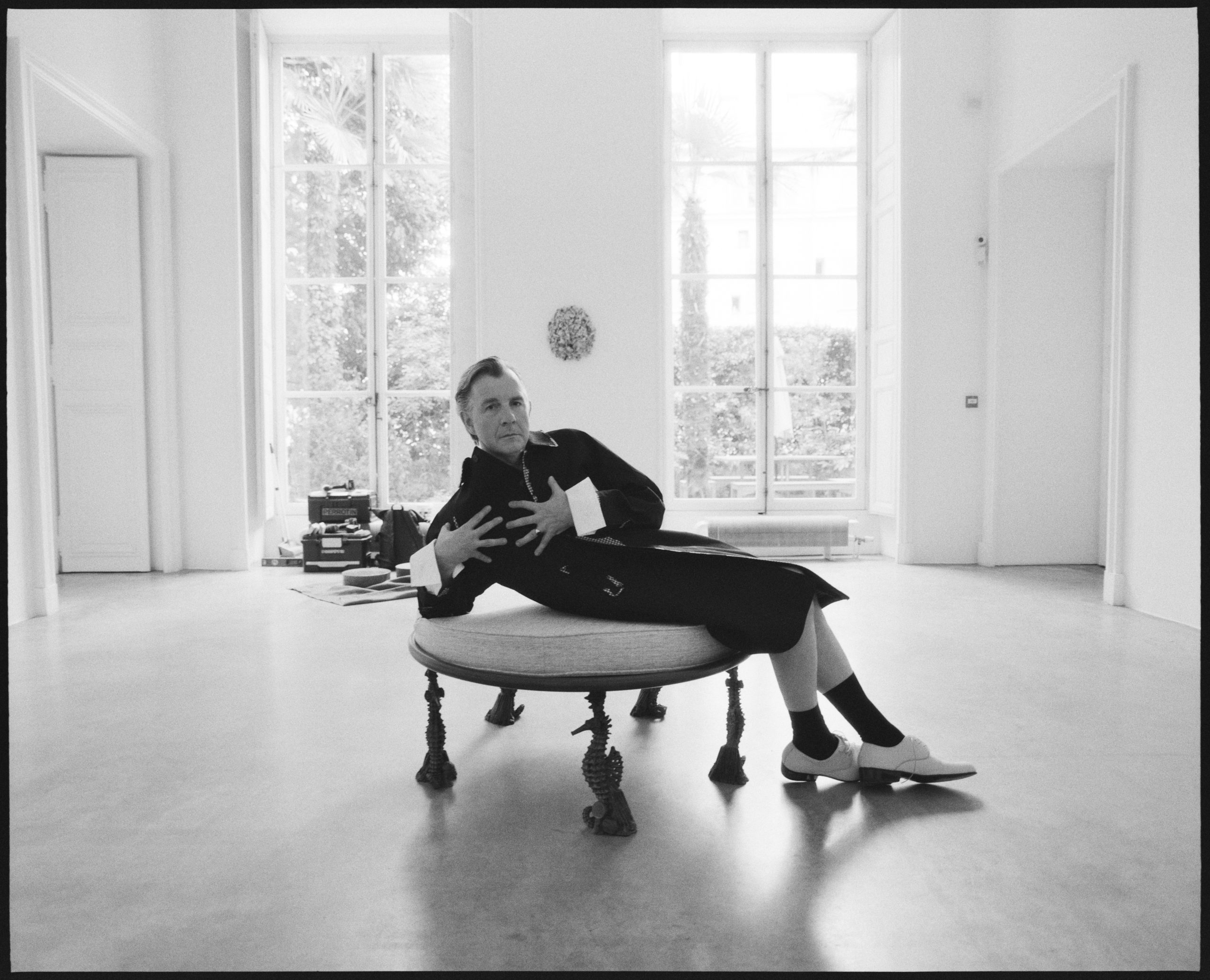
Johan Creten, wearing Prada