HAKIM BENCHEKROUN
TERRITORIES OF OBSOLESCENCE
CONVERSATION
Some places never quite die: they simply stop being of use. An architect by training turned visual artist, Hakim Benchekroun has spent a decade tracking these “territories of obsolescence” across Morocco, through old maps, forgotten archives and the remains of the Protectorate.
FROM LOST IN MOROCCO TO RELICS, WHERE THE IMAGE ITSELF BECOMES A RUIN, HE TELLS DUEL HOW TODAY WE ARE BUILDING THE RUINS OF TOMORROW.
IL Y A DES LIEUX QUI NE MEURENT PAS TOUT À FAIT : ILS CESSENT SEULEMENT DE SERVIR. ARCHITECTE DE FORMATION PASSÉ DU CÔTÉ DES ARTS PLASTIQUES, HAKIM BENCHEKROUN TRAQUE DEPUIS DIX ANS CES « TERRITOIRES DE L’OBSOLESCENCE » AU MAROC, ENTRE CARTES ANCIENNES, ARCHIVES OUBLIÉES ET VESTIGES DU PROTECTORAT. DE LOST IN MOROCCO À RELICS, OÙ L’IMAGE ELLE-MÊME DEVIENT RUINE, IL RACONTE À DUEL COMMENT ON FABRIQUE AUJOURD’HUI LES RUINES DE DEMAIN.
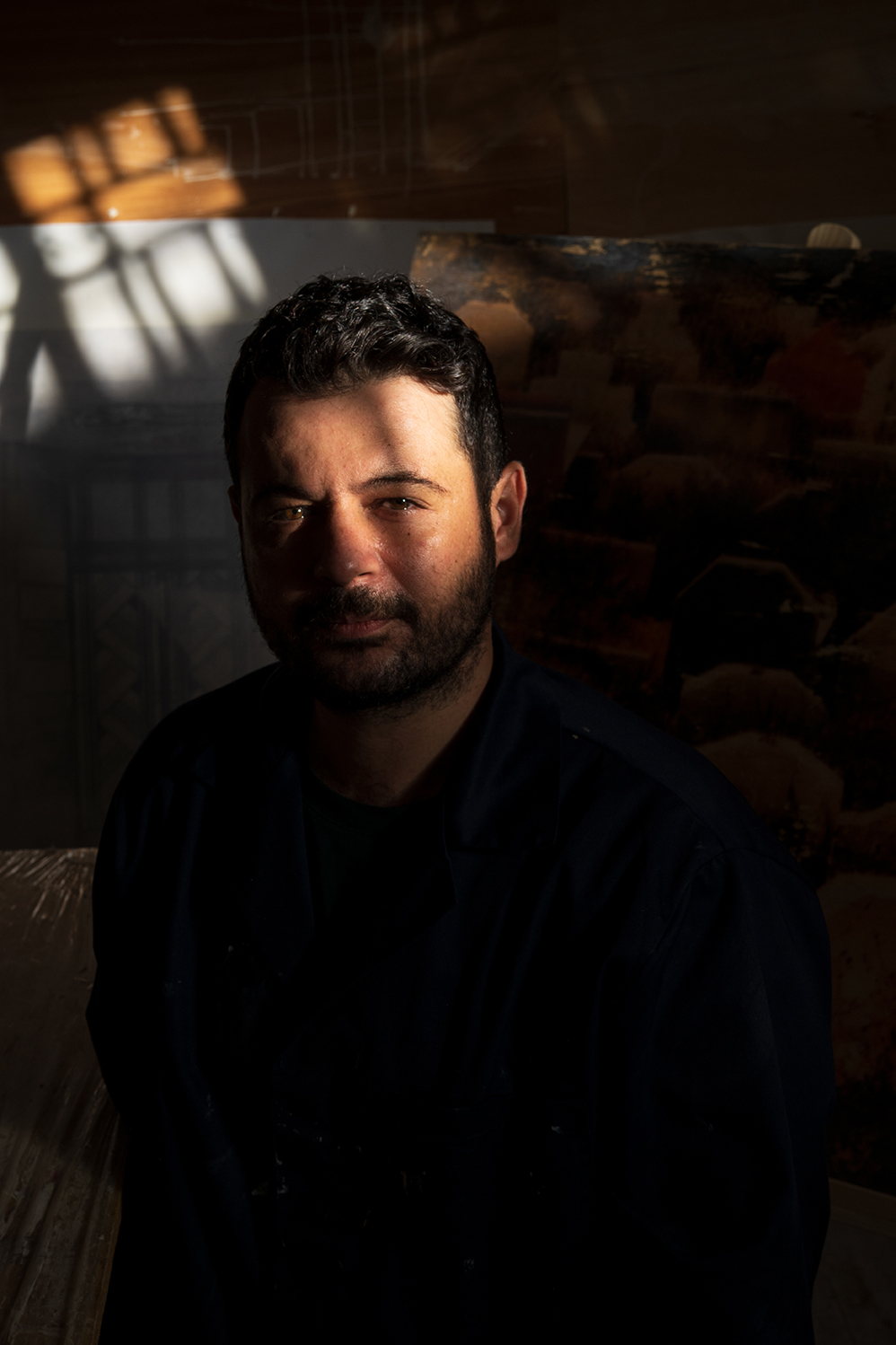
For several years, you have spoken about “territories of obsolescence.” What draws you to these places at the precise moment when they shift from use into oblivion?
The idea of the obsolescence of territories came to me after reading Günther Anders and The Obsolescence of Man. It seemed entirely legitimate to apply this framework to territory itself, questioning notions of use and functionality. For me, it is a very contemporary issue: it asks how, even today, we are producing the ruins of tomorrow.
These abandoned places were often designed around an extremely strong single function. Once that sole use comes to an end or becomes obsolete, the territory suddenly loses its economic or social justification, and therefore its legitimacy to exist.
When I spend hours on the road looking for these spaces, the physical experience of being on site produces a genuine sense of the uncanny. Different temporalities collide in a striking way: a past that resurfaces, an immutable present in which time seems to have stopped in the stone, and an anticipation of what our current urban territories will become.
This spatio-temporal ambiguity, and the unsettling beauty of the moment when everyday life slips into oblivion, lie at the heart of my work. It is a sensation that can be found as much in nineteenth-century painting as in genre cinema or video games.
VOUS PARLEZ DEPUIS PLUSIEURS ANNÉES DE « TERRITOIRES DE L’OBSOLESCENCE ». QU’EST-CE QUI VOUS ATTIRE DANS CES LIEUX AU MOMENT PRÉCIS OÙ ILS BASCULENT DE L’USAGE VERS L’OUBLI ?
La terminologie de l’obsolescence des territoires m’est venue après la lecture de Günther Anders et de L’Obsolescence de l’homme. J’ai trouvé totalement légitime d’appliquer cette grille de lecture au territoire, en questionnant les notions d’usage et de fonctionnalité. Pour moi, c’est une question très contemporaine : elle interroge la manière dont on fabrique, aujourd’hui même, les ruines de demain. Ces lieux abandonnés ont souvent été conçus autour d’une monofonctionnalité très forte. Une fois que cet usage unique s’arrête ou devient caduc, le territoire perd soudainement sa justification économique ou sociale et donc de sa légitimité à exister. Quand je passe des heures sur la route à chercher ces espaces, l’expérience physique du terrain produit une véritable inquiétante étrangeté. Il y a un télescopage saisissant des temporalités : un passé qui affleure, un présent immuable où le temps semble s’être arrêté dans la pierre, et une anticipation de ce que nos territoires urbains actuels vont devenir. C’est cette ambiguïté spatio-temporelle et cette beauté troublante du moment où le quotidien bascule dans l’oubli qui constituent le cœur de mon travail, une sensation qu’on retrouve aussi bien dans la peinture du XIXᵉ siècle que dans le cinéma de genre ou le jeu vidéo.
YOUR WORK OFTEN BEGINS LONG BEFORE THE PHOTOGRAPH ITSELF, WITH OLD MAPS, ARCHIVES, ACADEMIC TEXTS, AND SOMETIMES PLACES THAT HAVE EVEN DISAPPEARED FROM CONTEMPORARY MAPS. AT WHAT POINT DOES THE INVESTIGATION BECOME THE WORK?
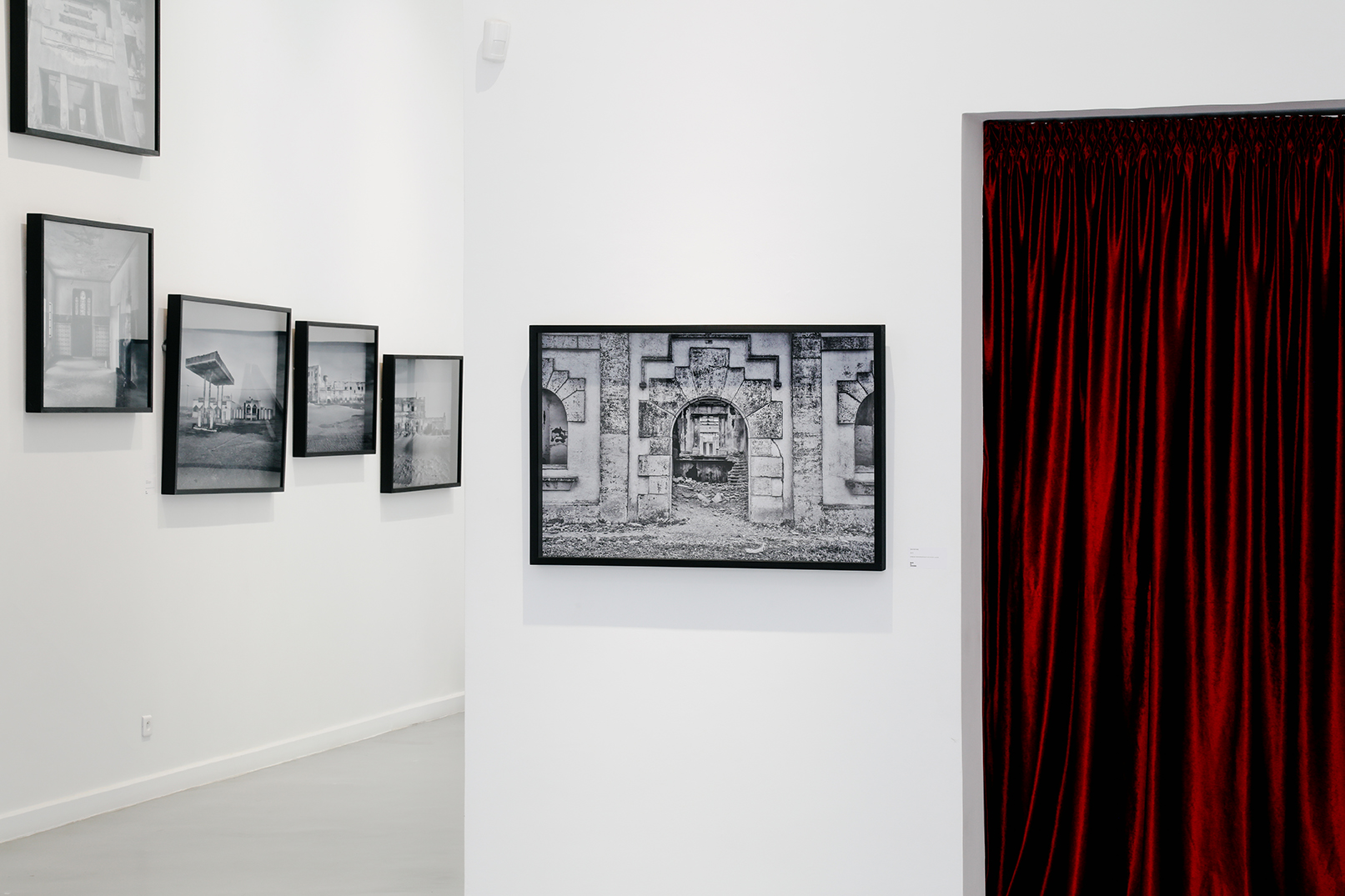
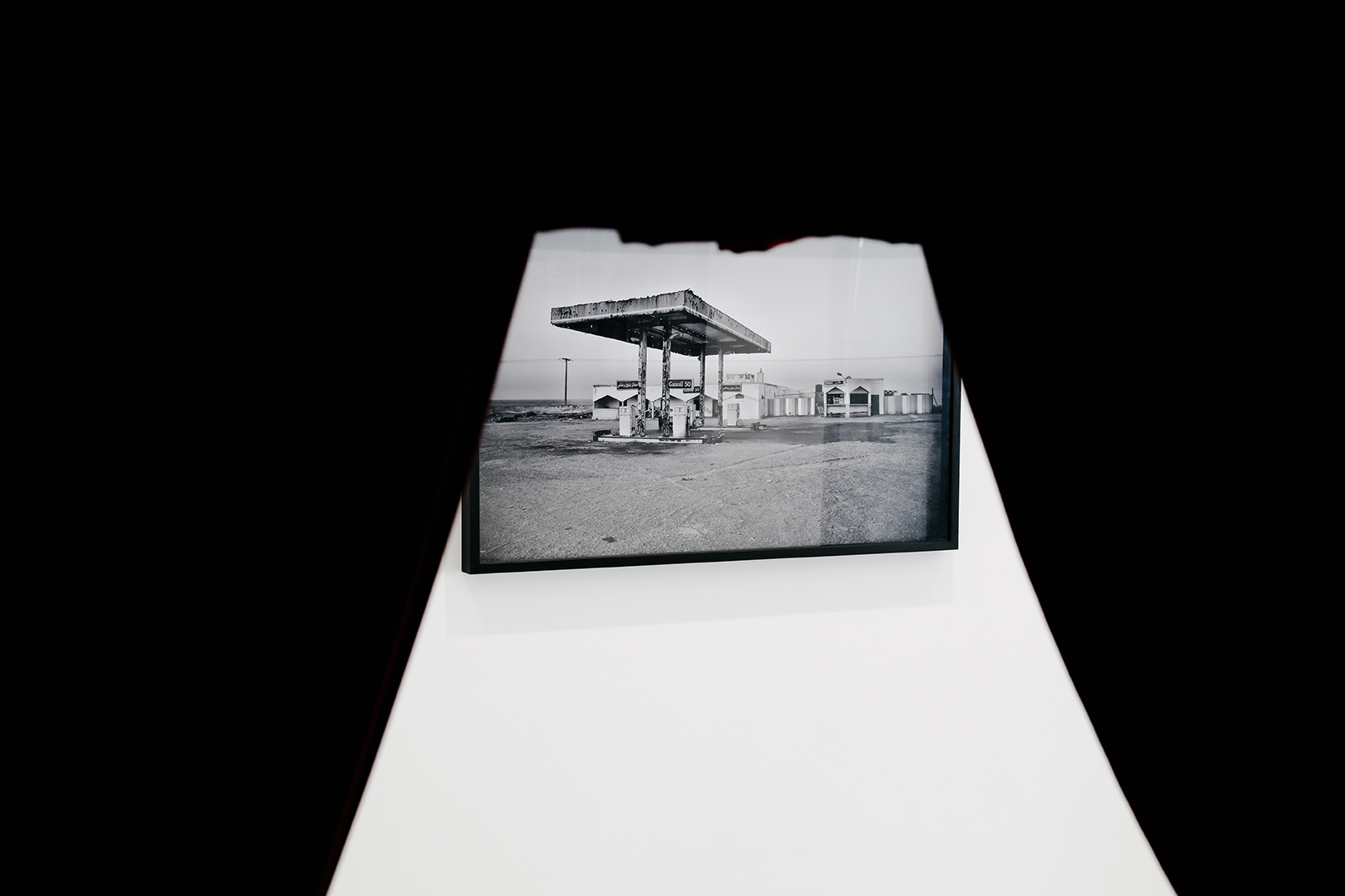
This is a fundamental question because it touches on the boundary between what surrounds the work and what actually constitutes the work. In a series such as Lost in Morocco, which represents almost ten years of work, I spent a considerable amount of time on pure research, comparing maps and exploring archives.
But this entire investigative phase is not merely documentary: it already fully belongs to the creative process. When I read through a text or study a map, there is an element of fantasy, anticipation and projection. I imagine the place before I even go there, without knowing whether I will still find traces of it or whether it has completely disappeared from the landscape.
The investigation truly becomes the work when this imagined projection encounters the reality of the site. It is this passage from mental projection to physical presence, and then to the photographic act and the artist’s intervention, that transforms a documentary object into an artistic one.
VOTRE TRAVAIL COMMENCE SOUVENT BIEN AVANT LA PHOTOGRAPHIE, AVEC DES CARTES ANCIENNES, DES ARCHIVES, DES TEXTES UNIVERSITAIRES, PARFOIS DES LIEUX QUI ONT MÊME DISPARU DES CARTES CONTEMPORAINES. À QUEL MOMENT L’ENQUÊTE DEVIENT-ELLE UNE ŒUVRE ?
C’est une question fondamentale, parce qu’elle touche à la frontière entre ce qui entoure l’œuvre et ce qui fait œuvre. Dans une série comme Lost in Morocco, qui représente près de dix ans de travail, j’ai passé un temps considérable dans la recherche pure, la confrontation des cartographies et l’exploration des archives. Mais toute cette phase d’enquête n’est pas seulement documentaire : elle appartient déjà pleinement à la création. Quand je parcours un texte ou que j’étudie une carte, il y a une part de fantasme, d’anticipation et de projection. Je m’imagine le lieu avant même de m’y rendre, sans savoir si j’en trouverai encore des traces ou s’il a définitivement disparu du paysage. L’enquête devient véritablement œuvre au moment où ce fantasme se confronte au réel du terrain. C’est ce passage de la projection mentale à la présence physique, puis à l’acte photographique et au geste plastique, qui transforme l’objet documentaire en objet artistique.
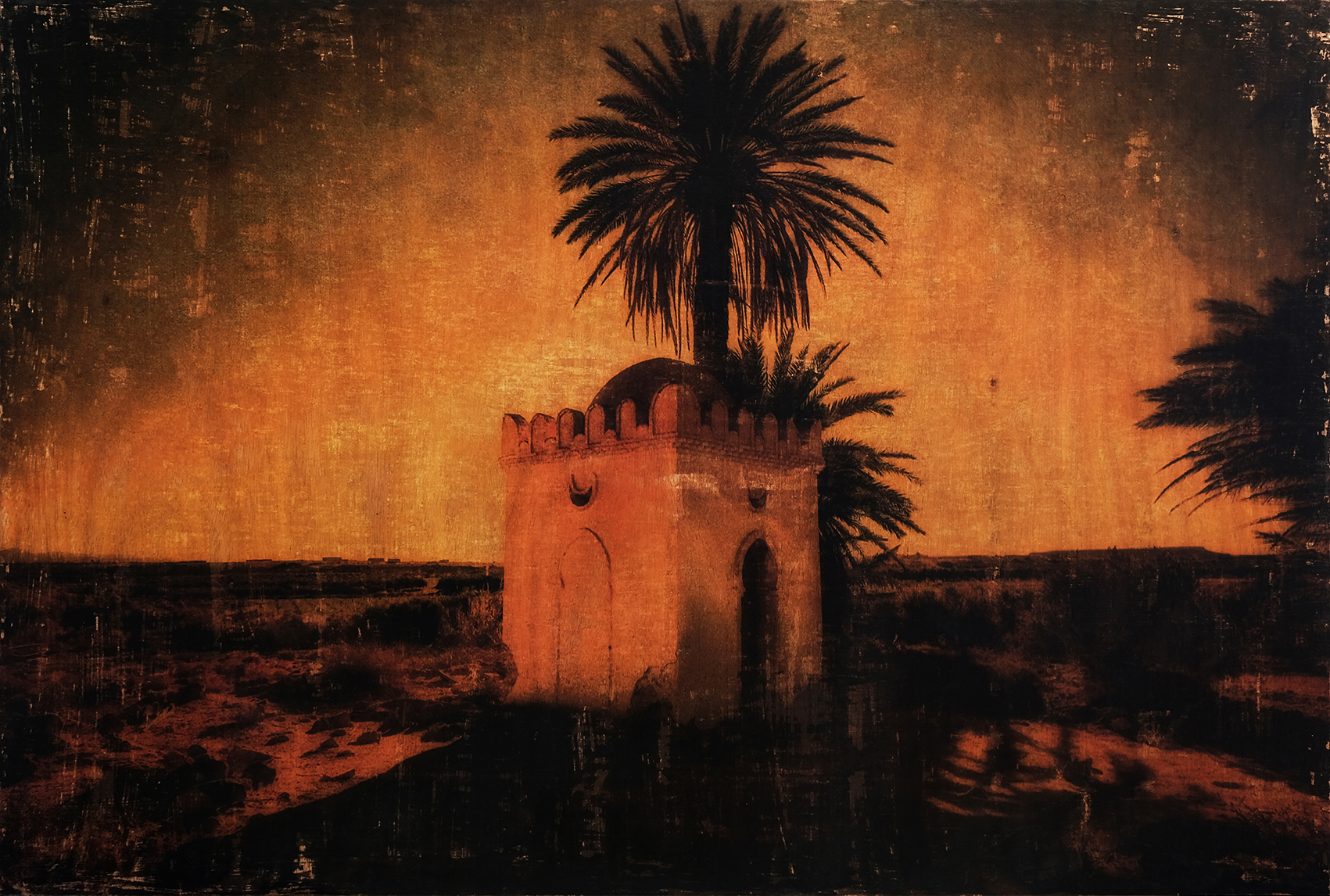
YOU HAVE SAID THAT YOU ARE NOT TRYING TO SHOW THE DESOLATION OF RUINS, BUT RATHER TO “UNEARTH THEIR TRIUMPHANT EXISTENCE.” IS THIS A WAY OF PHOTOGRAPHING THE PAST WITHOUT FALLING INTO NOSTALGIA?
Absolutely. If there is nostalgia, it is certainly not nostalgia for a regretted past or for a period I myself experienced. It is something far more ambiguous and ambivalent.
Faced with these ruins, we are directly confronted with the foundations of history and with the way a gaze has been cast upon this territory. To unearth their “triumphant existence” is not to praise the past or embellish a particular period: it is to reject miserabilism and mere lamentation. It means looking these architectures directly in the face, with all their historical and material weight, and questioning what remains of them and what they tell us about ourselves today, without ever slipping into naive romanticism.
VOUS AVEZ DIT NE PAS CHERCHER À MONTRER LA DÉSOLATION DES RUINES, MAIS PLUTÔT À « EXHUMER LEUR EXISTENCE TRIOMPHANTE ». EST-CE UNE MANIÈRE DE PHOTOGRAPHIER LE PASSÉ SANS TOMBER DANS LA NOSTALGIE ?
Absolument. Si nostalgie il y a, ce n’est certainement pas la nostalgie d’un passé regretté ou d’une époque que j’aurais connue. C’est quelque chose de beaucoup plus ambigu et ambivalent. Face à ces ruines, on est directement confronté aux fondements de l’histoire et à la manière dont le regard s’est posé sur ce territoire. Exhumer leur « existence triomphante », ce n’est pas faire l’éloge du passé ni embellir une période : c’est refuser le misérabilisme ou la simple déploration. C’est regarder ces architectures en face, dans toute leur charge historique et matérielle, pour questionner ce qu’il reste d’elles et ce qu’elles racontent de nous aujourd’hui, sans jamais tomber dans un romantisme naïf.
YOUR TRAINING AS AN ARCHITECT SEEMS TO LEAD YOU TO LOOK AT A BUILDING BOTH FOR WHAT IT IS AND FOR WHAT IT REVEALS ABOUT A PARTICULAR ERA. DO THE ARCHITECT AND THE PHOTOGRAPHER STILL LOOK AT THINGS DIFFERENTLY TODAY?
I am not sure that I look at a building through the eyes of a practising architect. I see myself more as someone who is deeply sensitive to architecture, who has benefited from architectural training and from access to informed ways of looking at the discipline.
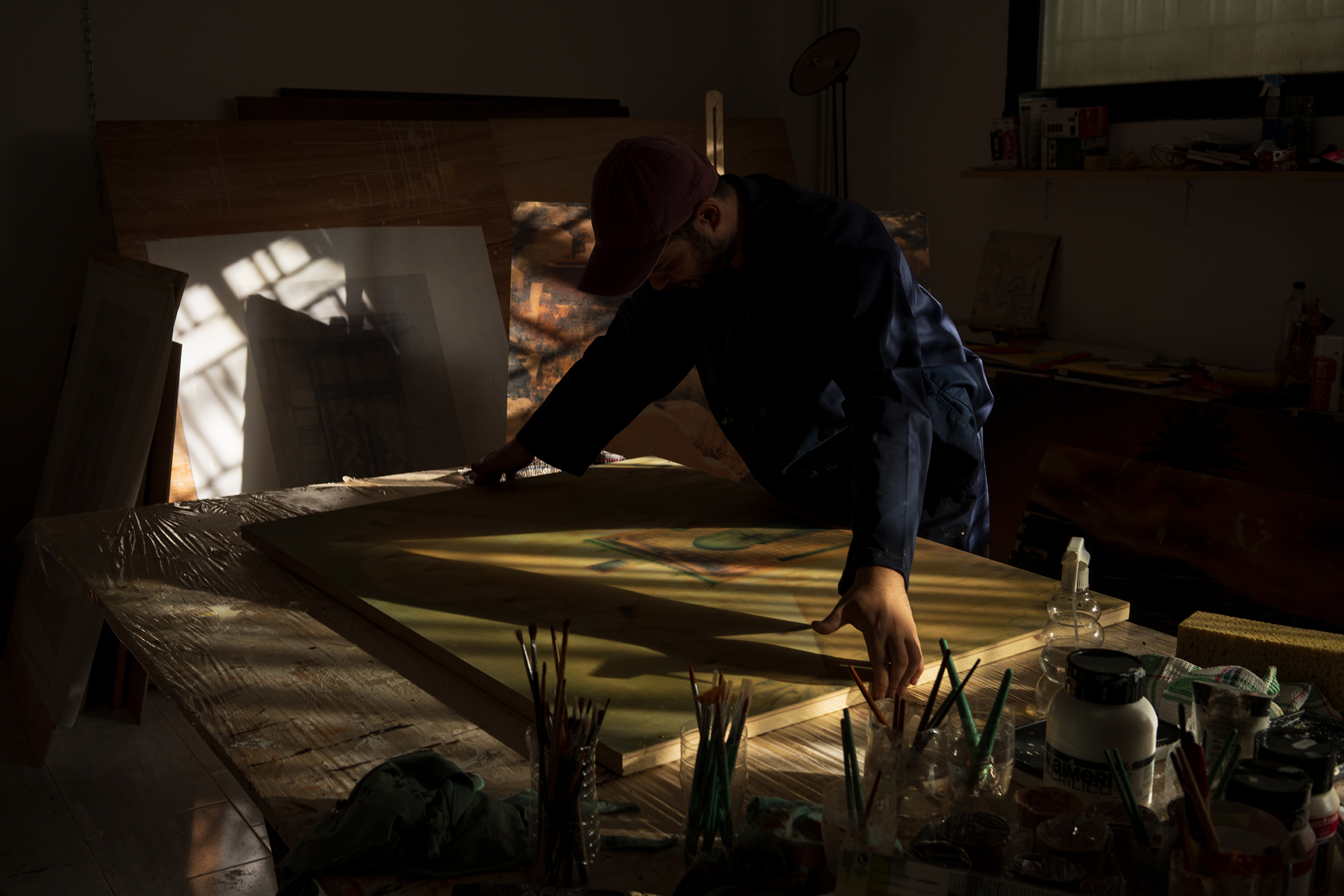
What my training gave me is the ability to read processes. What I find fascinating when observing, drawing or photographing a ruin is that the building is laid bare, stripped of all its infill elements. As it loses its function and finishes, it strangely returns to its most primary form: the drawing. Standing before a ruin, one perceives the plan, the section, the structure and the perspective all at once. These disembodied architectures return to what they always were before they physically existed.
They bring us back to topography, to the building’s intrinsic vulnerability, but also to an essential notion: the failure of architecture. Architecture attempts to freeze time in order to shelter life, and the ruin reveals the limits of that ambition. Today, my gaze is definitively that of a visual artist with a heightened sensitivity to architecture. My work is a gaze directed at photography and architecture, rather than a photographic gaze directed at architecture.
VOTRE FORMATION D’ARCHITECTE SEMBLE VOUS POUSSER À REGARDER UN BÂTIMENT AUTANT POUR CE QU’IL EST QUE POUR CE QU’IL RACONTE D’UNE ÉPOQUE. EST-CE QUE L’ARCHITECTE ET LE PHOTOGRAPHE REGARDENT ENCORE DIFFÉREMMENT AUJOURD’HUI ?
Je ne suis pas sûr de regarder le bâtiment avec l’œil de l’architecte praticien. Je me considère plutôt comme quelqu’un de très sensible à l’architecture, qui a bénéficié d’une formation et d’un accès à des regards savants sur cette discipline. Ce que ma formation m’a apporté, c’est la capacité de lire des processus. Ce que je trouve fascinant quand on observe, dessine, ou photographie une ruine, c’est que le bâtiment se retrouve mis à nu, dépouillé de tous ses éléments de remplissage. En perdant sa fonction et ses finitions, il se rapproche étrangement de sa forme la plus primaire : le dessin. Devant une ruine, on perçoit simultanément le plan, la coupe, la structure et la perspective. Ces architectures désincarnées reviennent à ce qu’elles ont toujours été avant d’exister physiquement. Elles nous ramènent ainsi à la topographie, à la vulnérabilité intrinsèque du bâtiment, mais aussi à une notion essentielle : celle de l’échec de l’architecture. L’architecture tente de figer le temps pour abriter la vie, et la ruine en montre la limite. Aujourd’hui, mon regard est définitivement celui d’un plasticien qui porte une sensibilité aiguë sur l’architecture. Mon travail est un regard posé sur la photographie et sur l’architecture, plutôt qu’un regard photographique sur l’architecture.
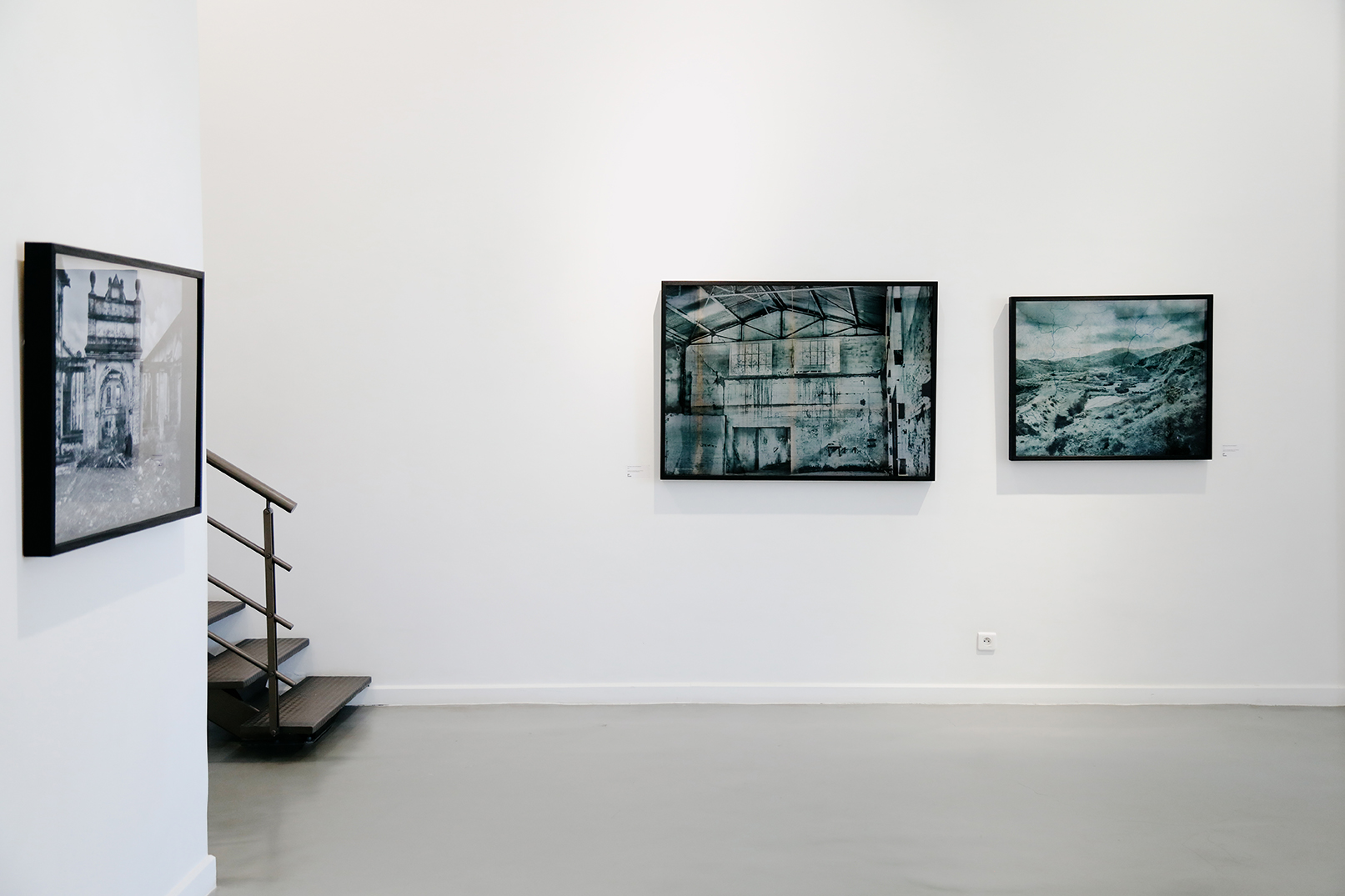
IN LOST IN MOROCCO, SOME PLACES BEAR DIRECT TRACES OF THE PROTECTORATE AND OF MOROCCO’S COLONIAL HISTORY. HOW DO YOU PHOTOGRAPH THIS HISTORY WITHOUT SIMPLY AESTHETICISING IT OR CLAIMING TO REWRITE IT?
This is probably the most fundamental question I ask myself on a daily basis in my practice. What draws me to these architectures in a state of obsolescence is precisely the way they make us question the imprint they leave on our territories, and the way they have shaped, and continue to shape, our collective identities.
To avoid the trap of mere aestheticisation or a romantic fascination with ruins, these places have to be approached with genuine formal and critical rigour. The point is not to reenact colonial history, nor to try to rewrite it, but to look at it as a form of stratification: a material, political and social layer that is now part of the Moroccan landscape.
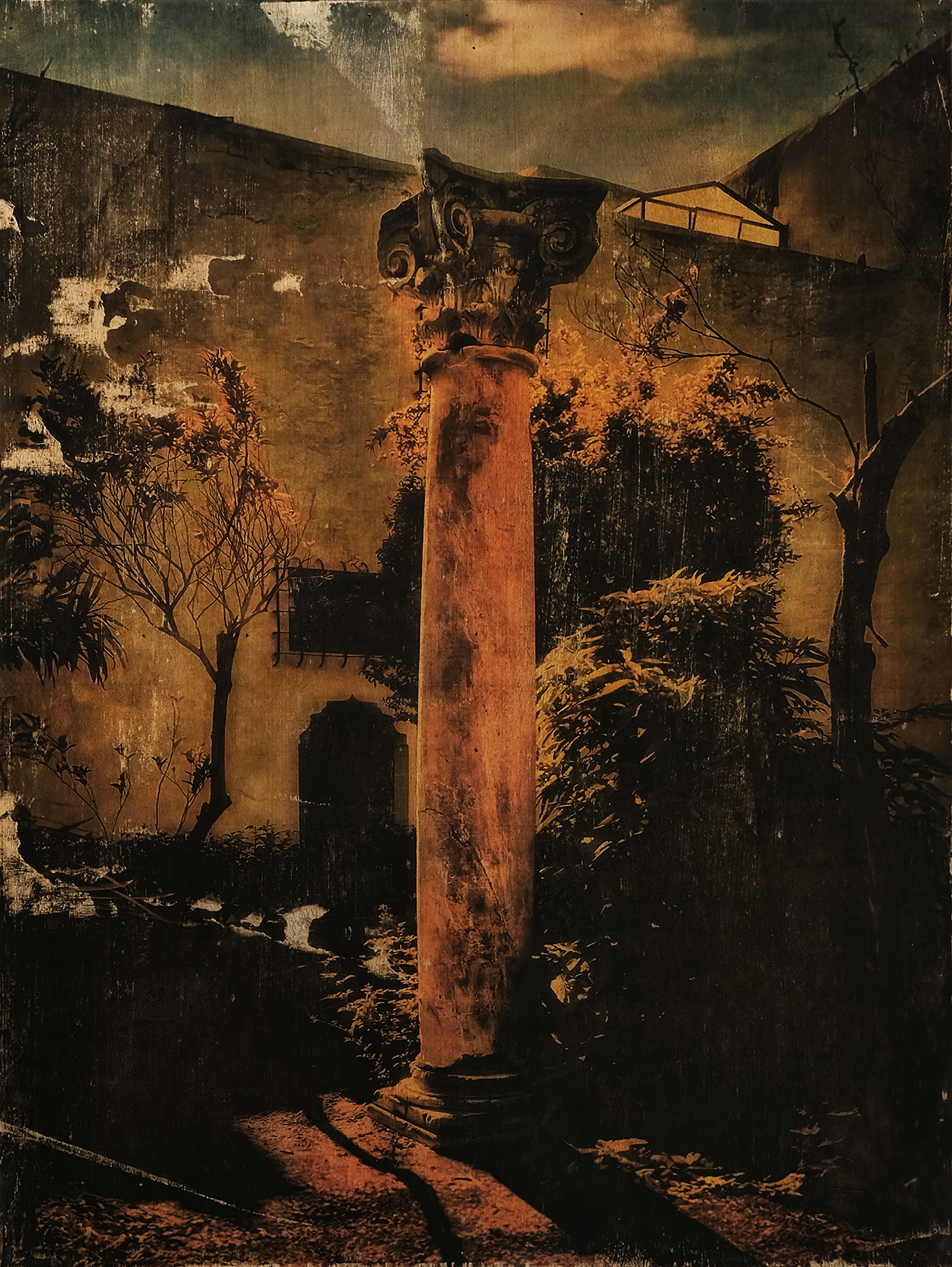
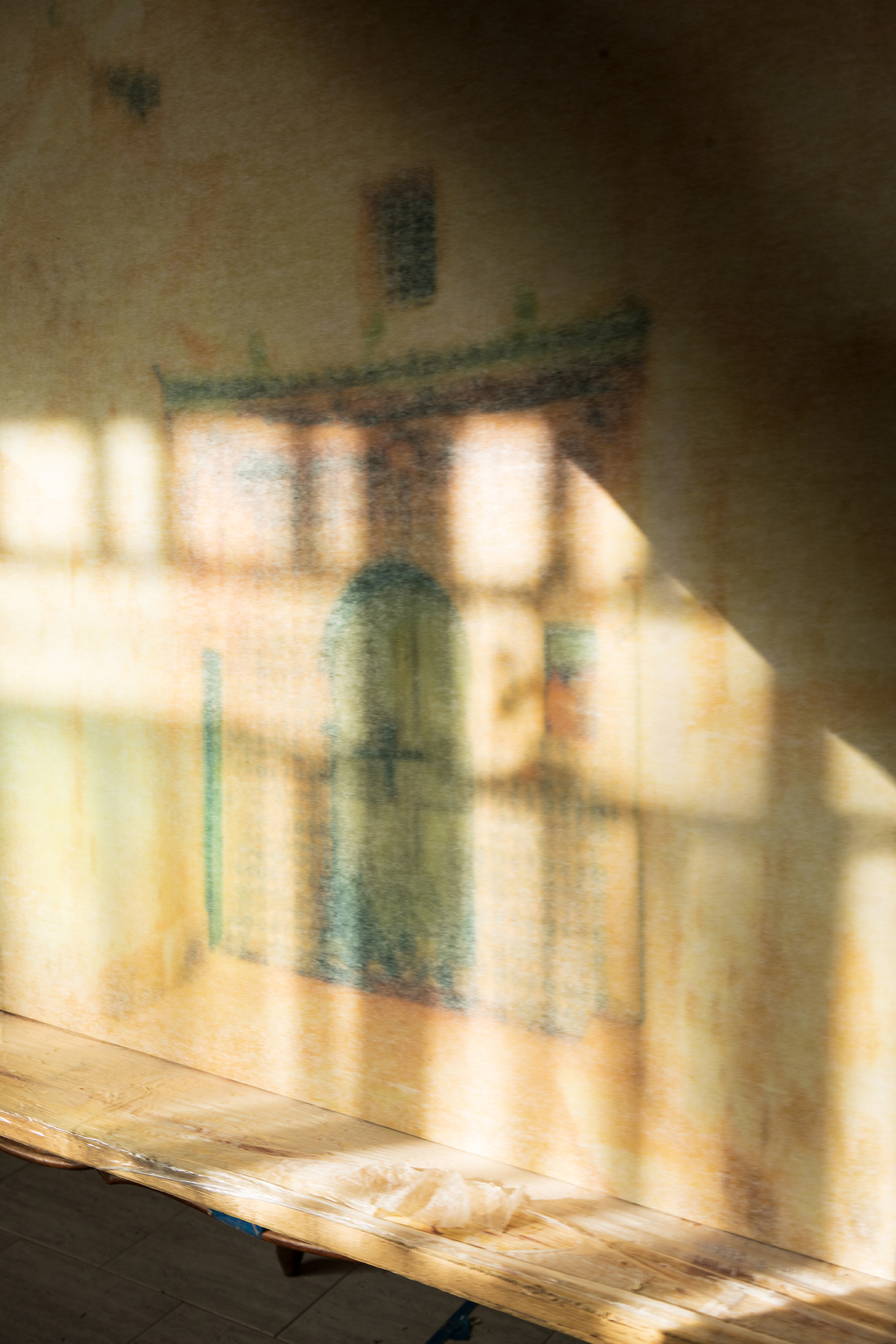
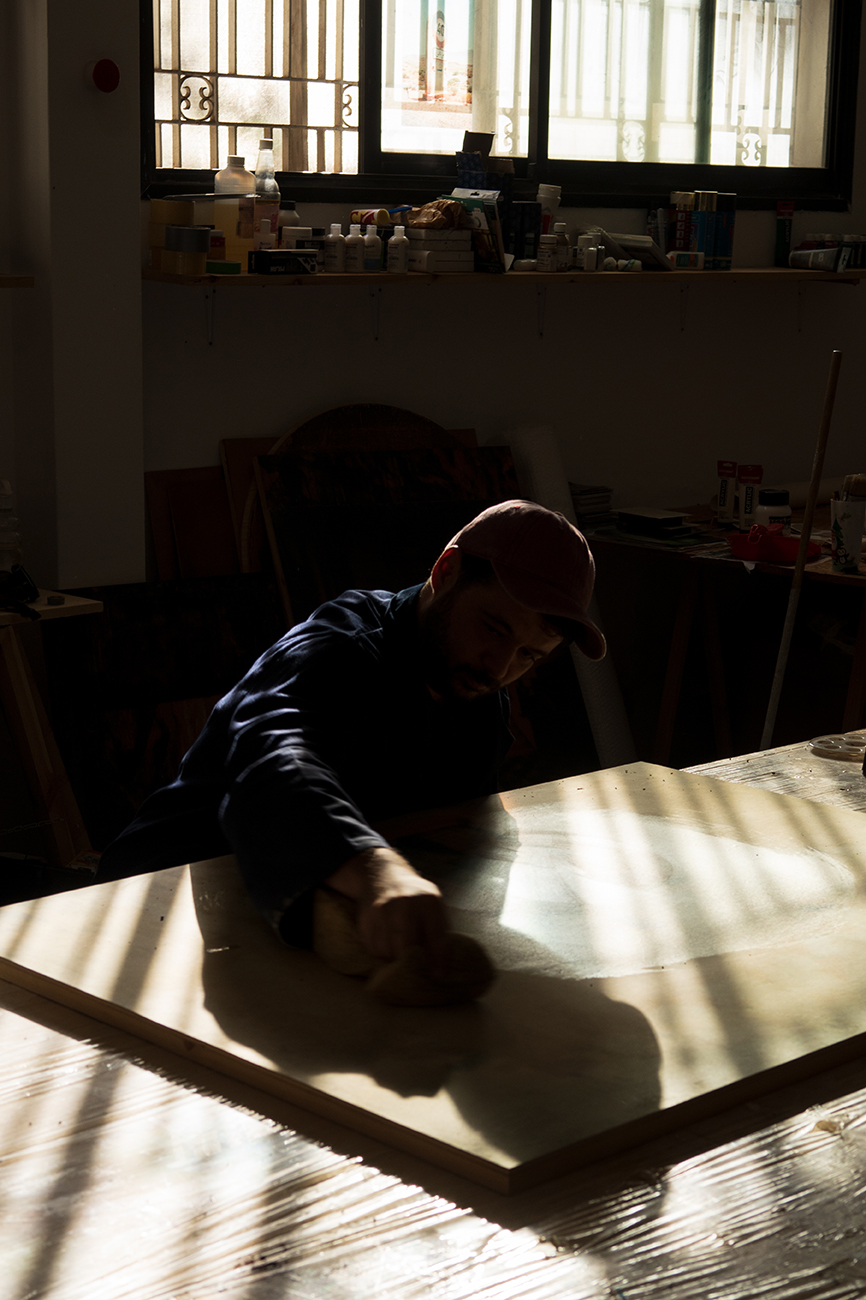
By working directly with the materiality of the image, through surface manipulation, processes and glazes, I try to move beyond simple documentary observation. The aim is to bring this ambiguous memory to the surface, to reveal the tension between what these buildings represented historically and what remains of them today: foreign bodies that, through the effects of time and climate, have become fully integrated elements of our geography. It is by confronting this complexity that one avoids the decorative pitfall.
DANS LOST IN MOROCCO, CERTAINS LIEUX PORTENT DIRECTEMENT LES TRACES DU PROTECTORAT ET DE L’HISTOIRE COLONIALE DU MAROC. COMMENT PHOTOGRAPHIER CETTE HISTOIRE SANS SIMPLEMENT L’ESTHÉTISER NI PRÉTENDRE LA RÉÉCRIRE ?
C’est sans doute la question la plus fondamentale que je me pose au quotidien dans ma démarche. Ce qui m’attire dans ces architectures en état d’obsolescence, c’est justement la manière dont elles nous interrogent sur l’empreinte qu’elles laissent dans nos territoires, et sur la façon dont elles ont façonné, et façonnent encore, nos identités collectives. Pour éviter le piège d’une simple esthétisation ou d’une fascination romantique pour la ruine, il faut aborder ces lieux avec une vraie rigueur plastique et critique. L’enjeu n’est pas de rejouer l’histoire coloniale, ni d’essayer de la réécrire, mais de la regarder comme une stratification : une strate matérielle, politique et sociale qui fait désormais partie du paysage marocain. En travaillant la matière même de l’image, par le biais de la manipulation de surface, des procédés et des glacis, je cherche à sortir du simple constat documentaire. Il s’agit de faire affleurer cette mémoire ambiguë, de montrer la tension entre ce que ces bâtiments ont représenté historiquement et ce qu’il reste d’eux aujourd’hui : des corps étrangers devenus, par la force du temps et du climat, des éléments à part entière de notre géographie. C’est en affrontant cette complexité qu’on évite l’écueil du décoratif.
IN YOUR MORE RECENT WORK, IT IS NO LONGER ONLY THE BUILDINGS THAT SEEM THREATENED WITH DISAPPEARANCE, BUT THE IMAGE ITSELF AS WELL: OLD PAPER, GLASS, CHEMICAL PROCESSES, FRAGILE SUPPORTS… IS DISAPPEARANCE ULTIMATELY THE TRUE THREAD RUNNING THROUGH YOUR WORK?
That is extremely accurate. There is an obvious continuity in this approach: fundamentally, what has always fascinated me is the trace of architecture just as much as the trace of photography itself.
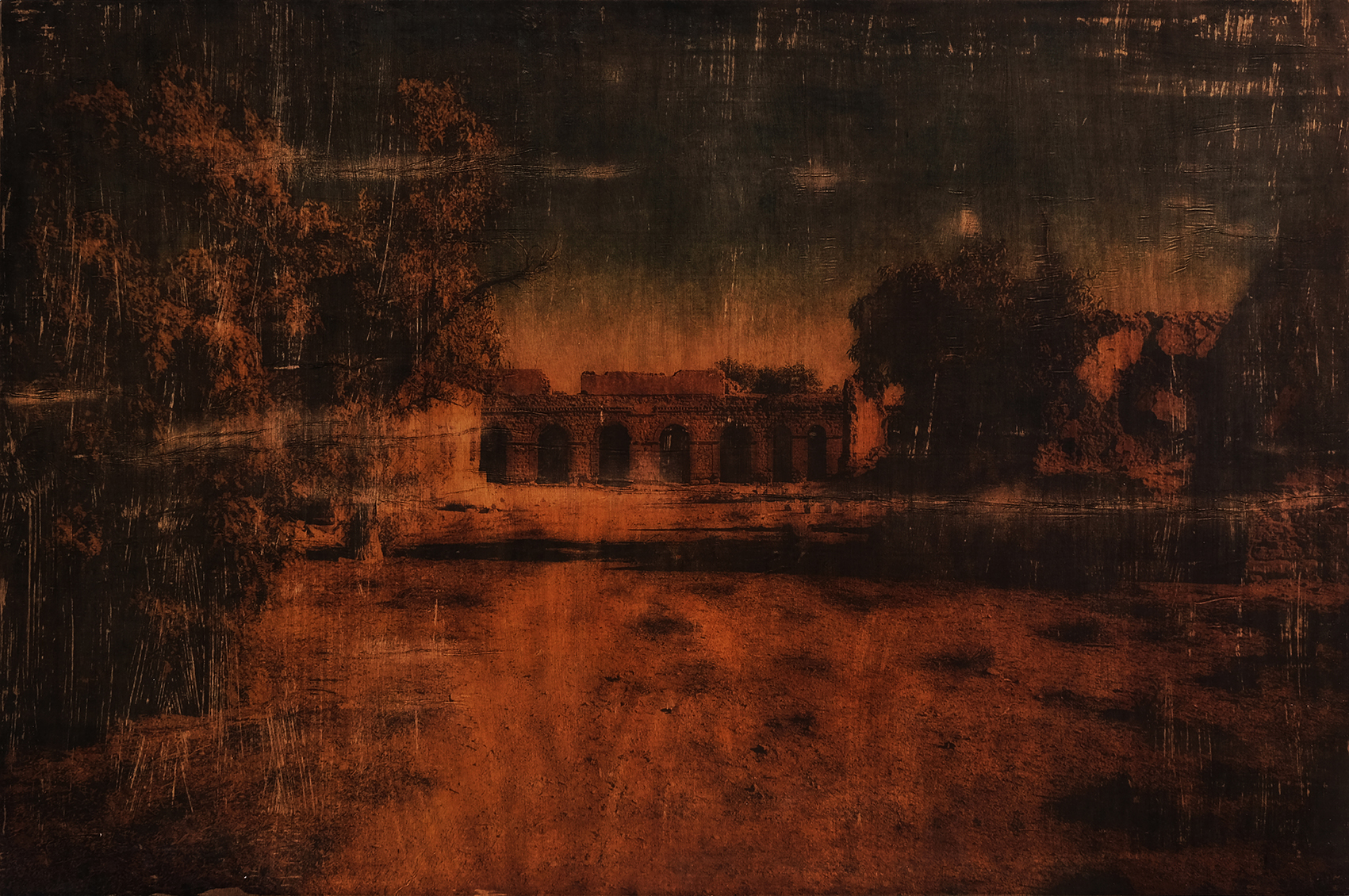
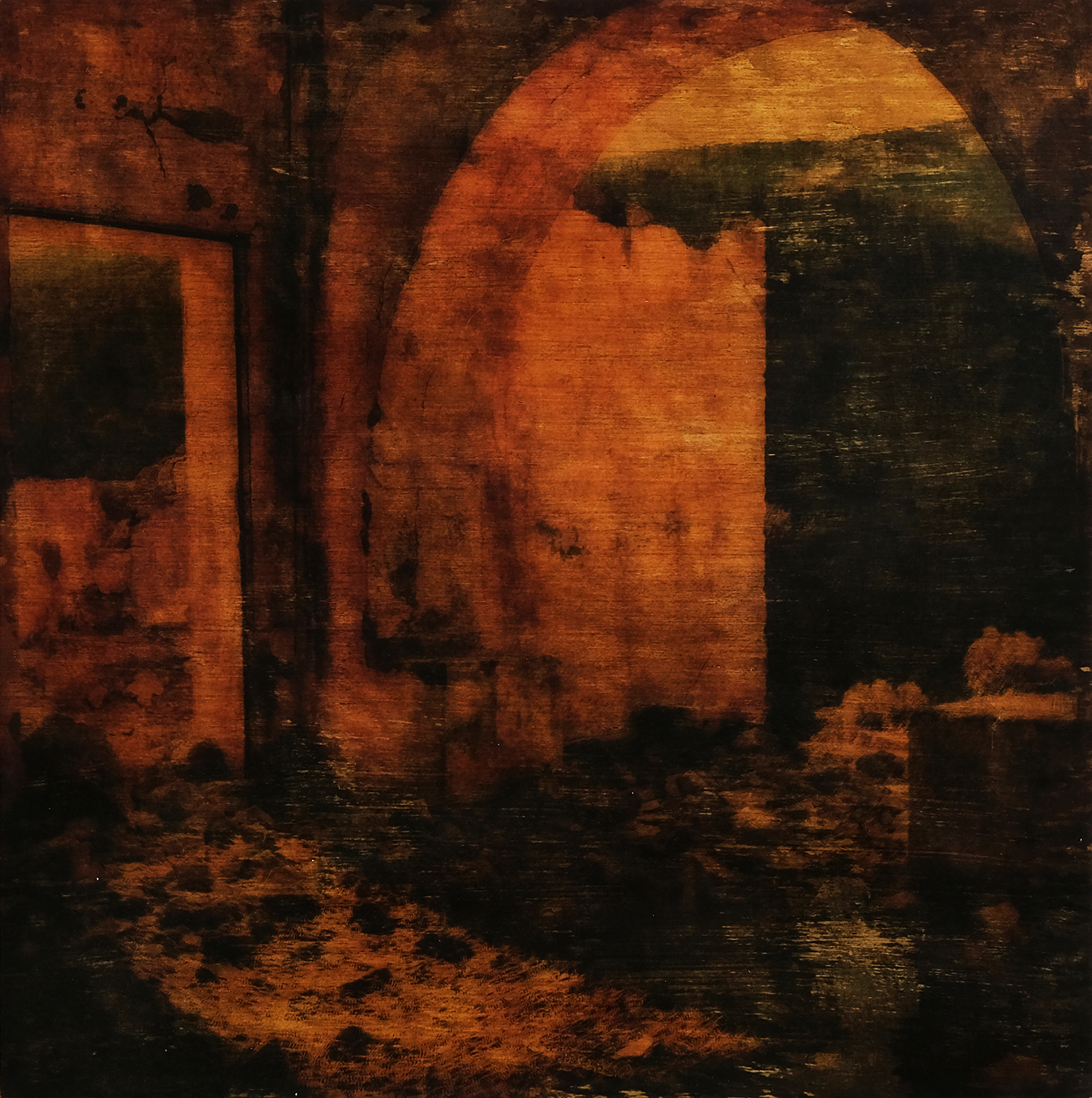
In my recent work (Relics), the support and the materiality of the image become inseparable from the subject. Working with chemical processes, glass, old papers or fragile surfaces means accepting that the image is a physical object, vulnerable and subject to wear, exactly like the buildings I photograph.
More than disappearance in a tragic or definitive sense, it is questions of representation and the notion of the vestige that concern me. How does an image retain the imprint of time? What remains when the support itself begins to deteriorate? The thread running through the work is this constant investigation into the persistence of memory, whether inscribed in stone or on paper.
DANS VOS TRAVAUX PLUS RÉCENTS, CE NE SONT PLUS SEULEMENT LES BÂTIMENTS QUI SEMBLENT MENACÉS DE DISPARITION, MAIS AUSSI L’IMAGE ELLE-MÊME : PAPIER ANCIEN, VERRE, PROCÉDÉS CHIMIQUES, SUPPORTS FRAGILES… EST-CE FINALEMENT LA DISPARITION QUI CONSTITUE LE VÉRITABLE FIL CONDUCTEUR DE VOTRE TRAVAIL ?
C’est extrêmement juste. Il y a une continuité évidente dans cette démarche : au fond, ce qui m’a toujours fasciné, c’est autant la trace de l’architecture que la trace de la photographie elle-même. Dans mes travaux récents (Relics), le support et la matière de l’image deviennent indissociables du sujet. Travailler avec des procédés chimiques, du verre, des papiers anciens ou des fragilités de surface, c’est accepter que l’image soit un objet physique, vulnérable et soumis à l’usure, exactement comme les bâtiments que je photographie. Plus que la disparition au sens tragique ou définitif, ce sont les questions de représentation et la notion de vestige qui m’interpellent. Comment une image garde-t-elle l’empreinte du temps ? Qu’est-ce qui subsiste quand le support lui-même commence à s’altérer ? Ce fil conducteur, c’est cette recherche constante sur la persistance de la mémoire, qu’elle soit inscrite dans la pierre ou sur papier.
BECAUSE DUEL LOVES WHAT PLAYS OUT BETWEEN TWO POLES: A FEW DUAL QUESTIONS.
ARCHITECTURE OR PHOTOGRAPHY?
Architecture
ARCHIVE OR FICTION?
Archive
RUIN OR NEW BUILDING?
Ruin
MAP OR TERRITORY?
Both (except with Houellebecq)
BLACK AND WHITE OR COLOUR?
Colour(s)!!!
MEMORY OR OBLIVION?
Memory
ORDER OR ACCIDENT?
Accident
MEDINA OR NEW TOWN?
New town
MSEMEN OR BAGHRIR?
Msemen (political question)
RAJA OR WYDAD?
ASS Salé
PARCE QUE DUEL AIME CE QUI SE JOUE ENTRE DEUX PÔLES : QUELQUES QUESTIONS DUALES.
ARCHITECTURE OU PHOTOGRAPHIE ?
Architecture
ARCHIVE OU FICTION ?
Archive
RUINE OU BÂTIMENT NEUF ?
Ruine
CARTE OU TERRITOIRE ?
Les deux (sauf chez Houellebecq)
NOIR ET BLANC OU COULEUR ?
Couleur(s)!!!
MÉMOIRE OU OUBLI ?
Mémoire
ORDRE OU ACCIDENT ?
Accident
MÉDINA OU VILLE NOUVELLE ?
Ville nouvelle
MSEMEN OU BAGHRIR ?
Msemen (question politique)
RAJA OU WYDAD ?
ASS Salé