AUGUSTUS NAZZARO
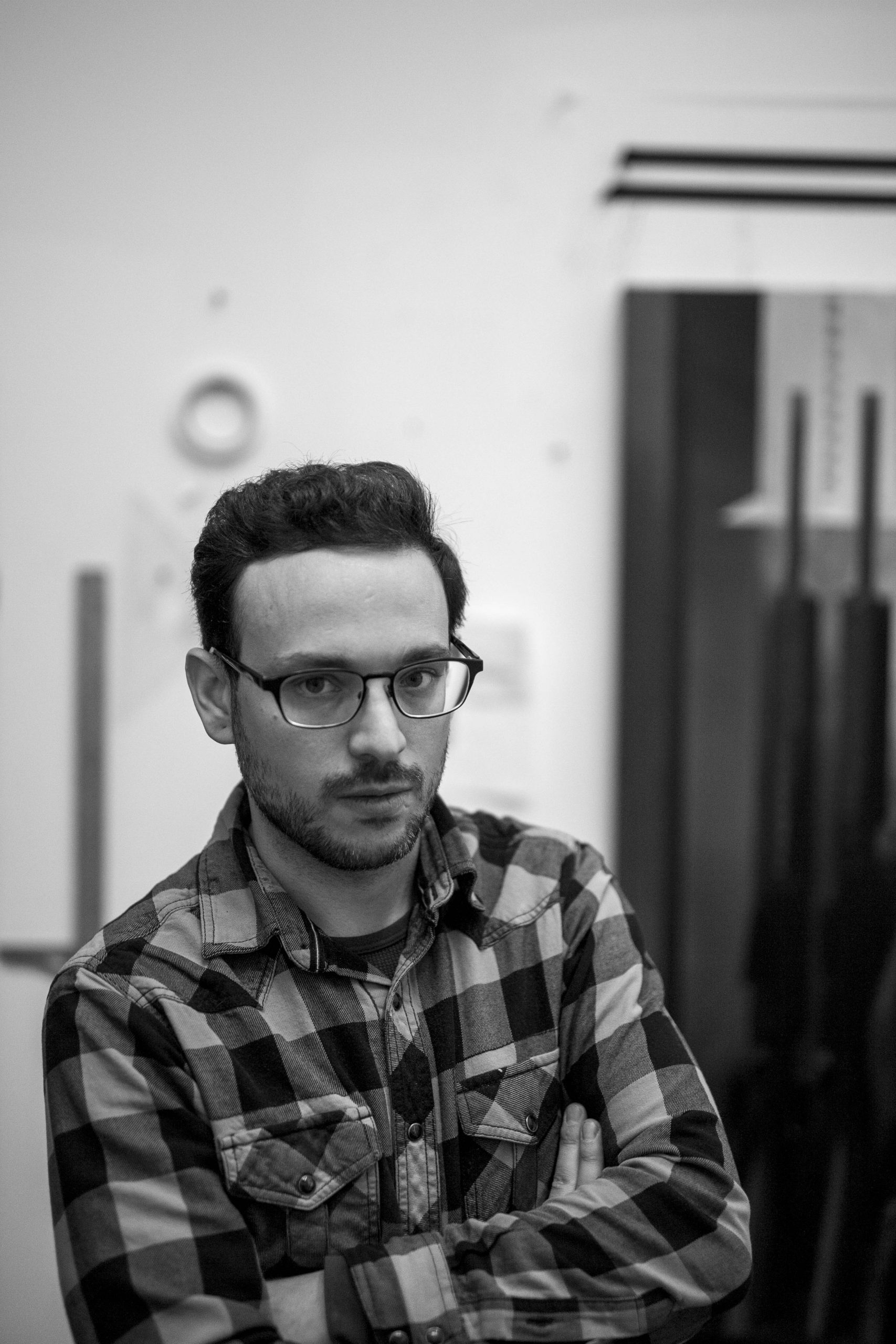
PORTRAIT
INTERVIEW BY ROSE POILANE
Born in 1984 in New York, Augustus Nazzaro paints memory as it fades: through a process of sanding and rebuilding, he transforms found images (archives, surveillance footage, censored documents) into universal symbols of collective trauma. In this interview, he discusses erasure as a conceptual gesture, the power of forgetting, and the architectures that embody institutional control.
Né en 1984 à New York, Augustus Nazzaro peint la mémoire qui s’efface : par un processus de ponçage et de reconstruction, il transforme des images trouvées — archives, surveillance, documents censurés — en symboles universels de trauma collectif. Dans cet entretien, il revient sur l’érasure comme geste conceptuel, le pouvoir de l’oubli et les architectures qui incarnent le contrôle institutionnel.
Disappearance
In your paintings, subjects seem to emerge and disappear at the same time. What interests you about this space where the image hovers between presence and erasure?
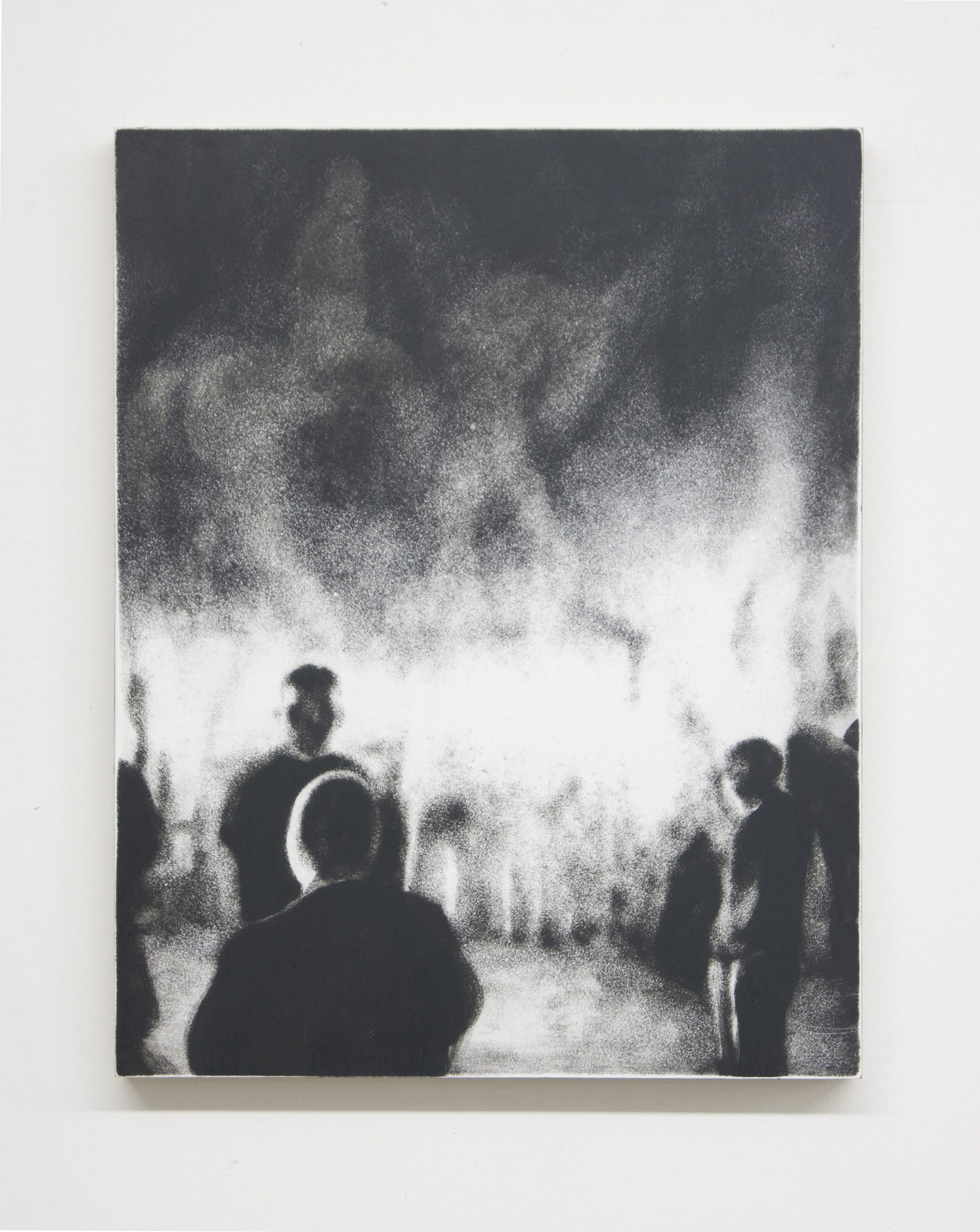
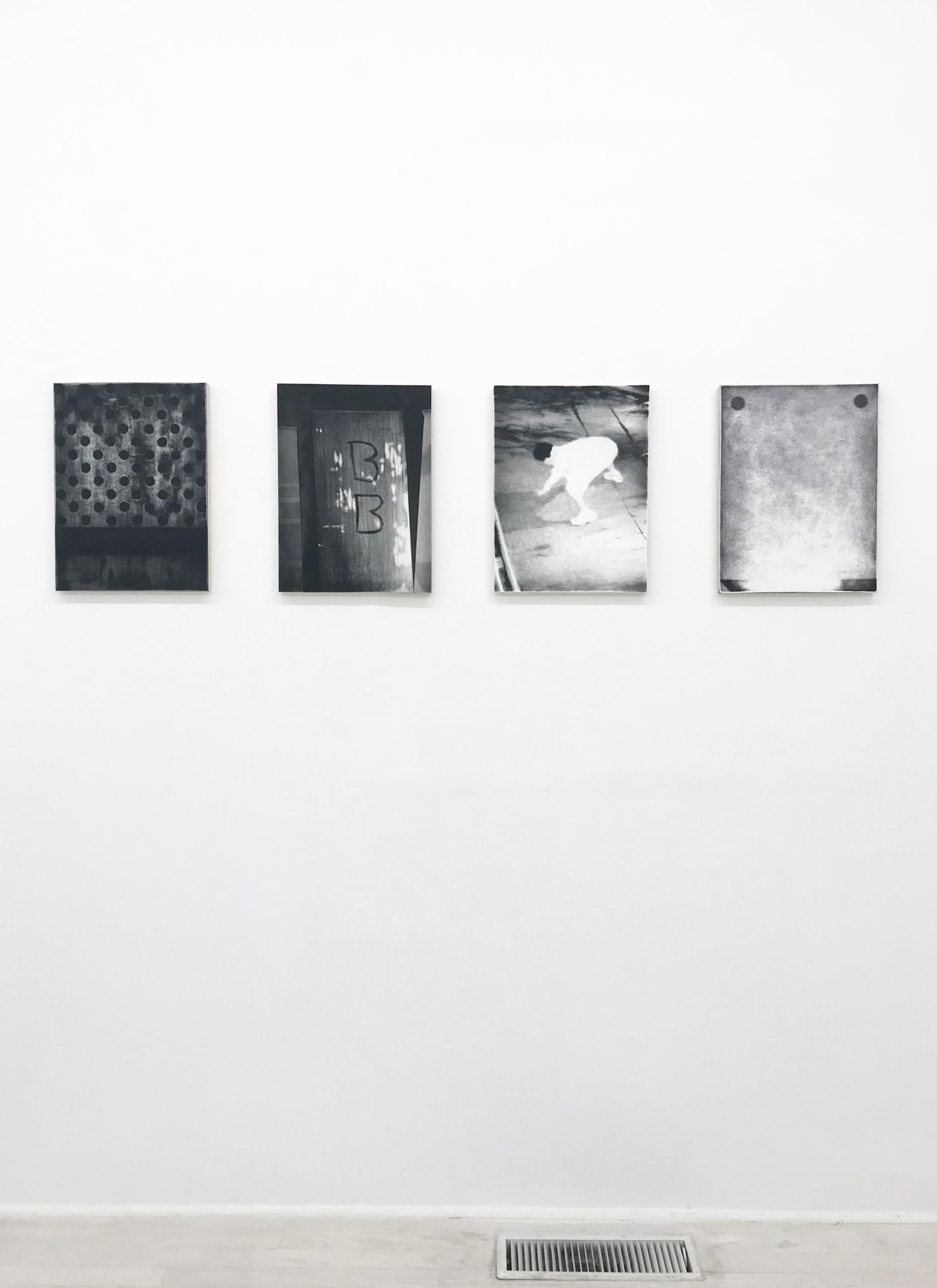
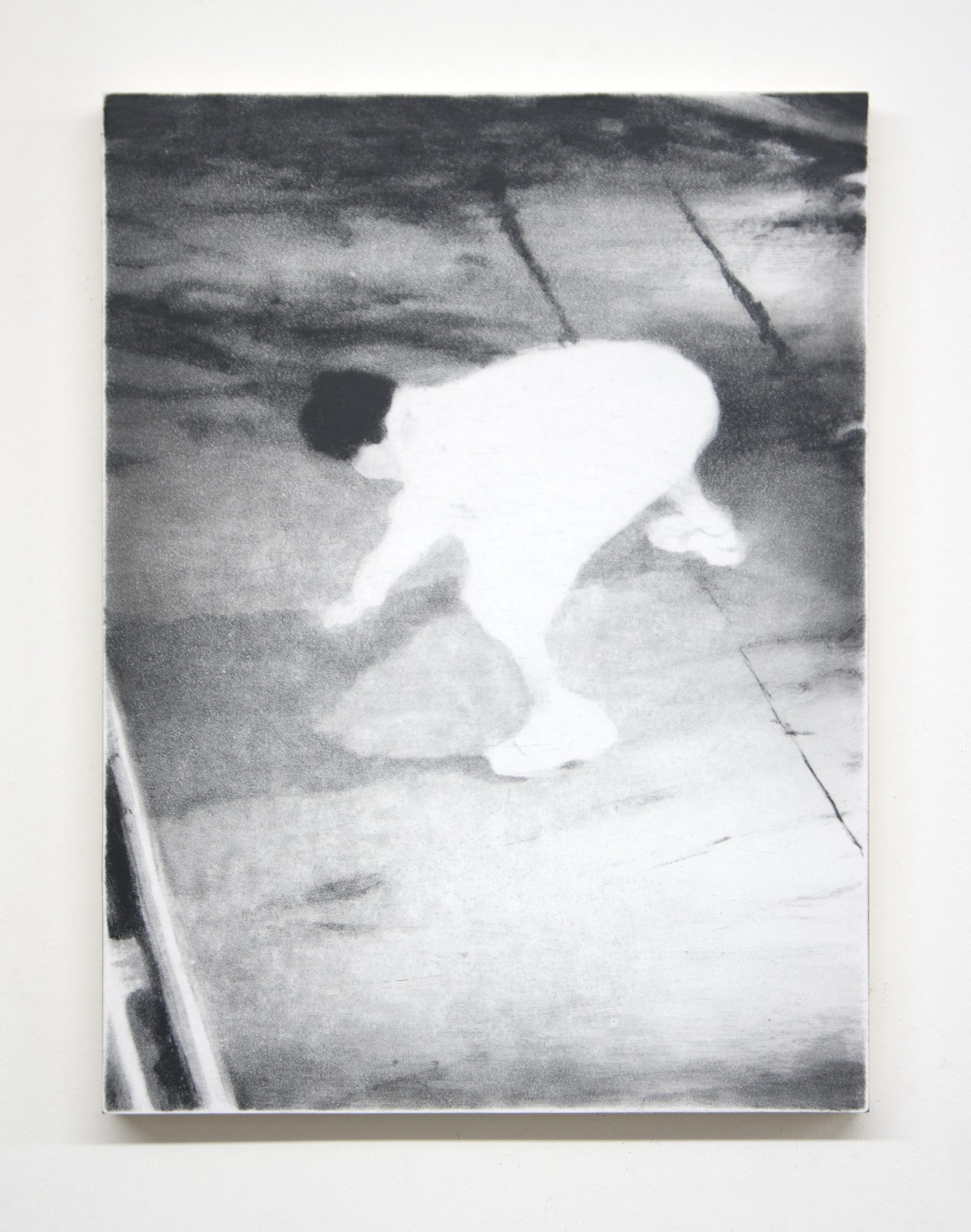
This liminal space is compelling because it mirrors the actual mechanics of human memory and psychological trauma, which are rarely sharp or fully formed. When an image hovers on the edge of visibility, it creates a palpable tension that forces a deeper, more investigative engagement from the viewer. There is a powerful quality in an image that is simultaneously haunting and fleeting, existing merely as a ghost of its original source. It is within this exact gray area that a found media still transforms from a specific historical event into a universal symbol of collective anxiety.
DISPARITION
DANS VOS PEINTURES, LES SUJETS SEMBLENT APPARAÎTRE ET DISPARAÎTRE SIMULTANÉMENT. QU’EST-CE QUI VOUS INTÉRESSE DANS CET ESPACE OÙ L’IMAGE OSCILLE ENTRE PRÉSENCE ET EFFACEMENT ?
Cet espace liminal m’intéresse parce qu’il reflète le fonctionnement de la mémoire et du traumatisme. Ni l’un ni l’autre ne sont jamais complètement nets ou pleinement constitués. Lorsqu’une image reste au seuil de la visibilité, elle crée une tension qui pousse le regard à ralentir et à s’engager davantage. Une image qui semble à la fois présente et insaisissable possède une force particulière. Elle devient le fantôme de sa propre origine. C’est dans cette zone grise qu’une image trouvée dans les médias cesse de renvoyer à un événement précis pour devenir le symbole d’une anxiété collective.
Your process often involves removing material rather than adding it. Is erasure primarily a formal gesture for you, or does it also carry a broader conceptual dimension?
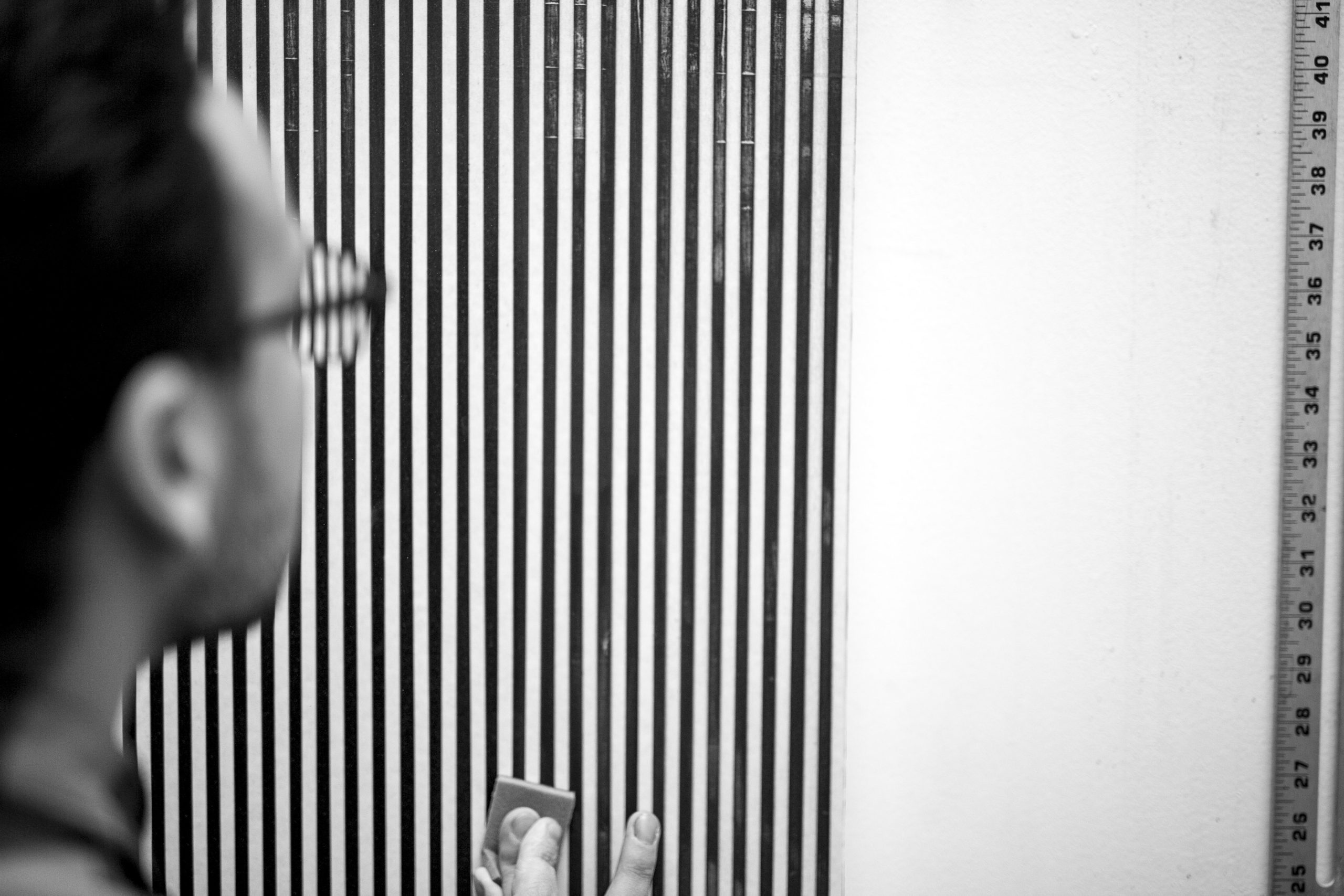
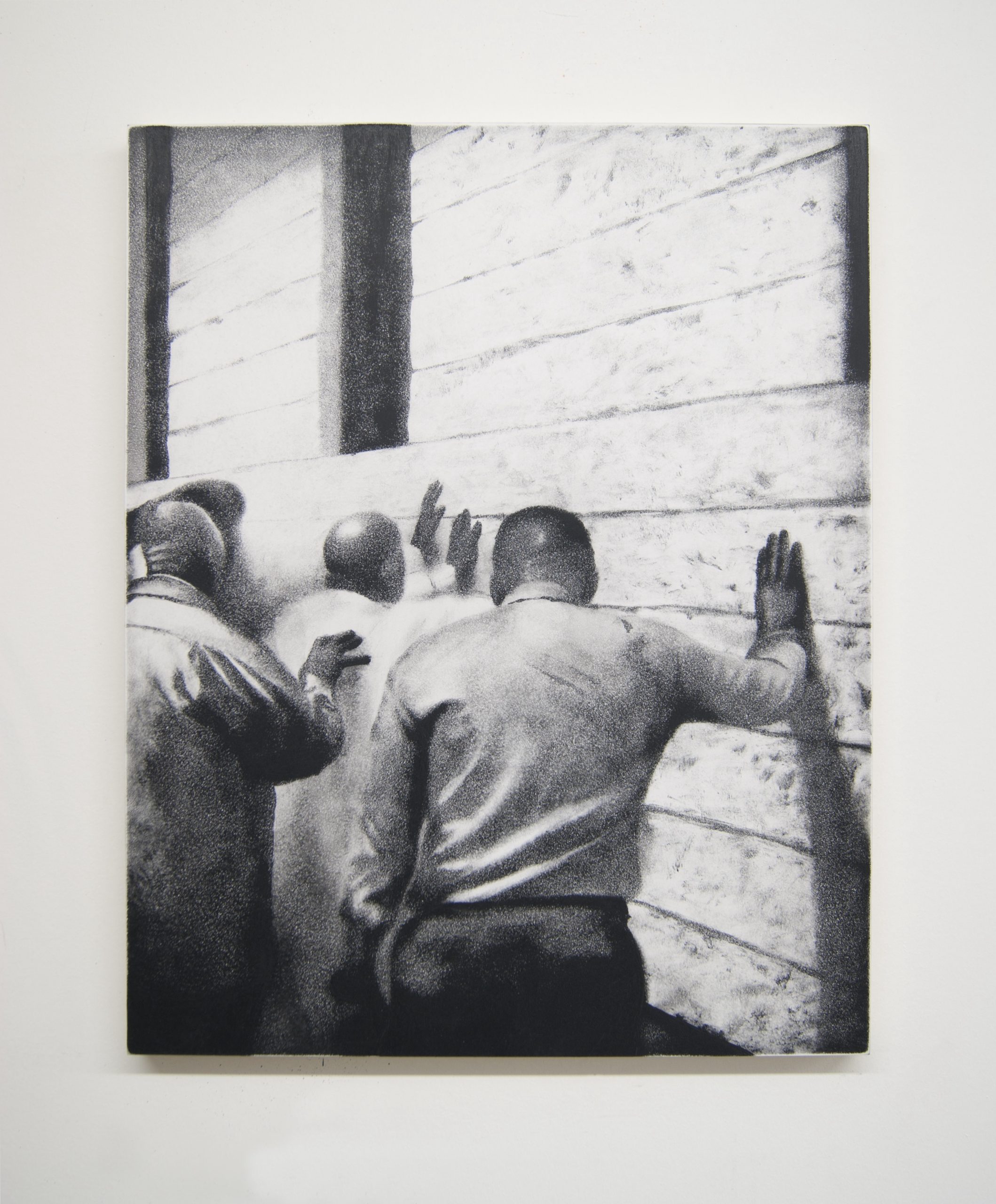
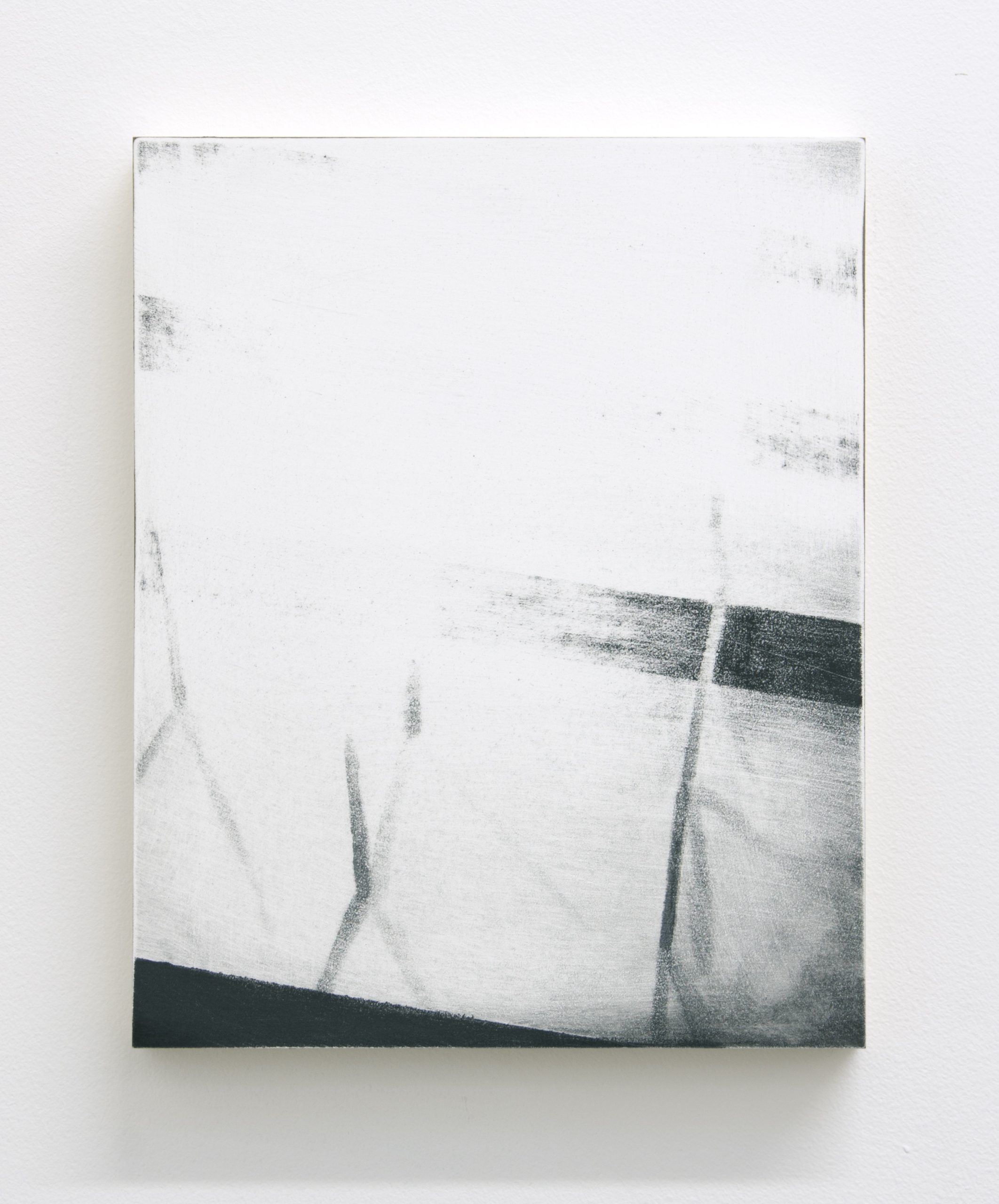
While the physical act of sanding and burnishing has clear formal qualities that mimic film grain or a Xerox copy, erasure operates fundamentally as a conceptual anchor. It serves as a direct material metaphor for how history is actively rewritten, censored, and stripped of context by institutions of power. The removal of paint physically enacts the toll that time, media saturation, and political suppression take on objective truth. The final surface functions not just as a picture, but as a physical archive of loss and structural degradation.
VOTRE PROCESSUS CONSISTE SOUVENT DAVANTAGE À RETIRER DE LA MATIÈRE QU’À EN AJOUTER. L’EFFACEMENT EST-IL AVANT TOUT UN GESTE FORMEL, OU PORTE-T-IL ÉGALEMENT UNE DIMENSION CONCEPTUELLE PLUS LARGE ?
Le ponçage et le polissage ont évidemment une dimension formelle. Ils évoquent le grain de la pellicule ou la texture d’une photocopie. Mais l’effacement est avant tout un point d’ancrage conceptuel. C’est une métaphore matérielle de la façon dont l’histoire est réécrite, censurée et progressivement privée de son contexte par les institutions de pouvoir. En retirant la peinture, je donne une forme physique à ce que le temps, la saturation médiatique et la répression politique font subir à l’idée même de vérité. La surface finale ne fonctionne pas seulement comme une image. Elle devient une archive matérielle de la perte et de la degradation
Your work is built around the gradual destruction of an image. Is there a point at which you know it’s time to stop erasing?
The stopping point is reached when the composition achieves a precise tipping point, or threshold, where specific details vanish but the underlying psychological weight remains intact. The goal is the exact moment an individual face or structure loses its specific identity and transforms into a collective archetype. Over-sanding risks turning the work into a purely abstract formal exercise, while under-sanding leaves it as a literal illustration of a past news event. Finding that boundary requires a careful, intuitive dialogue with the material and content that is worked out during the physical labor of production.
VOTRE TRAVAIL REPOSE SUR LA DESTRUCTION PROGRESSIVE D’UNE IMAGE. EXISTE-T-IL UN MOMENT OÙ VOUS SAVEZ QU’IL EST TEMPS D’ARRÊTER D’EFFACER ?
J’arrête lorsque la composition atteint un point de bascule très précis. Les détails disparaissent, mais la charge psychologique de l’image reste intacte. Je cherche le moment où un visage ou un bâtiment perd son identité propre pour devenir une figure collective. Si je ponce davantage, le tableau bascule vers une abstraction pure. Si je m’arrête trop tôt, il reste une illustration d’un événement. Trouver cette limite demande un dialogue constant avec la matière et avec l’image, un dialogue qui se construit pendant tout le processus de travail.
Many of your paintings feel like memories with missing fragments. What role does forgetting play in your creative process?
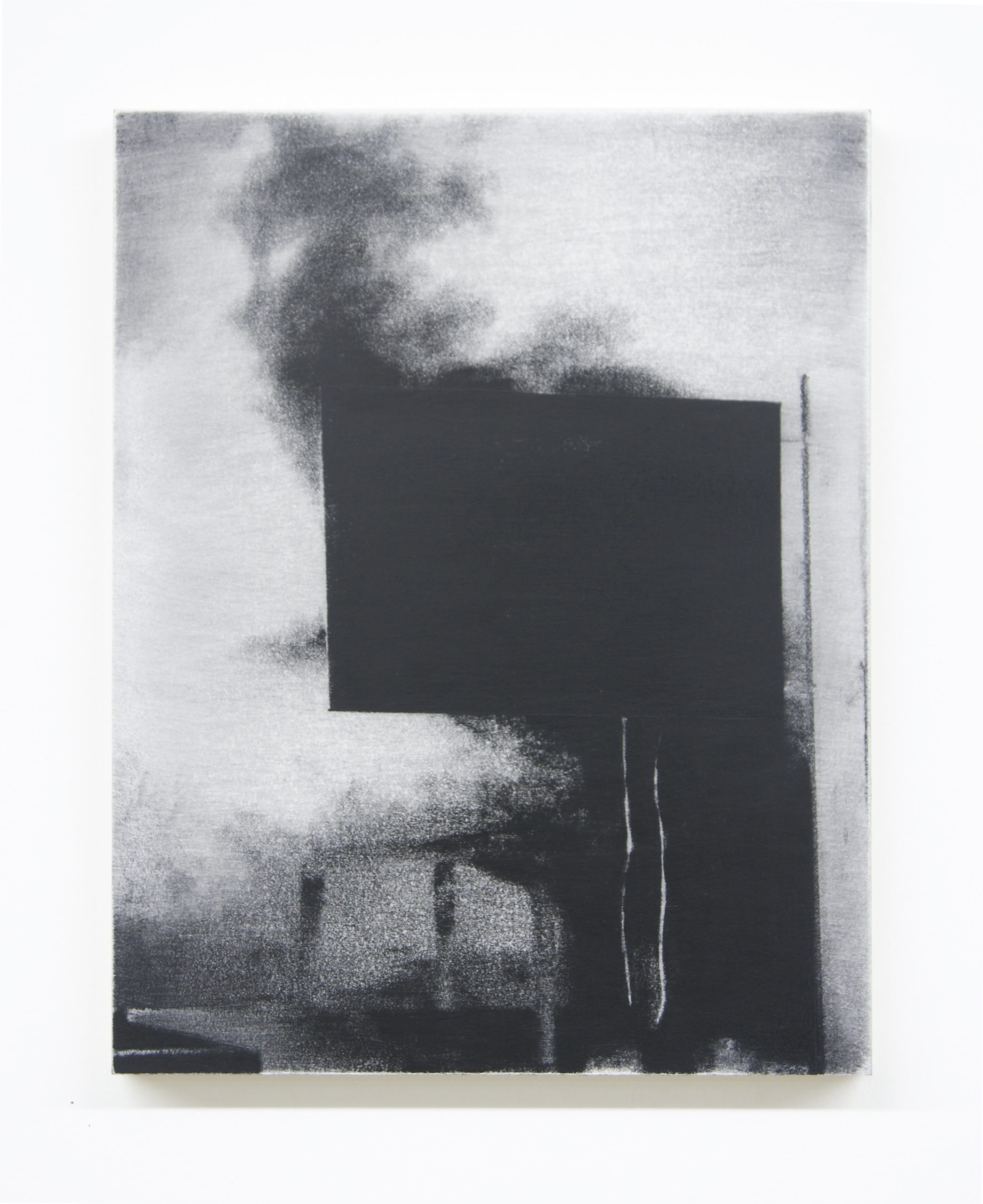
Forgetting operates as an active force that allows the paintings to breathe and invite outside activation. By intentionally omitting visual fragments and stripping away descriptive data like color, structural voids are created within the image. These omitted details represent the blind spots inherent in both personal recollections and official historical records. Within this practice, forgetting is not a passive loss, but an intentional tool used to strip away contemporary noise so the viewer can confront what truly remains.
BEAUCOUP DE VOS PEINTURES DONNENT L’IMPRESSION D’ÊTRE DES SOUVENIRS AUXQUELS IL MANQUE DES FRAGMENTS. QUEL RÔLE L’OUBLI JOUE-T-IL DANS VOTRE PROCESSUS DE CRÉATION ?
L’oubli est une force active. C’est ce qui permet aux peintures de respirer et de laisser une place au regard du spectateur. En retirant certains fragments de l’image et des informations comme la couleur, je crée des vides. Ces absences renvoient aux angles morts de la mémoire individuelle comme de l’histoire officielle. Dans mon travail, oublier n’est pas une perte passive. C’est une manière d’écarter le bruit du présent pour voir ce qui subsiste réellement.
Power, Surveillance & Archives
You often work from images related to surveillance, government archives, or censored documents. What draws you to images produced by institutions of power?
These images are inherently designed to observe, categorize, or control, yet they frequently possess an unintended, chilling abstraction. Whether dealing with a low-resolution surveillance freeze-frame or a heavily redacted document, the visual texture itself communicates state authority and secrecy. Working with this material subverts its original, clinical purpose by translating it into a tactile, human medium. Examining the visual language of the state reveals the underlying anxieties embedded within a culture that is constantly being watched.
POUVOIR, SURVEILLANCE ET ARCHIVES
VOUS TRAVAILLEZ SOUVENT À PARTIR D’IMAGES ISSUES DE LA SURVEILLANCE, DES ARCHIVES GOUVERNEMENTALES OU DE DOCUMENTS CENSURÉS. QU’EST-CE QUI VOUS ATTIRE DANS LES IMAGES PRODUITES PAR LES INSTITUTIONS DE POUVOIR ?
Ces images sont conçues pour observer, classer ou contrôler. Pourtant, elles produisent souvent une forme d’abstraction involontaire, presque inquiétante. Qu’il s’agisse d’un arrêt sur image de vidéosurveillance en basse définition ou d’un document largement caviardé, leur texture visuelle exprime à elle seule l’autorité de l’État et la logique du secret. Travailler à partir de ces images, c’est détourner leur fonction d’origine et les faire passer d’un langage administratif à une matière profondément humaine. En regardant de près le langage visuel de l’État, on finit par voir les angoisses d’une société qui vit sous le regard permanent de la surveillance.
Ambiguity & Perception
When looking at your paintings, the eye constantly shifts between abstraction and representation. Is it important to you that viewers experience a sense of uncertainty?
Uncertainty is vital because it destabilizes the quick, passive consumption usually brought to images in the digital age. When a viewer cannot immediately identify the subject matter, the analytical mind slows down, allowing emotional intuition to take over. This psychological friction forces an interrogation of personal perception and how meaning is constructed. The resulting sense of unease mimics the confusion of navigating a contemporary landscape where truth is constantly being obscured.
AMBIGUÏTÉ ET PERCEPTON
FACE À VOS PEINTURES, LE REGARD OSCILLE SANS CESSE ENTRE ABSTRACTION ET FIGURATION. EST-IL IMPORTANT POUR VOUS QUE LE SPECTATEUR FASSE L’EXPÉRIENCE DE CETTE INCERTITUDE ?
Oui. Cette incertitude est essentielle parce qu’elle rompt avec la manière rapide et passive dont nous consommons aujourd’hui les images. Lorsqu’on ne reconnaît pas immédiatement ce que l’on regarde, le regard ralentit. L’analyse laisse alors plus de place à l’intuition. Cette hésitation oblige chacun à interroger sa manière de voir et la façon dont le sens se construit. Le trouble qui en résulte fait écho à notre époque, où la vérité est sans cesse brouillée, déplacée ou dissimulée.
Your paintings often seem to suggest a narrative without ever fully revealing it. How important is it for you to leave room for interpretation?
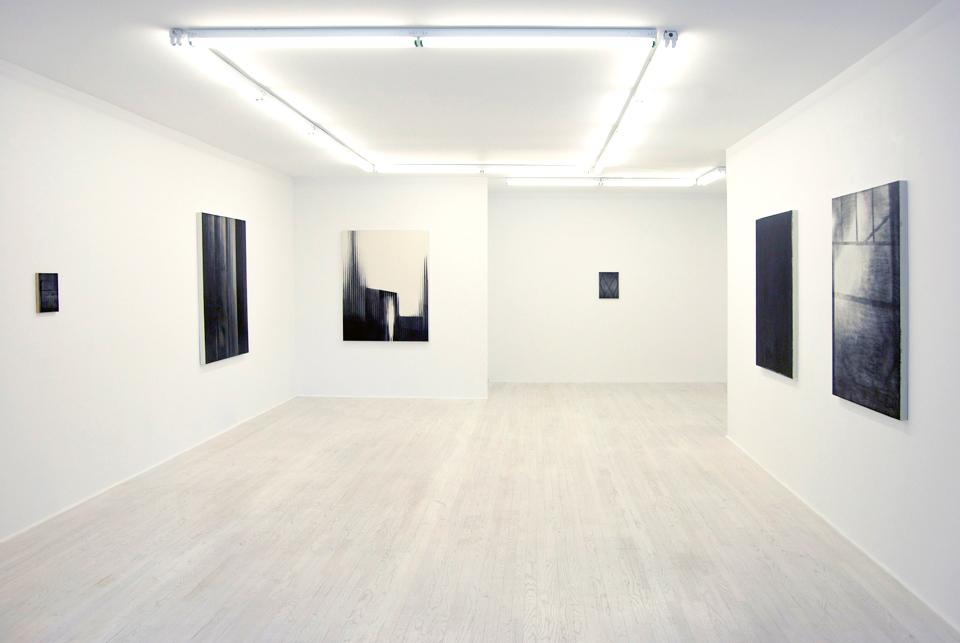
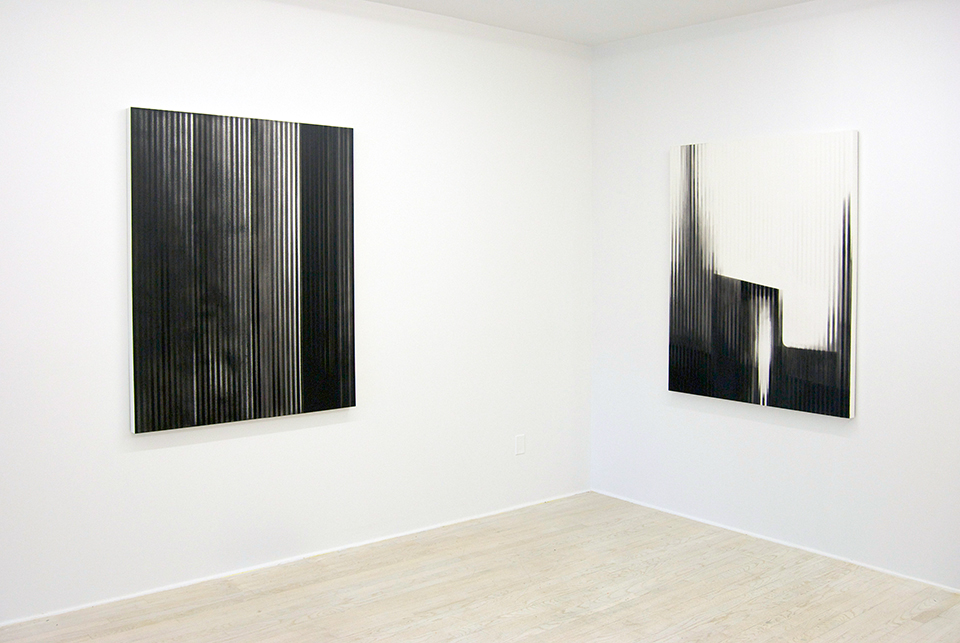
Leaving room for interpretation is essential because the work is only fully realized when activated by the viewer’s personal history. Providing a complete, literal narrative would cause the paintings to function merely as historical illustrations rather than open-ended psychological spaces. The fragmented visual cues within the panoramic installation create an ambiguous filmic vignette, requiring the audience to piece together the broken timeline. This approach transforms the audience from passive observers into active participants in the construction of meaning.
VOS PEINTURES SEMBLENT SOUVENT SUGGÉRER UN RÉCIT SANS JAMAIS LE RÉVÉLER COMPLÈTEMENT. DANS QUELLE MESURE EST-IL IMPORTANT POUR VOUS DE LAISSER UNE PLACE À L’INTERPRÉTATION ?
Oui, parce que l’œuvre n’existe pleinement qu’à partir du moment où le spectateur y projette sa propre expérience. Si le récit était entièrement donné, les peintures ne seraient plus que des illustrations historiques. Je préfère qu’elles restent des espaces ouverts. Les fragments qui composent les installations panoramiques fonctionnent comme les plans d’un film dont il manquerait certaines séquences. C’est au spectateur de reconstituer la chronologie. Il ne regarde plus simplement une image ; il participe à la construction de son sens.
America, History & Collective Memory
Many of your series appear deeply rooted in an American context. Do you see the subjects you address as specifically American, or do they reveal broader, more universal mechanisms?
While the source material often originates from the American landscape and directly reflects the current sociopolitical tipping points, subcultures, and domestic anxieties the overall underlying mechanisms are entirely universal. The dynamics of state control, public protest, media distortion, and collective grief are human conditions that transcend national borders. Utilizing an American vernacular provides a direct entry point into these realities while addressing global anxieties about power and history. Ultimately, local histories serve as a lens to examine how human societies at large process institutional trauma.
AMÉRIQUE, HISTOIRE ET MÉMOIRE COLLECTIVE
NOMBRE DE VOS SÉRIES SEMBLENT PROFONDÉMENT ANCRÉES DANS UN CONTEXTE AMÉRICAIN. LES SUJETS QUE VOUS ABORDEZ VOUS PARAISSENT-ILS SPÉCIFIQUEMENT AMÉRICAINS, OU RÉVÈLENT-ILS DES MÉCANISMES PLUS VASTES ET UNIVERSELS ?
Même si les images qui nourrissent mon travail viennent souvent du paysage américain et reflètent directement les tensions politiques, les sous-cultures ou les inquiétudes qui traversent aujourd’hui la société américaine, les mécanismes en jeu sont universels. Le contrôle de l’État, les mouvements de protestation, la déformation des récits par les médias ou le deuil collectif ne sont pas propres aux États-Unis. Ce sont des réalités humaines qui dépassent les frontières. Le contexte américain me sert de point d’entrée vers ces questions, mais ce qui m’intéresse, ce sont les rapports entre pouvoir, histoire et mémoire. Les histoires locales deviennent alors une manière d’observer la façon dont les sociétés font face aux traumatismes institutionnels.
Several of your works seem to originate from events or images that have left a lasting mark on the American collective imagination. What interests you about these moments that continue to resonate in contemporary culture?
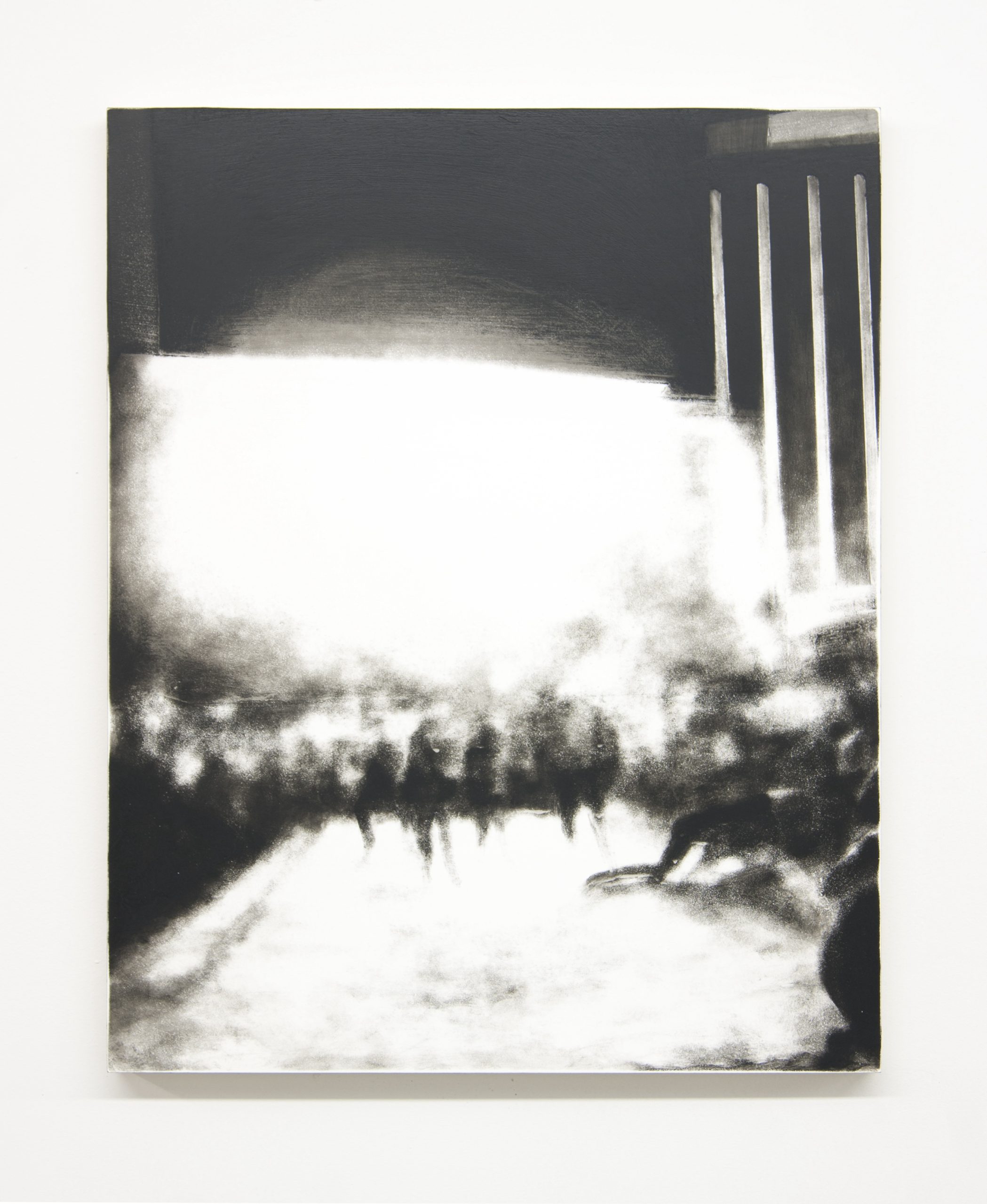
These specific cultural flashpoints act as historical ghosts that continue to haunt present realities. Moments of profound crisis, war or protest leave deep scars on the collective psyche, and their imagery becomes a shared reference point shaping current political identity. Readdressing these images through the slow medium of painting investigates why certain traumas refuse to fade and how they dictate current cultural anxieties. It explores the ways in which past events are continuously re-contextualized by shifting media and memory.
PLUSIEURS DE VOS ŒUVRES SEMBLENT PRENDRE LEUR ORIGINE DANS DES ÉVÉNEMENTS OU DES IMAGES QUI ONT PROFONDÉMENT MARQUÉ L’IMAGINAIRE COLLECTIF AMÉRICAIN. QU’EST-CE QUI VOUS INTÉRESSE DANS CES MOMENTS QUI CONTINUENT DE RÉSONNER DANS LA CULTURE CONTEMPORAINE ?
Ces moments sont comme des fantômes historiques. Ils continuent de hanter le présent. Les crises, les guerres ou les mouvements de protestation laissent des traces profondes dans la mémoire collective, et leurs images finissent par façonner notre imaginaire politique. Revenir sur ces images à travers la lenteur de la peinture me permet de comprendre pourquoi certains traumatismes refusent de disparaître et continuent d’alimenter nos inquiétudes actuelles. Je m’intéresse aussi à la manière dont ces événements changent de sens au fil du temps, à mesure que les images circulent, sont réinterprétées ou intégrées à de nouveaux récits.
Technology & the Circulation of Images
You have cited drone footage, photocopies, technological glitches, and forensic photography among your influences. What attracts you to these types of images?
These specific technologies mechanically distort reality, creating a cold, detached distance between the viewer and the subject matter. A photocopy or a drone feed strips away human empathy, replacing it with a pixelated, high-contrast, or stippled visual pattern. This coldness represents the way modern society sanitizes violence, surveillance, and tragedy through screens. Recreating these technological artifacts through meticulous hand-painting returns a sense of human labor, gravity, and presence to otherwise discarded images.
TECHNOLOGIE ET CIRCULATION DES IMAGES
VOUS AVEZ ÉVOQUÉ LES IMAGES DE DRONES, LES PHOTOCOPIES, LES DYSFONCTIONNEMENTS TECHNOLOGIQUES OU ENCORE LA PHOTOGRAPHIE MÉDICO-LÉGALE PARMI VOS INFLUENCES. QU’EST-CE QUI VOUS ATTIRE DANS CES TYPES D’IMAGES ?
Ces technologies produisent une vision du monde qui est mécanique et distante. Une photocopie ou l’image d’un drone retire une grande partie de la présence humaine pour la remplacer par des pixels, des contrastes excessifs ou une trame artificielle. Cette froideur dit quelque chose de la manière dont notre époque regarde la violence, la surveillance ou la catastrophe à travers des écrans. En repeignant ces artefacts technologiques à la main, j’essaie de redonner du poids, du temps et une présence physique à des images qui, autrement, seraient consommées puis oubliées.
At a time when images are becoming increasingly sharp, fast, and abundant, your paintings seem to slow down and complicate the act of looking. Is that an effect you consciously seek to create?
Yes, this slowing down is a deliberate counterstrategy to the hyper-speed of the current digital landscape. In an era of endless, high-definition scrolling, tragic or historic images are consumed and forgotten in a matter of seconds. Translating fleeting digital artifacts into heavily sanded, material objects force a radical pause in that consumption. The complexity of the surface demands a prolonged physical presence from the viewer, successfully resisting the immediate gratification of the modern screen.
À UNE ÉPOQUE OÙ LES IMAGES SONT TOUJOURS PLUS NETTES, PLUS RAPIDES ET PLUS NOMBREUSES, VOS PEINTURES SEMBLENT RALENTIR ET COMPLIQUER L’ACTE MÊME DE REGARDER. EST-CE UN EFFET QUE VOUS RECHERCHEZ CONSCIEMMENT ?
Oui. C’est une réponse volontaire au rythme imposé par les images numériques. Aujourd’hui, nous faisons défiler sans fin des images en haute définition, y compris des images de guerre ou de catastrophe, qui disparaissent de notre attention en quelques secondes. Transformer ces fragments numériques en peintures longuement travaillées et poncées interrompt ce mouvement. La surface demande du temps. Elle oblige le spectateur à rester devant l’œuvre et à regarder autrement. C’est une manière de résister à l’immédiateté des écrans.
Your work often feels like it slows down images that we would normally consume in a matter of seconds. Has this relationship to time become a central concern in your practice?
Time has become a core pillar of the practice, both in how the work is produced and how it is experienced. The laborious studio process of painting, erasing, and rebuilding takes weeks or months, standing in direct opposition to the split-second capture of the original source images. Furthermore, the panoramic, sequential layout of the paintings when installed for exhibition forces a cinematic, linear reading that must be navigated chronologically through physical space. This dual relationship to time, stretching a fleeting media moment into a permanent physical monument, allows the viewer to truly weigh the gravity of the imagery.
VOTRE TRAVAIL DONNE SOUVENT L’IMPRESSION DE RALENTIR DES IMAGES QUE NOUS CONSOMMERIONS NORMALEMENT EN QUELQUES SECONDES. CETTE RELATION AU TEMPS EST-ELLE DEVENUE UNE PRÉOCCUPATION CENTRALE DE VOTRE PRATIQUE ?
Oui. Le temps est devenu l’un des fondements de mon travail, autant dans la fabrication des œuvres que dans leur réception. Le processus de peinture, d’effacement et de reconstruction prend des semaines, parfois des mois. Il est à l’opposé de la vitesse avec laquelle les images d’origine ont été produites. Lorsqu’elles sont présentées sous forme d’installation panoramique, les peintures imposent aussi une lecture progressive, presque cinématographique. Le spectateur traverse les images dans un ordre précis. Cette manière d’étirer un instant médiatique en une expérience physique et durable permet, je crois, de mesurer pleinement le poids des images.
Architecture & Spaces of Power
Institutional and governmental architecture appears repeatedly throughout your work. What do these buildings communicate to you?
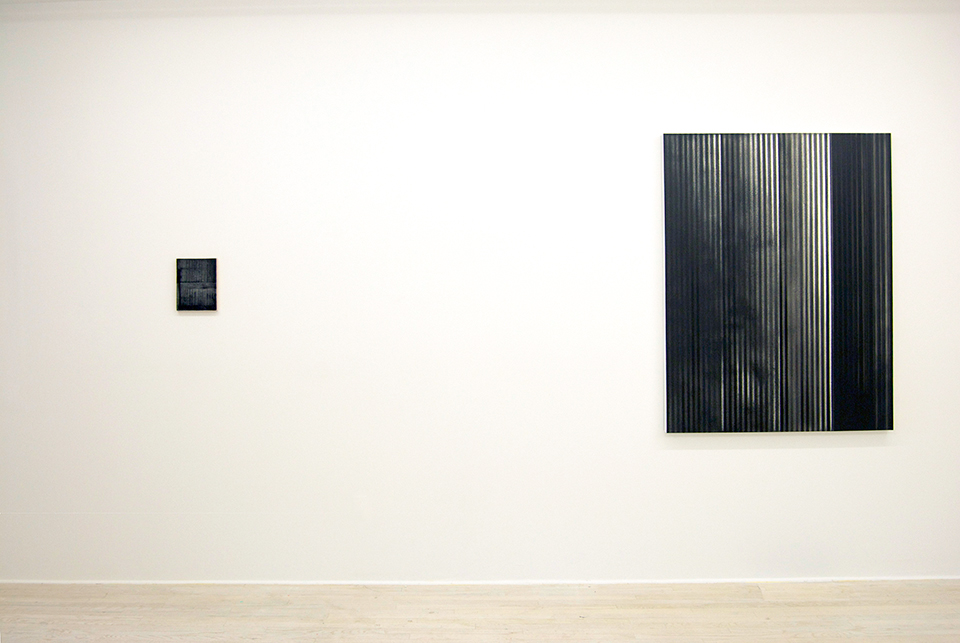
These buildings communicate a sense of permanent, faceless authority designed to project stability and control over the individual. Brutalist concrete or neoclassical government facades are built to imply absolute historical permanence. However, when rendered through erasure and distressing, those rigid structures begin to look fragile, haunted, and vulnerable. They become monuments to the anxieties of the state, reminding the viewer that even the most imposing institutions are subject to decay and historical reckoning.
ARCHITECTURE ET ESPACES DE POUVOIR
L’ARCHITECTURE INSTITUTIONNELLE ET GOUVERNEMENTALE APPARAÎT RÉGULIÈREMENT DANS VOTRE TRAVAIL. QUE VOUS COMMUNIQUENT CES BÂTIMENTS ?
Ces bâtiments incarnent une forme d’autorité permanente et impersonnelle. Ils sont conçus pour projeter une image de stabilité et de contrôle. L’architecture brutaliste comme les façades néoclassiques des institutions donnent l’impression d’une permanence historique, presque incontestable. Mais lorsqu’elles passent par le processus d’effacement et d’altération de la peinture, ces structures commencent à paraître fragiles, hantées, vulnérables. Elles deviennent les monuments des angoisses de l’État. Elles rappellent aussi que les institutions les plus imposantes restent soumises au temps et au regard de l’histoire.
What fascinates you about forms of architecture that are often associated with authority, control, or collective memory?
These architectural forms are fascinating because they serve as the physical containers for collective history and political trauma. They are the physical stages where policies are enacted, secrets are kept, and protests converge, making them deeply loaded symbols in the cultural imagination. Stripping these structures of specific signage and color isolates their geometric forms, highlighting their psychological function. The work explores how the built environment shapes a subconscious relationship to authority, turning architecture into a mirror for institutional control.
QU’EST-CE QUI VOUS FASCINE DANS CES FORMES ARCHITECTURALES SOUVENT ASSOCIÉES À L’AUTORITÉ, AU CONTRÔLE OU À LA MÉMOIRE COLLECTIVE ?
Ces architectures me fascinent parce qu’elles sont les lieux où s’inscrit l’histoire collective. C’est là que les décisions sont prises, que les secrets sont gardés et que les mouvements de protestation prennent forme. Elles portent donc une forte charge symbolique. En retirant les enseignes, les couleurs et les éléments qui les identifient, j’isole leurs formes géométriques. Ce qui m’intéresse alors, c’est moins leur fonction que leur impact psychologique. J’essaie de montrer comment l’environnement construit façonne, souvent de manière inconsciente, notre rapport à l’autorité. L’architecture devient ainsi le reflet des mécanismes du pouvoir.
Augustus Nazzaro
INTERVIEW BY Rose Poilane