ALICE DIOP AT ART BASEL PARIS: A GESTURE OF CONSOLATION FOR A WOUNDED GAZE
BY AURORA MANDELLI
Western art has long fetishized Black women. These representations are not relics of the past. They continue to shape how we see, what we expect to see and how we respond to the bodies in front of us. How do we confront this legacy? And can art do more than expose the violence of representation? Can it begin to restore it?
These questions lie at the heart of Geste de Consolation, a project by French filmmaker Alice Diop, presented at the Palais d’Iéna for Art Basel Paris 2026, in collaboration with Miu Miu. Winner of two César Awards for Vers la tendresse and Saint Omer, Diop has spent much of her life as a filmmaker bearing witness to the violence through which the collective imagination has confined Black women or rendered them invisible. Her inquiry begins with Voyage of the Sable Venus, a prose poem by American poet Robin Coste Lewis that first took cinematic form in Fragments for Venus, Diop’s 2025 short film for Miu Miu Women’s Tales. Now, she takes it beyond the screen.
Neither quite an exhibition nor an installation, Geste de Consolation unfolds as a cinematic montage in four scenes, bringing together the work of Black women artists across film, photography, sculpture, poetry, dance and performance. They are women who, in Diop’s words, have “healed me” and “nourished me” and “sharpened my gaze”.
WHAT IMAGES LEAVE BEHIND
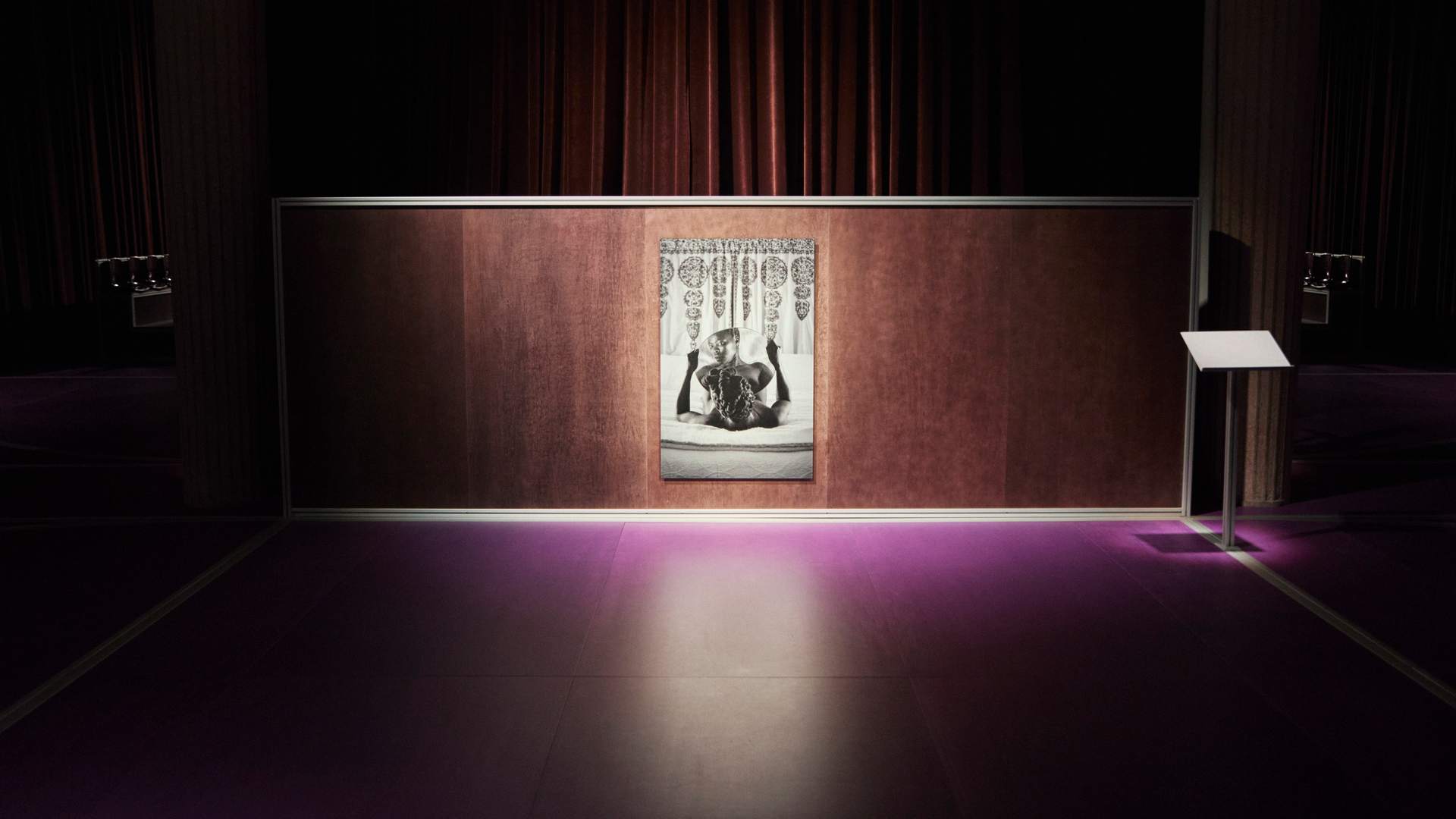
he exhibition opens with a photograph by Zanele Muholi. A naked body on a bed. A mirror held in both hands. The face exists only as a reflection: no direct gaze, no invitation to look back. For more than two decades, Muholi, who identifies as a visual activist rather than an artist, has been documenting the lives of Black LGBTQIA+ people in South Africa. This work belongs to their ongoing series Somnyama Ngonyama – “Hail the Dark Lioness” -, which turns the self-portrait into an act of resistance. And the gaze turns back on itself.
Who, then, gets to decide how a body is meant to be seen?
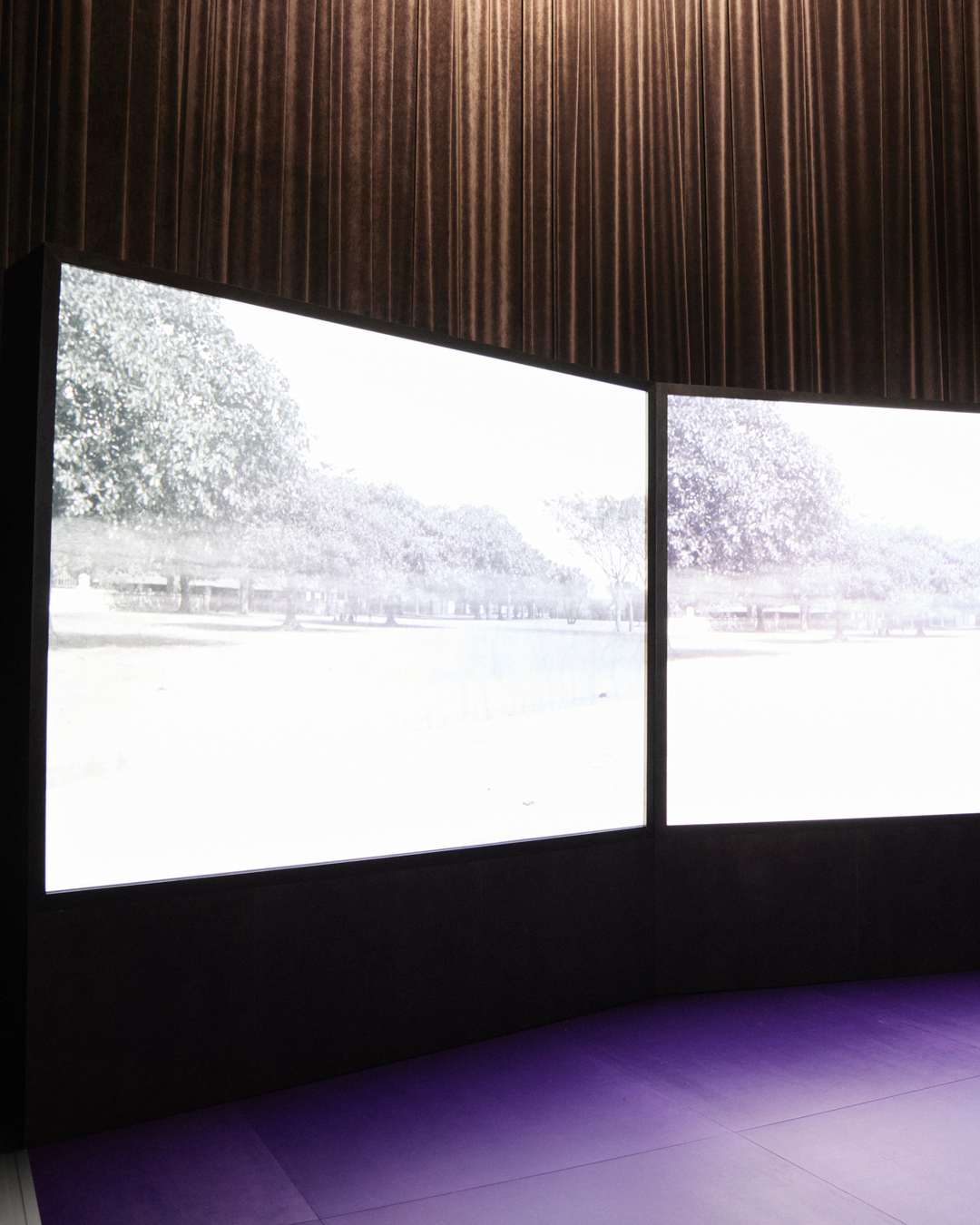
Behind the photograph, Alice Diop’s two-screen video installation gathers fragments of private films and archival footage from the early to mid-20th century, sourced from so-called ‘scientific expeditions’. Images she grew up with. Images that shaped her understanding of what it means to see Black women on screen and what it means to see them represented again and again in the same ways. Some are violent. Others are ambiguous. A few offer comfort. In Diop’s words, “the installation is a kind of intimate visual scrapbook of all the images of Black women that haunt me”.
FROM THE PAGE TO THE BODY
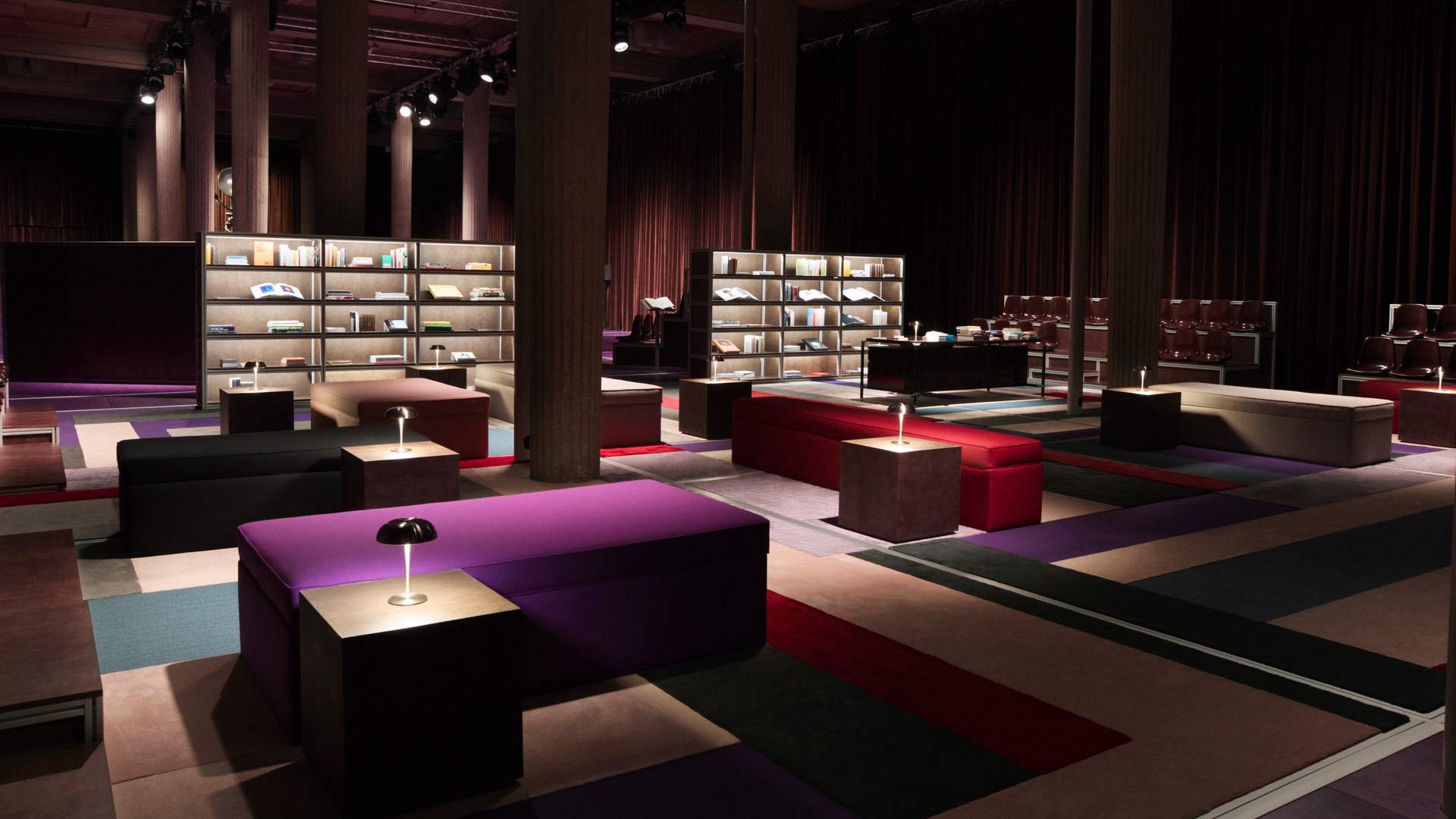
The second space opens onto a personal library. Desks, sofas, lamps. Carpets in rich, shifting colours cover the floor, stitched together in a patchwork bearing a motif by Mary Lee Bendolph, one of the best-known figures in the quilting tradition of Gee’s Bend, Alabama. For generations, Black women in this rural community pieced together worn work clothes into improvised geometries, creating intricate patterns on the very land where their ancestors had been enslaved.
The title, Chambre à soi, inevitably brings Virginia Woolf to mind. “A room of one’s own”: the material conditions required for a woman to think, to write, to dream. But Diop’s room draws on a specific intellectual genealogy. It presents libraries as a silent form of resistance: from the time when learning to read was itself an act of defiance, to the public library in Pasadena where a young Octavia Butler first discovered science fiction, a genre she would reshape on her own terms.
Libraries are places where ideas survive, knowledge is passed on and voices pushed to the margins find their place at the centre. Here, Black women writers, thinkers and artists stand alongside feminist, queer and anti-colonial voices, from Otobong Nkanga and Angela Davis to Mawena Yehouessi, Christina Sharpe and Monique Wittig.
In this sense, Diop’s library is not an escape from reality, but a way of making room for another one. A place to think beyond the limits of the present. To dream of what comes next.
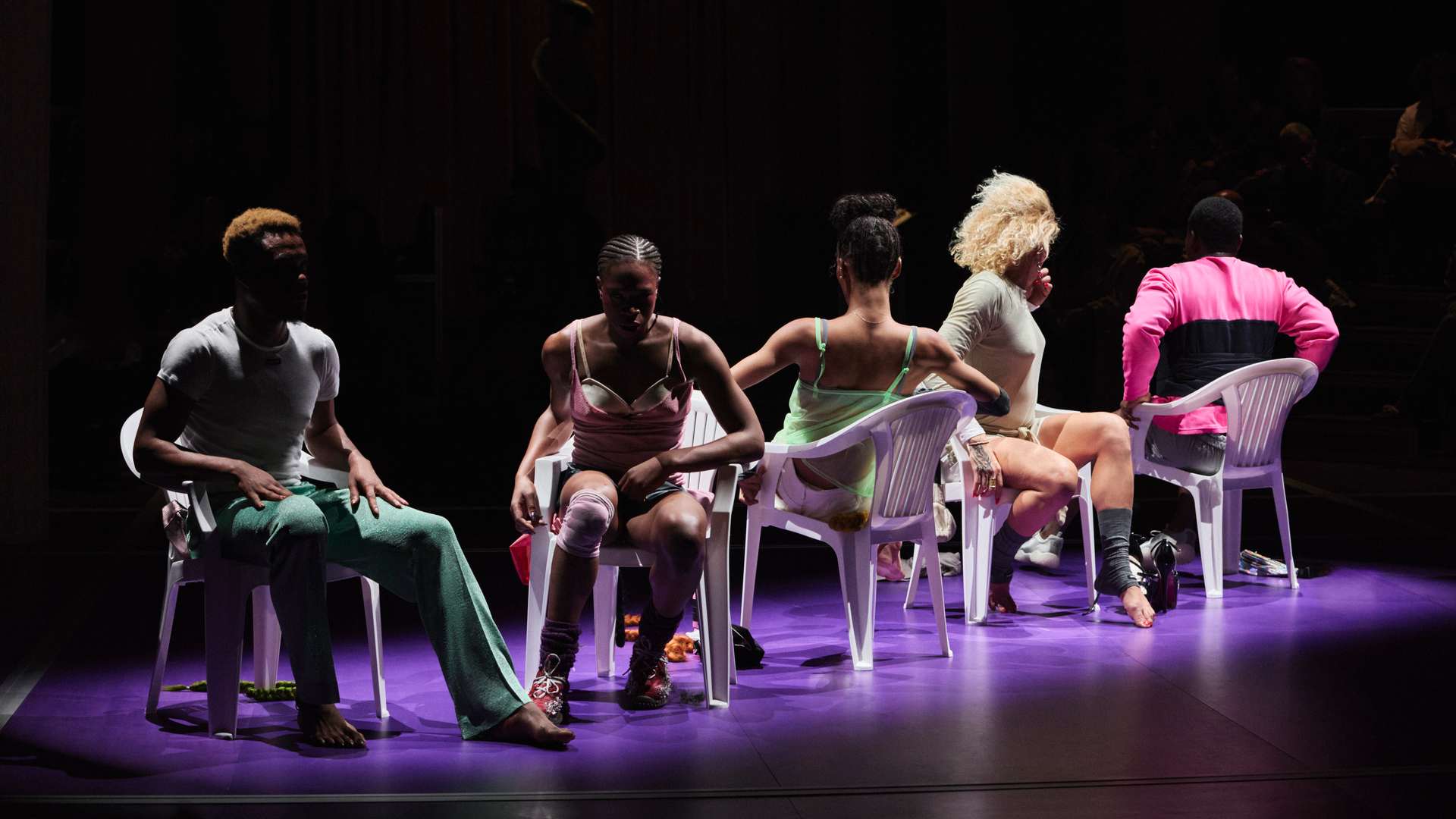
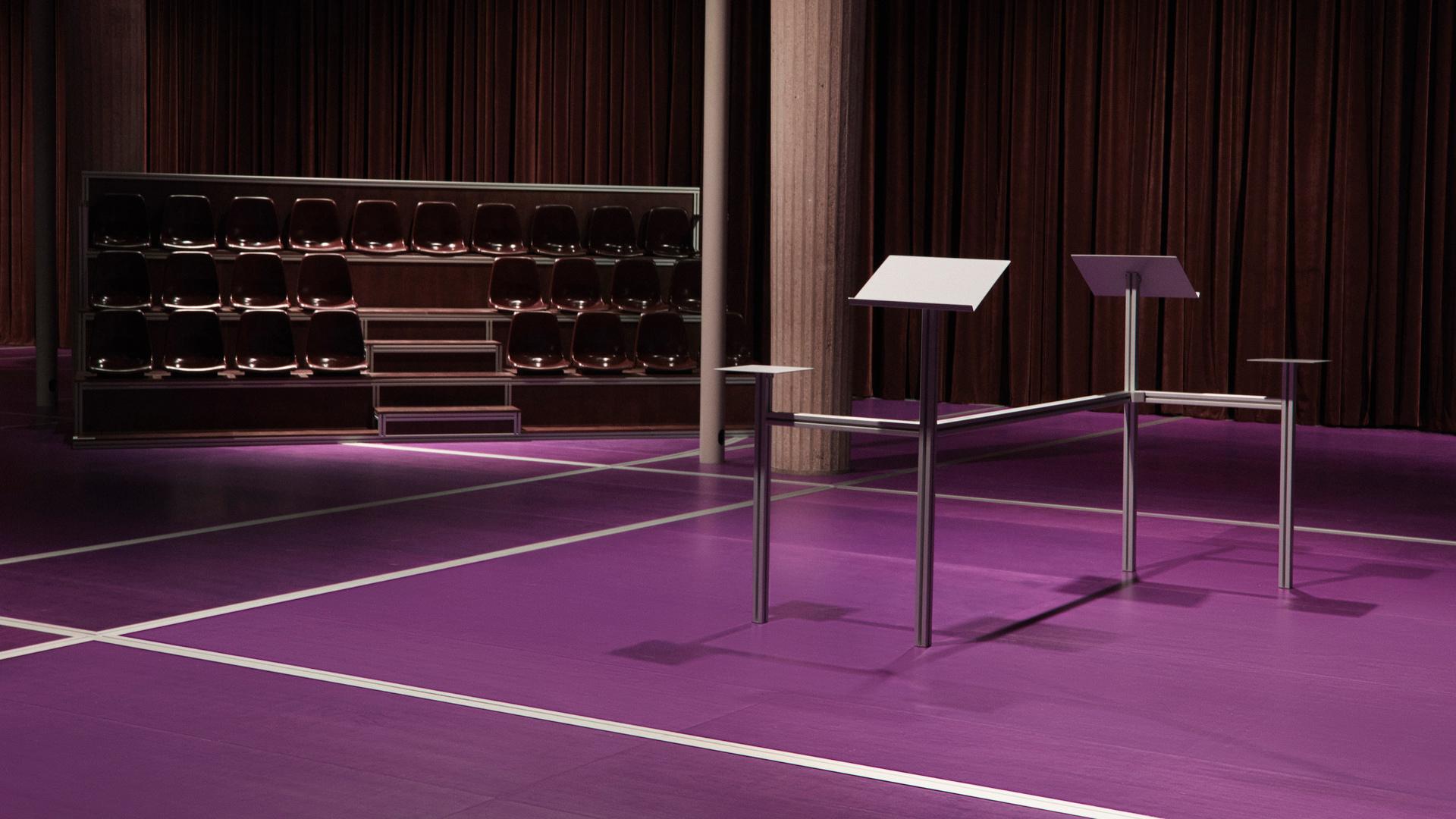
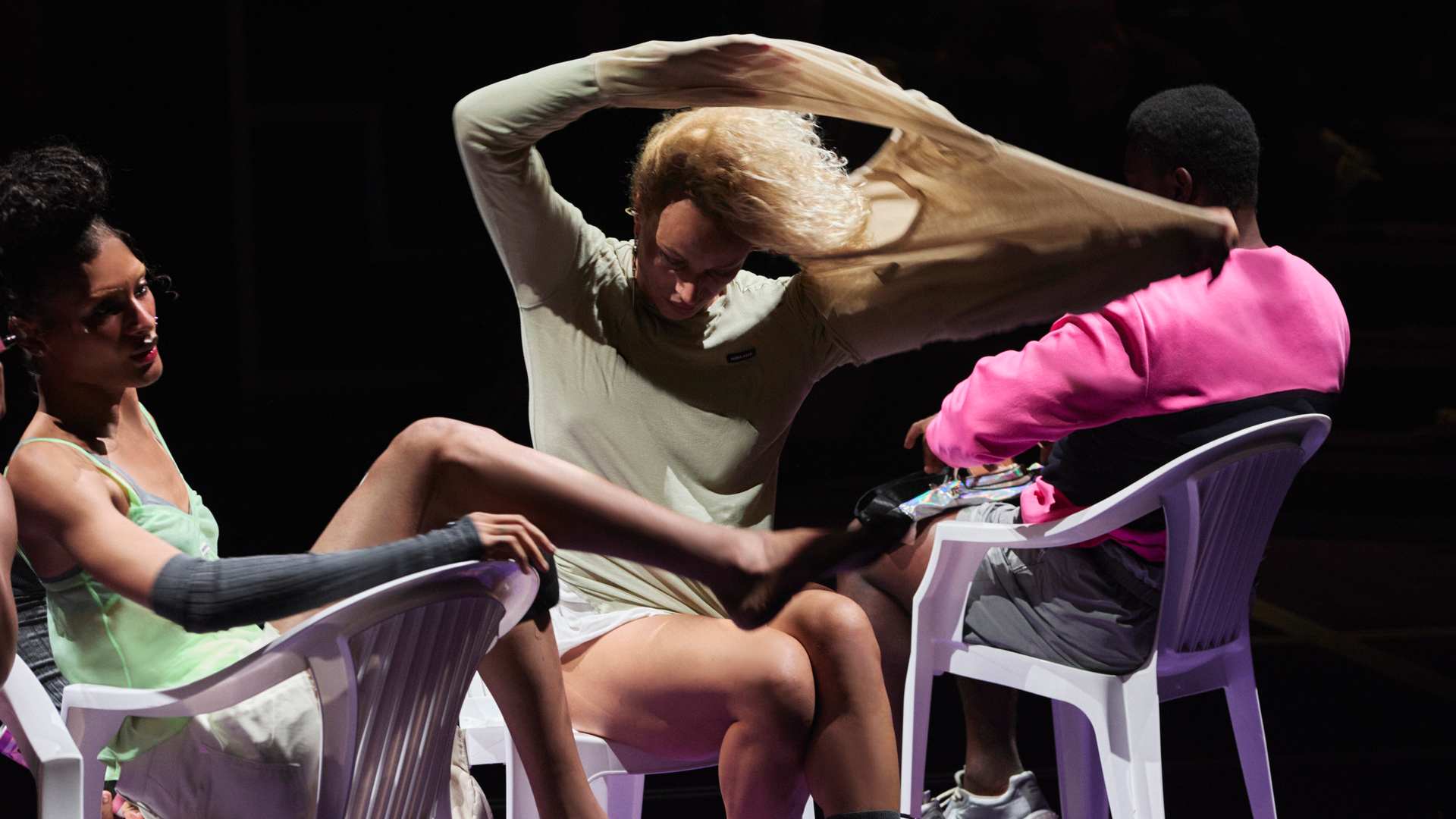
Words leave the page and enter the body as we step from the bookshelves into the amphitheatre. Six performers – Penda Diouf, Alice Da Luz Gomes, Latifa Laâbissi, Séphora Pondi, Davide-Christelle Sanvee and Betty Tchomanga – read texts by Lucille Clifton, Saidiya Hartman, June Jordan, Toni Morrison, Marie Ndiaye, and others. Their voices move through histories of colonial violence and its afterlives, through the transmission of trauma, through the question of who gets to speak and who has been spoken for. Then movement comes alive in Prophétique, an adapted work by Ivorian choreographer Nadia Beugré, performed by five dancers and followed by the music of Chicago-based composer and musician Angel Bat Dawid and her ensemble, Sistazz of the Nitty-Gritty.
What begins in the privacy of reading spills into the shared space of performance. The distance between those who speak and those who listen begins to shift. And with it, perhaps, the possibility of seeing one another differently.
BEFORE THE SILENCE
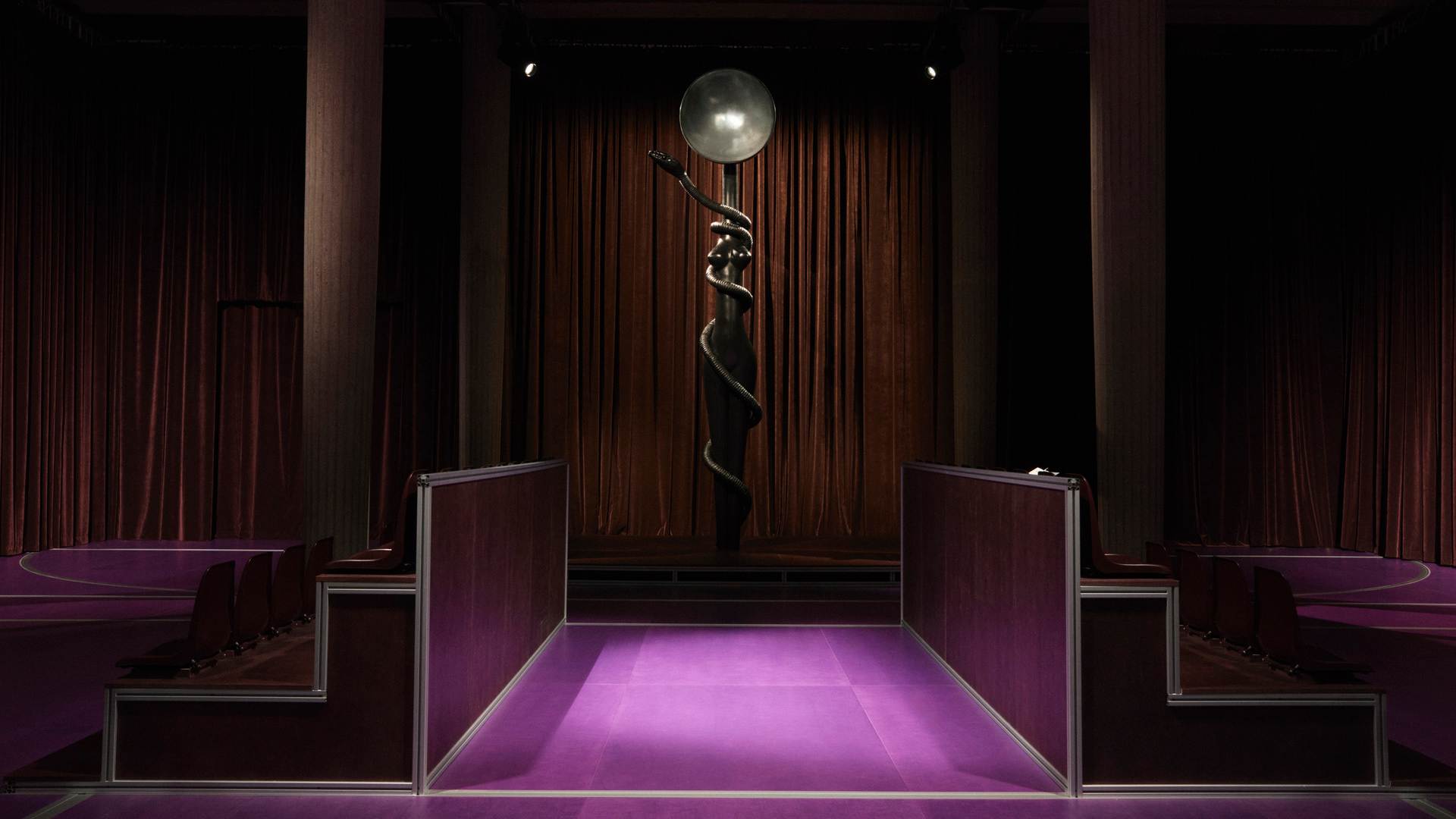
The journey ends before Sentinel, Simone Leigh’s monumental bronze sculpture. Inspired by Mami Wata, a water spirit venerated across parts of Africa and its diasporas, from the Caribbean to Brazil and the United States, the figure stands guard over the exhibition.
Mami Wata holds a double power: destruction and creation, danger and renewal. In her wake, the waters carry the weight of a history marked by the transatlantic slave trade, forced crossings and displacement. Leigh’s sculpture seems to hold all of this within its stillness. Silent and unyielding. Standing before her, the visitor is left with a sense of awe. No images to follow, no words to read, no voices to hold on to. The figure simply stands there, watching. And for once, the question is no longer what we are looking at, but what it means to stand before something that refuses to give itself away.
Geste de Consolation unfolds as a journey of remembrance and repair. Can art console the very gaze it has imposed? Perhaps not by erasing the past, but, ultimately, by bringing together the women who have found other ways of seeing and being seen.
Through this gesture, Alice Diop invites the viewers to connect with a way of seeing the world shaped by the violence inflicted on Black women. To reckon with the gaze we have inherited, to recognize that looking is never innocent. To consider what it might mean to look without assuming that everything we see belongs to us.