THE SPANISH PAVILION AT THE VENICE BIENNALE: the weight of images we no longer see
By Elena Cescon
“I wish you were here.” Written on the back of a postcard, this phrase once had the power to capture, in a single image, an experience, a shared thought, an unrepeatable moment turned into memory and sent across a distance.
Today, that same impulse still exists, but it has taken a different form. We produce thousands of images, send fewer and fewer, and often never look at them again.
This phenomenon has been sharply analyzed by the Spanish Pavilion, presented within the context of the 61st International Art Exhibition of La Biennale di Venezia, running from 9 May to 22 November 2026 under the title In Minor Keys.
Within the historic setting of the Giardini, the Spanish Pavilion, returning to its original building after a major renovation completed in 2025, presents the work of the Catalan artist Oriol Vilanova, together with curator Carles Guerra, and invites us to reflect on the image as object, as memory, as residue.
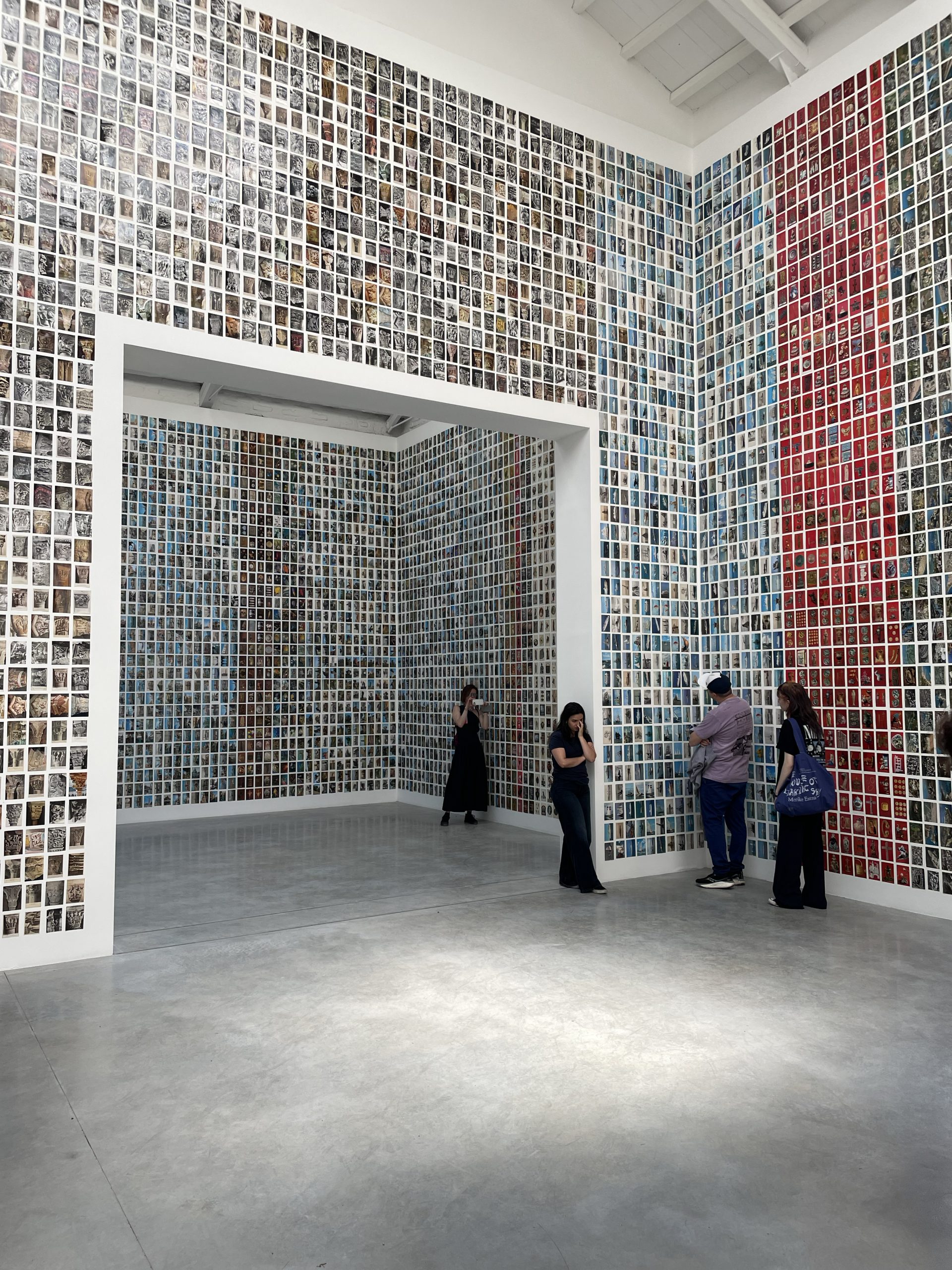
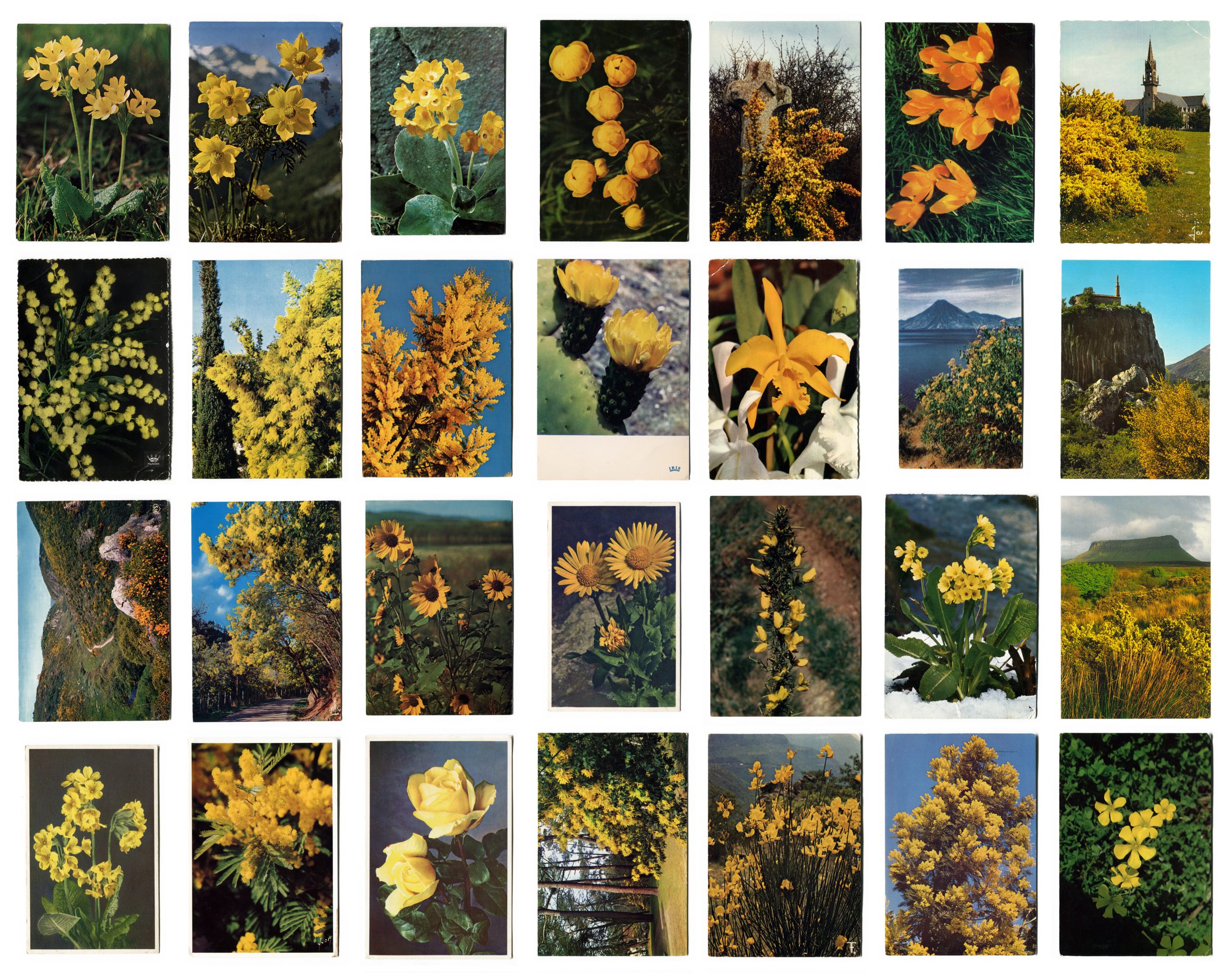
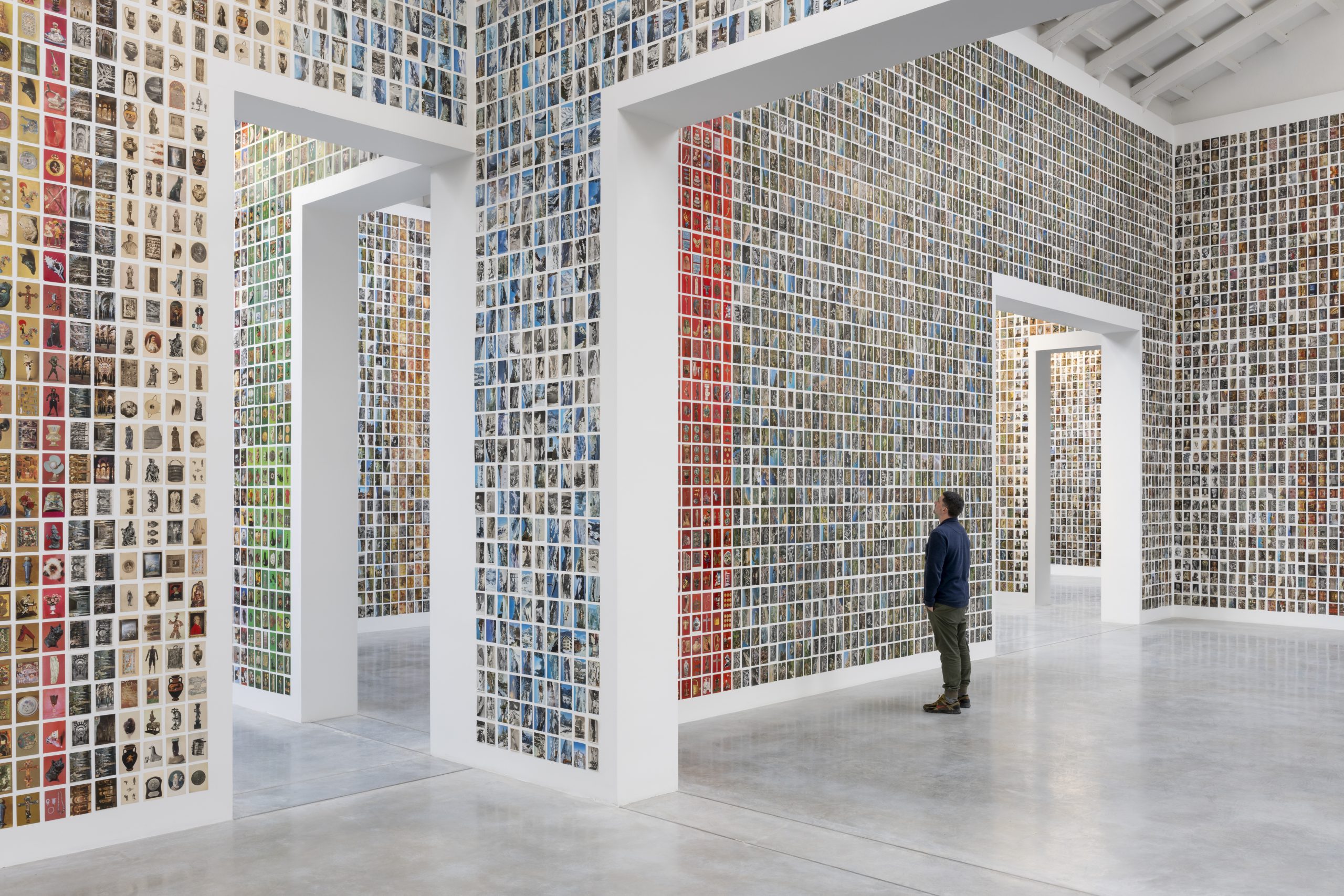
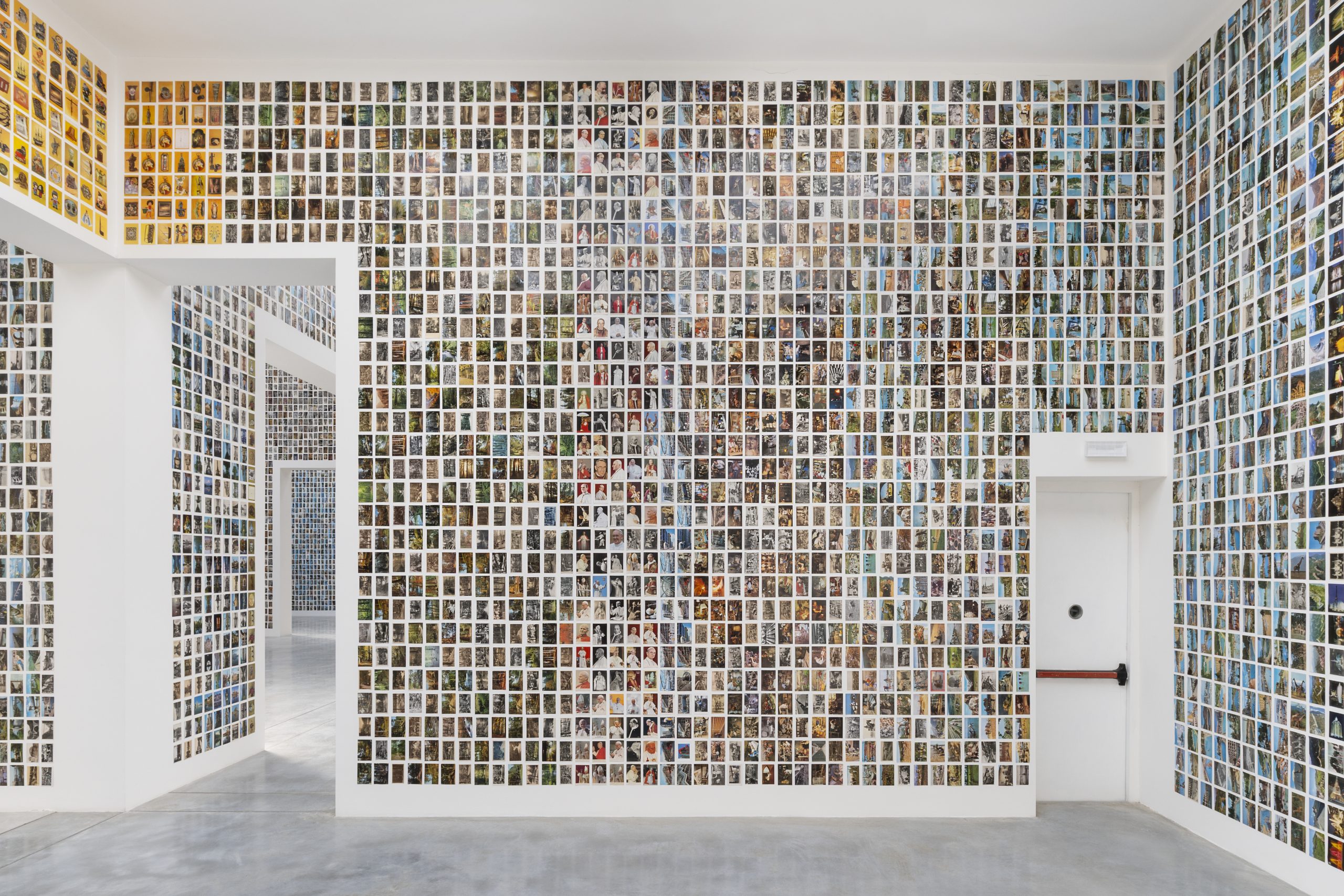
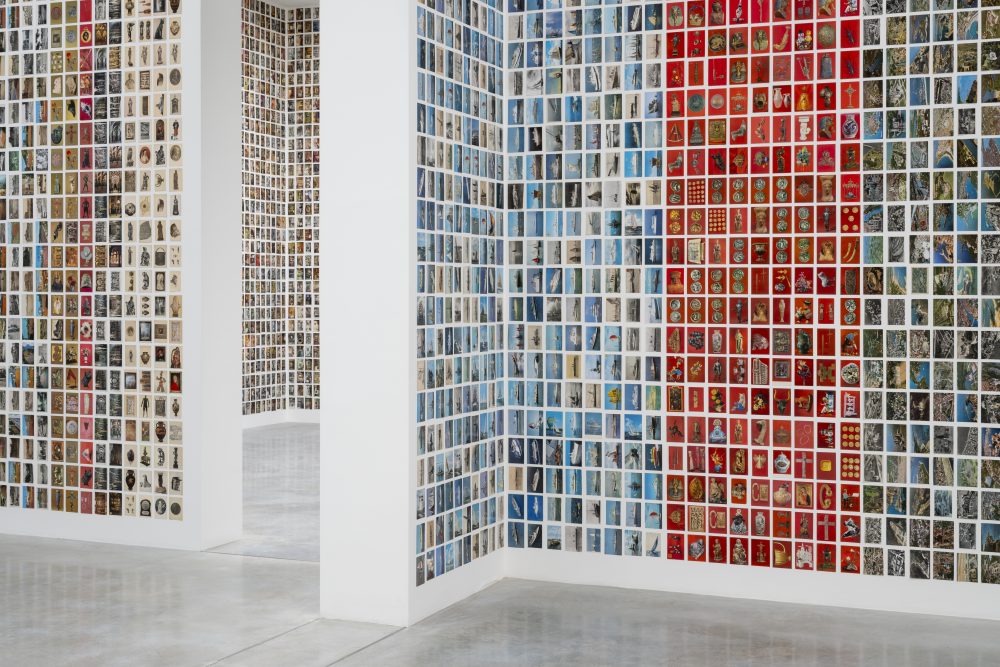
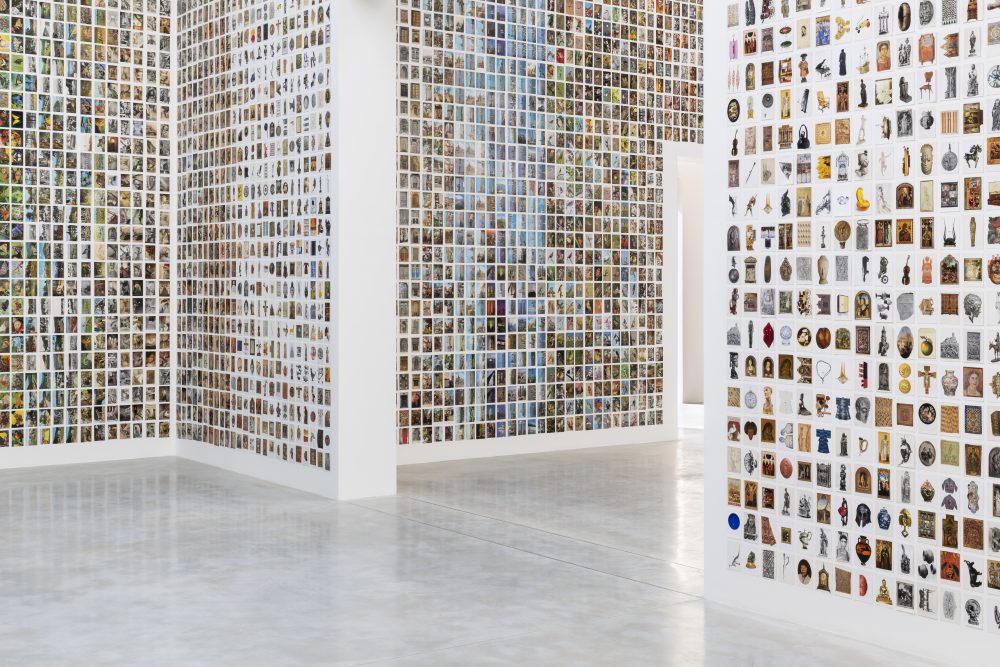
The exhibition, titled Los Restos, consists of an installation made up of thousands of postcards removed from their original circuits of exchange and brought together in a space that reflects on accumulation, repetition, and the preservation of memory.
From Memory to Archive
For more than twenty years, Oriol Vilanova has been collecting postcards from flea markets and second-hand shops, building an archive of forgotten images.
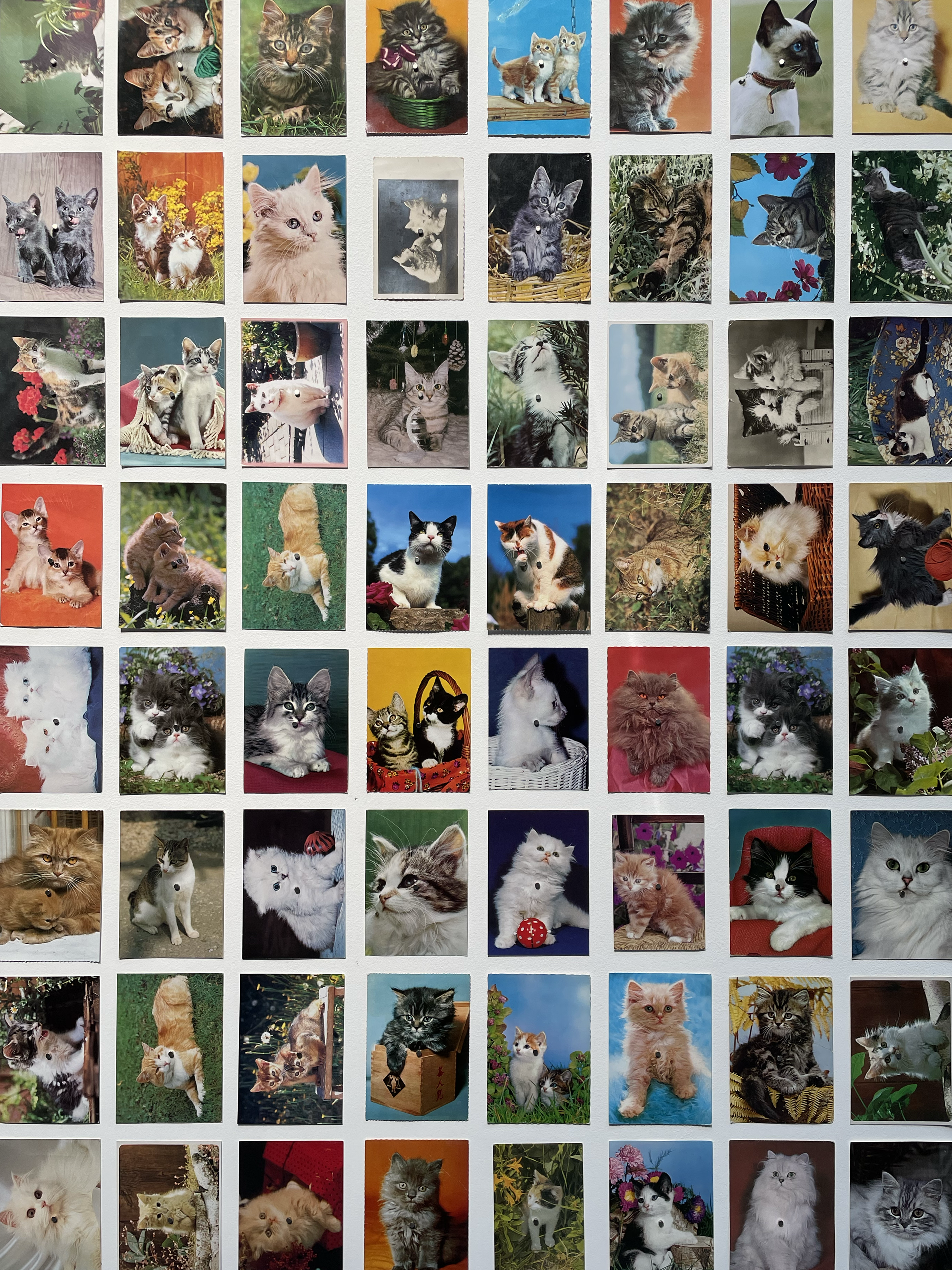
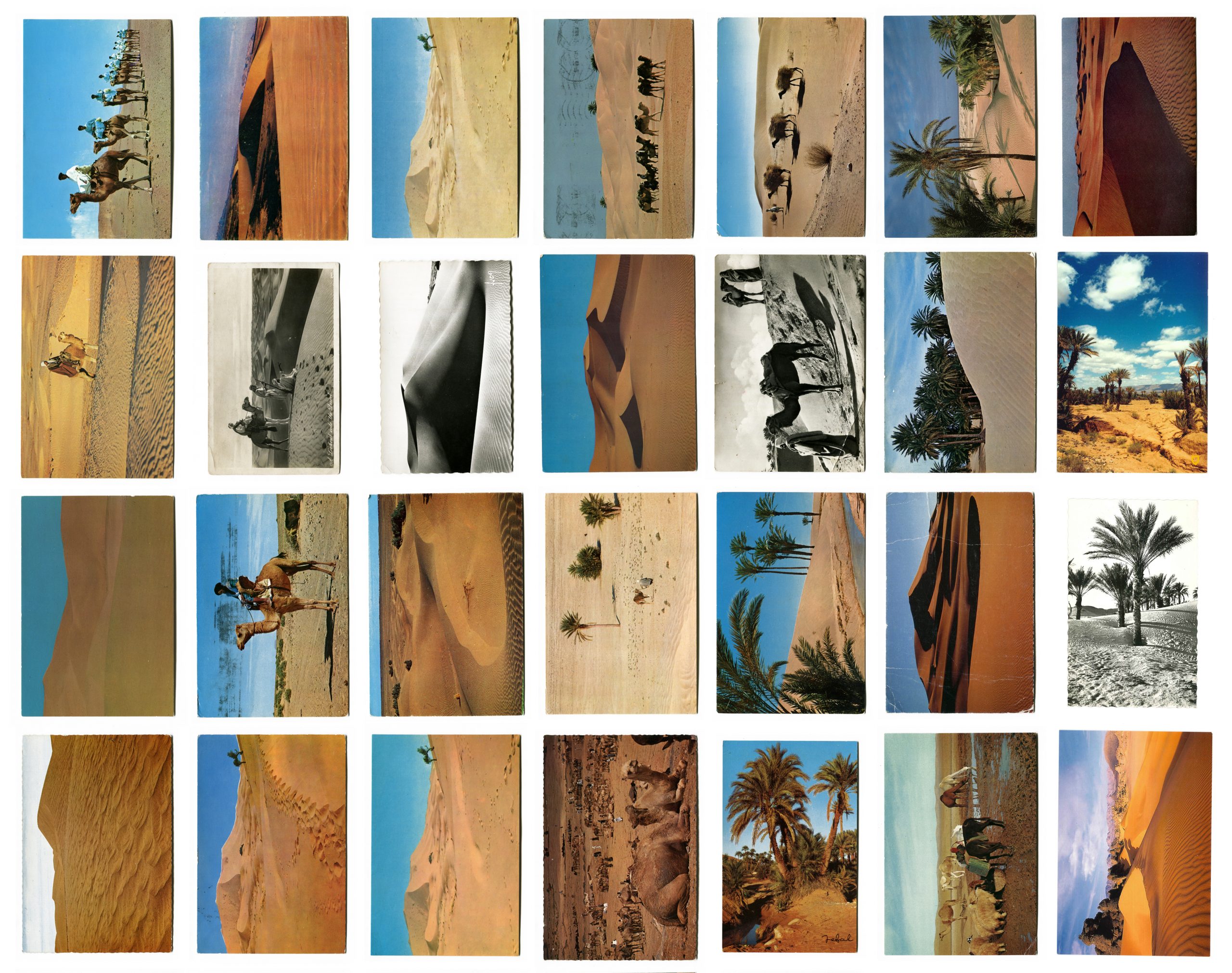
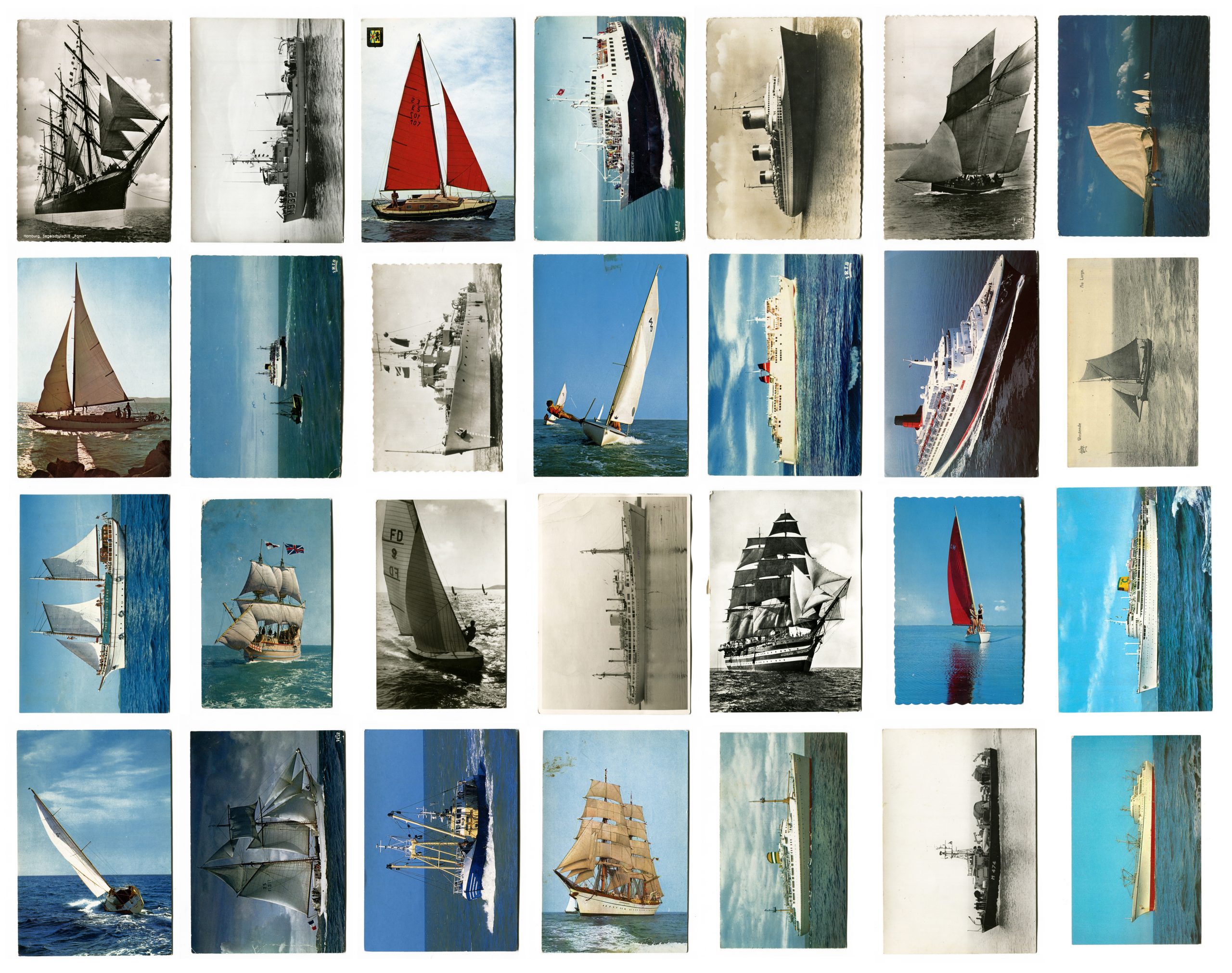
In Los Restos, these postcards are arranged in a vast wall composition, without hierarchy or chronological order. The visitor is immersed in an apparently endless visual field: familiar images of the Colosseum, the Eiffel Tower, Greek statues, paradisiacal beaches, mountains, and, not least, glamorous dogs and cats.
At first glance, it appears as nothing more than an accumulation of ordinary memories, traces of holidays once lived and perhaps already forgotten.
Yet postcards were never simply images. They were among the first modern tools designed to transform experience into image, and image into memory. A small visual fragment chosen to say: I was here, I thought of you, I wanted to remember this, and I wanted you to remember it too.
Here, however, that message is absent. In Vilanova’s installation, only the images remain: silent, suspended, without the voice meant to frame them. And it is precisely in this silence that the work begins to ask its most urgent questions: how many of the images we produce today truly help us remember? How many still hold memory, and how many, instead, interfere with its very formation?
Today, it often feels as if every moment, even the most ordinary, must be recorded, as if we trusted digital storage more than our own memory to keep things for us. Taking a photograph once helped us keep a memory; now it often replaces the need to fully remember it. As soon as we press the shutter, it is as if we give the job of remembering to the image itself.
A simple zoom-out on the camera roll of our phones reveals something strikingly similar to the walls of the Spanish Pavilion: an endless accumulation of flattened moments, blending into one another until memory itself becomes blurred, if it ever had the chance to fully take shape.
Images that we no longer remember, only archive.
From Image to Product
It would be instinctive to read Los Restos through the lens of art history alone, as an echo of Duchamp’s ready-made: the use of ordinary, pre-existing objects, emptied of their original function, brought into the museum space and elevated to the status of art. But stopping there would be reductive.
The installation’s real force lies in its ability to reflect one of the defining conditions of contemporary life: the image as one of the most produced, consumed, and accumulated mass products of our time.
There was a time when taking, or even choosing, an image was a deliberate act. The moment was selected with care, the photograph reserved for something that truly mattered: a birthday, a holiday, Christmas with your grandmother, an important milestone in life. Every image carried a certain weight.
Today, we live immersed in an image-based society, exposed to a continuous flow of visual content that we produce and consume almost compulsively. We photograph our meals, museum visits, flowers on a balcony, ourselves.. not once, but dozens of times. The image has become both product and proof: a proof that we were there, product of a fast visual economy we know all too well.
What once served to document life now often serves to certify and merchandise it.
In this sense, Los Restos does not simply present an archive of postcards. It mirrors a material economy of images defined by accumulation and repetition, where the image has become a mass product, endlessly produced, consumed, and replaced.
From Habit to Awareness
What makes Oriol Vilanova’s installation so compelling is its refusal to impose itself: no narrative, no hierarchy, no suggested interpretation. Only images, left to speak through their own accumulation and repetition.
Vilanova does not tell us that images are harmful, nor does he idealize a pre-digital past. Instead, he creates a space in which our habits suddenly become visible again.
Perhaps this is one of the most important functions of art today: to awaken and question the automatic behaviors that have become invisible to us. To interrupt what we have gradually come to accept as normal. To help us step back and make sure we do not lose the bigger picture of our own existence.
The forces that shape our relationship with images today are not easy to identify. They do not have a single face, nor a clear direction. They are dispersed throughout our daily gestures, the platforms we use, and the desires we continue to feed.
Images themselves are neither positive nor negative. But precisely for this reason, they still need to be questioned. To continue integrating them without reflection would mean accepting them passively.
To pause, instead, and ask what images do to us, and what we ask from them, is already a way of restoring awareness.
Ultimately, Vilanova’s work is nothing less than an enormous postcard of our society: the portrait of a collective journey we are all part of, and of a shared memory we continue to build, often without realizing it.
And perhaps, on the back of this postcard, what feels most natural to write is simply:
I wish you were here, the Spanish Pavilion is great.
Courtesy of @labiennale
Artist – Oriol Vilanova @oriolvilanova
Curator – Carles Guerra @carlesguerra
Arstist Studio Manager – Ingrid Sala
Assistant Curator – Carolina Ciuti @caro16caro
Visual Identity – ZAK Group @zakgroupoffice
PR Manager – Alessandra Biscaro @alessandra.gugu.biscaro
Exhibition views – Roberto Ruíz @roberto_ruiz_fotografo_de_arte
Images : Oriol Vilanova, Los restos, Installation Images Spanish Pavilion at Venice Biennale 2026 ©Roberto Ruiz. Courtesy of the artist.